Voice Search Optimization 2025: Boost Organic Traffic

Implementing a robust voice search optimization strategy in 2025 is crucial for businesses aiming to capture a significant portion of organic traffic by leveraging conversational content.
As we advance into 2025, the landscape of digital search is undergoing a profound transformation, with voice search optimization emerging as a pivotal frontier. This isn’t just a trend; it’s a fundamental shift in how users interact with information, demanding a fresh approach to SEO and content strategy. Businesses that master conversational content and align their digital presence with the nuances of voice queries stand to capture an impressive 25% more organic traffic, gaining a substantial competitive edge. This comprehensive guide serves as your insider’s playbook, dissecting the intricacies of voice search and equipping you with the strategies needed to thrive in this evolving digital ecosystem.
Understanding the Voice Search Revolution
The proliferation of smart speakers, virtual assistants, and voice-enabled devices has fundamentally altered user search behavior. Voice search is no longer a niche feature but a mainstream method, driven by convenience and efficiency. This revolution necessitates a strategic pivot in how content is created and optimized.
The Rise of Conversational Queries
Unlike traditional text searches, voice queries are inherently conversational, mimicking natural human speech patterns. Users often ask full questions, use longer phrases, and expect direct, concise answers. This shift demands content that is not only informative but also contextually relevant and easily digestible by AI assistants.
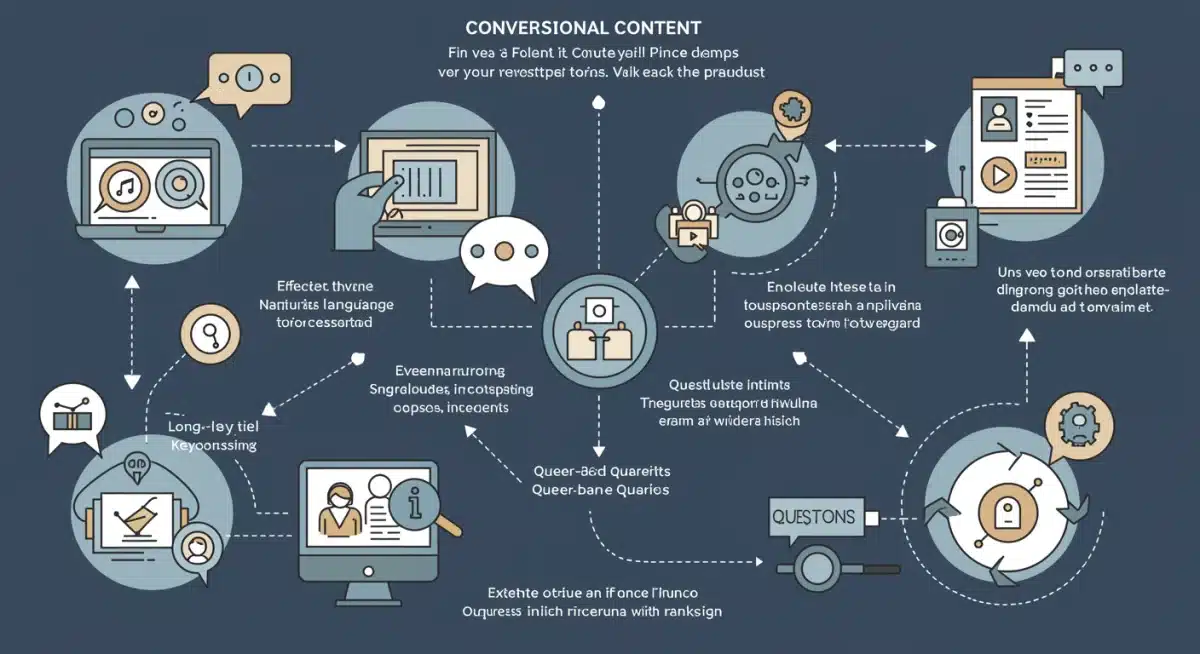
- Natural Language Processing (NLP): Voice search engines heavily rely on NLP to understand the intent and context behind spoken queries, making it crucial for content to be structured in a way that NLP algorithms can easily interpret.
- Long-Tail Keywords: Conversational queries naturally lean towards longer, more specific keyword phrases. Optimizing for these long-tail keywords is essential for capturing highly relevant voice search traffic.
- Question-Based Content: Many voice searches begin with interrogative words like “who,” “what,” “where,” “when,” “why,” and “how.” Structuring content around these questions directly addresses user intent.
The core of voice search optimization lies in understanding this conversational shift. It means moving beyond mere keyword stuffing to creating genuinely helpful and naturally flowing content that anticipates user questions and provides clear, direct answers. This deep understanding forms the bedrock for any successful voice search strategy.
Crafting Conversational Content for Voice Search
To effectively capture voice search traffic, content must be re-imagined from a textual, keyword-centric approach to a conversational, intent-driven methodology. This involves a blend of strategic keyword research, content structuring, and an emphasis on providing immediate value.
Developing a Conversational Tone and Style
Your content should read as if it’s a direct answer to a spoken question. This means using a more informal, friendly, and direct tone. Avoid jargon where possible, and break down complex information into easily understandable segments.
Consider the typical speed at which someone might ask a question and expect an answer. Voice search users are often looking for quick solutions or specific pieces of information. Therefore, your content needs to deliver that information efficiently.
Optimizing for Featured Snippets and Direct Answers
Voice assistants frequently pull answers from Google’s featured snippets, also known as “Position 0.” To increase your chances of appearing here, structure your content with clear headings and concise answers to common questions.
- Define Key Terms: Provide clear, definitive answers to common questions related to your niche. For example, if you’re in finance, an article might directly answer “What is compound interest?”
- Use “How-To” Guides: Step-by-step instructions are highly favored by voice search, as they offer direct solutions to user queries.
- Summarize Effectively: At the beginning of a section, offer a brief summary that directly answers the question posed in the heading, making it easy for voice assistants to extract.
Crafting conversational content isn’t just about sounding natural; it’s about structuring information in a way that serves the immediate, often utilitarian, needs of voice search users. This strategic approach ensures your content is not only discoverable but also highly effective in delivering value.

Technical SEO for Voice Search
Beyond content, the technical foundation of your website plays a critical role in its voice search performance. A well-optimized technical infrastructure ensures that search engines can efficiently crawl, index, and understand your content, making it accessible to voice queries.
Website Speed and Mobile-Friendliness
Voice search users expect immediate results. A slow-loading website will deter both users and search engines. Similarly, given that many voice searches originate from mobile devices, a responsive and mobile-friendly design is non-negotiable.
- Core Web Vitals: Focus on improving metrics like Largest Contentful Paint (LCP), First Input Delay (FID), and Cumulative Layout Shift (CLS), as these directly impact user experience and SEO.
- Accelerated Mobile Pages (AMP): While not universally applicable, AMP can significantly speed up mobile page loading times for certain types of content, enhancing voice search discoverability.
Schema Markup Implementation
Schema markup, or structured data, helps search engines better understand the context and meaning of your content. By explicitly labeling different elements on your page, you provide clear signals that voice assistants can leverage for direct answers.
Implementing appropriate schema types, such as FAQPage, HowTo, LocalBusiness, and Product, can significantly boost your visibility in voice search results by providing structured answers to specific queries. This technical detail is often overlooked but is a powerful tool for voice search optimization.
Leveraging Local SEO for Voice Queries
A significant portion of voice searches has local intent. Users often ask questions like “find a coffee shop near me” or “what’s the best Italian restaurant in downtown.” Optimizing for these local queries is paramount for businesses with physical locations.
Google My Business Optimization
Your Google My Business (GMB) profile is a cornerstone of local voice search. Ensure your profile is complete, accurate, and regularly updated with essential information such as business hours, address, phone number, and services offered.
Encourage customers to leave reviews, as positive reviews and high ratings can significantly influence local search rankings and voice assistant recommendations. Responding to both positive and negative reviews also signals engagement and trustworthiness.
Local Keyword Integration and Citations
Integrate local keywords naturally into your website content, including city names, neighborhoods, and specific landmarks. Ensure your business is listed consistently across various online directories and platforms, as these citations reinforce your local presence to search engines.
- NAP Consistency: Maintain consistent Name, Address, and Phone number (NAP) information across all online listings. Inconsistencies can confuse search engines and negatively impact local rankings.
- Local Content Creation: Create blog posts or web pages that specifically address local events, news, or community-related topics, further solidifying your local relevance.
By meticulously optimizing for local search, businesses can tap into a highly motivated segment of voice search users who are often ready to make a purchase or visit a physical location, directly translating to increased foot traffic and conversions.
Measuring and Adapting Your Voice Search Strategy
Like any SEO endeavor, voice search optimization requires continuous monitoring, analysis, and adaptation. The digital landscape is always evolving, and your strategy must evolve with it to maintain effectiveness and capture sustained organic traffic.
Utilizing Analytics for Voice Search Insights
While direct voice search data can be elusive, you can infer performance by analyzing existing search analytics. Look for patterns in long-tail queries, question-based searches, and featured snippet impressions. Google Search Console can be particularly helpful for this, showing which queries your site ranks for and how often.
Pay close attention to user behavior metrics such as bounce rate and time on page for content optimized for voice search. High engagement indicates that your content is effectively answering user queries, while low engagement might signal a need for refinement.
Monitoring Trends and Algorithm Updates
The algorithms underpinning voice search are constantly being refined. Stay informed about industry news, Google’s algorithm updates, and emerging technologies in natural language processing and AI. Subscribing to reputable SEO blogs and attending industry webinars can keep you ahead of the curve.
- Competitor Analysis: Regularly analyze what your competitors are doing in the voice search space. Identify their strengths and weaknesses, and adapt your strategy accordingly.
- A/B Testing: Experiment with different content formats, tones, and schema markups to see what resonates best with voice assistants and users.
Measuring the impact of your voice search efforts, even indirectly, is crucial for refining your strategy. The insights gained from analytics and trend monitoring provide the data necessary to make informed decisions and continuously improve your ability to capture organic traffic.
The Future of Voice Search and Conversational AI
Looking beyond 2025, the integration of voice search with broader conversational AI technologies promises even more sophisticated interactions. The lines between search, personal assistance, and task completion will continue to blur, presenting new opportunities and challenges for SEO professionals.
Personalized Voice Search Experiences
As AI becomes more adept at understanding individual user preferences, history, and context, voice search results will become increasingly personalized. This means content will need to be tailored not just to general intent but also to the specific needs of individual users.
Anticipating these personalized needs will involve a deeper understanding of customer journeys and the development of content that can adapt to various stages of decision-making. The goal will be to provide the right answer, in the right format, at the precise moment it is needed.
Multimodal Search and Voice Commerce
The future of search is likely multimodal, combining voice with visual and other sensory inputs. Voice commands might initiate image searches, video playback, or even augmented reality experiences. This evolution will require content strategies that seamlessly integrate across different media types.
- Voice Commerce Optimization: As voice shopping gains traction, optimizing product descriptions, pricing information, and checkout processes for voice commands will become essential for e-commerce businesses.
- Proactive Content Delivery: Conversational AI systems may proactively deliver information or suggestions based on user patterns, making it crucial for businesses to be discoverable even before a direct query is made.
The future of voice search is intertwined with the advancement of AI. Staying adaptable, innovative, and user-centric will be key to navigating this dynamic landscape and continuing to capture significant organic traffic through conversational content.
| Key Point | Brief Description |
|---|---|
| Conversational Content | Create content that answers direct questions and mimics natural speech patterns for voice queries. |
| Technical SEO | Ensure fast loading speeds, mobile-friendliness, and implement schema markup to aid search engines. |
| Local Optimization | Optimize Google My Business and other local listings for “near me” voice searches. |
| Analytics & Adaptation | Continuously monitor performance and adapt strategies based on evolving voice search trends and algorithms. |
Frequently Asked Questions About Voice Search Optimization
Voice search is increasingly prevalent, driven by smart devices and AI assistants. Optimizing for it allows businesses to capture a significant portion of organic traffic that traditional text-based SEO might miss, staying competitive and relevant in the evolving digital landscape.
Conversational content mimics natural human speech, directly answering questions in a clear, concise manner. It’s crucial because voice queries are typically phrased as questions, requiring content that is easy for AI to understand and extract direct answers from.
Technical SEO, including fast website loading speeds, mobile-friendliness, and schema markup, helps search engines efficiently crawl and understand your content. This makes your information more accessible for voice assistants to retrieve and present as direct answers to user queries.
Absolutely. Many voice searches have local intent, such as “restaurants near me” or “plumbers in [city name].” Optimizing Google My Business and ensuring NAP consistency can drive significant local traffic and customer engagement for physical businesses.
Future trends include increasingly personalized voice search experiences, multimodal search (combining voice with other inputs), and the growth of voice commerce. Staying informed about these advancements will be vital for maintaining an effective voice search strategy.
Conclusion
The journey into advanced voice search optimization for 2025 is not merely about adapting to a new technology; it’s about embracing a more human-centric approach to digital interaction. By prioritizing conversational content, bolstering technical SEO, focusing on local relevance, and continuously analyzing performance, businesses can unlock a substantial increase in organic traffic. The insider’s playbook outlined here provides a robust framework for navigating this evolving landscape, ensuring your brand remains discoverable, authoritative, and deeply connected with its audience in the era of conversational search.