Analytics for SEO: 5 Key Data Points for 2025 Rankings

To dominate search rankings by 2025, SEO professionals must leverage key data points from analytics, transforming raw information into actionable strategies for sustained digital growth and visibility.
Understanding and applying SEO Analytics Data Points is no longer just an advantage; it’s a fundamental requirement for digital success. As search engines evolve, so must our approach to data. This article will guide you through the five most critical data points to monitor and leverage to ensure your website not only competes but dominates search rankings in 2025 and beyond.
The Evolving Landscape of SEO Analytics
The world of search engine optimization is in constant flux. What worked yesterday might not be effective tomorrow, and staying ahead requires a keen eye on evolving metrics. The sheer volume of data available can be overwhelming, making it crucial to identify the most impactful data points that truly drive performance.
Ignoring analytics is akin to navigating without a compass. Without understanding user behavior, search engine preferences, and content performance, your SEO efforts are largely guesswork. The goal is not just to rank, but to rank for the right audience, with content that resonates and converts.
Why Data-Driven Decisions Matter
- Reduced Guesswork: Analytics provide concrete evidence for strategy validation.
- Improved ROI: Focusing on high-impact areas maximizes returns on SEO investments.
- Competitive Advantage: Proactive data analysis allows for quicker adaptation to market changes.
- Enhanced User Experience: Understanding user behavior helps optimize site usability.
The evolving landscape demands a shift from reactive to proactive analysis. By understanding the ‘why’ behind the numbers, we can predict future trends and adjust our strategies accordingly, ensuring long-term success in a highly competitive digital environment.
Key Data Point 1: User Engagement Metrics
User engagement metrics offer invaluable insights into how visitors interact with your website. These metrics go beyond simple traffic numbers, delving into the quality of interaction and how satisfied users are with your content and site experience. Google, in particular, places a significant emphasis on these signals, as they directly correlate with content quality and relevance.
Monitoring engagement helps identify areas where users might be struggling or losing interest, allowing for targeted improvements. A highly engaged user is more likely to convert and return, contributing positively to your site’s overall authority and ranking potential.
Understanding Core Engagement Signals
Several metrics fall under the umbrella of user engagement. Each provides a unique perspective on user behavior and contributes to a holistic understanding of your audience’s interaction with your site.
- Bounce Rate: The percentage of visitors who navigate away from your site after viewing only one page. A high bounce rate can indicate irrelevant content or a poor user experience.
- Time on Page/Session Duration: How long users spend on a specific page or across multiple pages during a single visit. Longer durations typically suggest higher engagement and satisfaction.
- Pages Per Session: The average number of pages a user views during a single session. More pages per session often mean users are finding your content valuable and exploring further.
- Scroll Depth: How far down a page users scroll. This metric helps determine if users are consuming the full breadth of your content or only skimming the top.
Analyzing these metrics in conjunction can paint a clear picture of user behavior, highlighting both strengths and weaknesses in your content and site design. Optimizing for engagement is not just about pleasing search engines; it’s about providing real value to your audience.
Key Data Point 2: Core Web Vitals and Page Experience
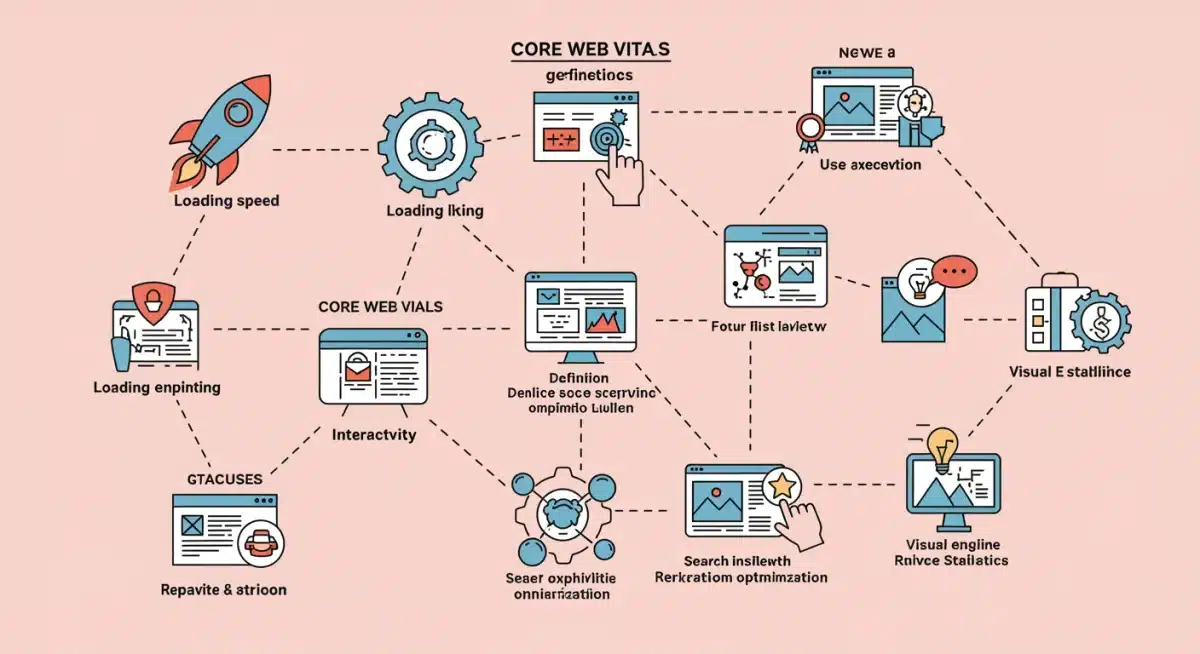
Google’s emphasis on page experience, particularly through Core Web Vitals, has profoundly reshaped SEO. These metrics measure real-world user experience aspects of loading performance, interactivity, and visual stability. Ignoring them in 2025 would be a critical oversight, as they directly influence search rankings and user satisfaction.
Optimizing for Core Web Vitals requires a technical understanding of how your website renders and responds. It’s not just about speed; it’s about providing a seamless, frustration-free experience from the moment a user clicks on your link.
The Three Pillars of Core Web Vitals
The Core Web Vitals consist of three specific page speed and user interaction metrics:
- Largest Contentful Paint (LCP): Measures loading performance. It should occur within 2.5 seconds of when the page first starts loading. This metric focuses on the time it takes for the largest content element on a page to become visible.
- First Input Delay (FID): Measures interactivity. Pages should have an FID of less than 100 milliseconds. FID quantifies the time from when a user first interacts with a page (e.g., clicks a button) to the time when the browser is actually able to respond to that interaction.
- Cumulative Layout Shift (CLS): Measures visual stability. Pages should maintain a CLS of less than 0.1. CLS quantifies the amount of unexpected layout shift of visual page content.
Improving these metrics often involves technical SEO adjustments, such as optimizing image sizes, deferring JavaScript, and ensuring stable layout elements. A strong focus on Core Web Vitals ensures your site offers a superior experience, which is increasingly vital for ranking success.
Key Data Point 3: Keyword Performance and Search Intent
While keyword research has always been foundational to SEO, its application in 2025 requires a deeper understanding of search intent. It’s no longer enough to target high-volume keywords; you must understand the underlying purpose behind a user’s search query. Are they looking for information, a specific product, or a solution to a problem?
Analyzing keyword performance involves tracking not just rankings, but also click-through rates (CTR), conversion rates, and the alignment between your content and what users truly seek. This refined approach ensures your content effectively addresses user needs, leading to higher engagement and better organic visibility.
Aligning Content with User Intent
Search intent can broadly be categorized into four types:
- Informational Intent: Users seeking answers to specific questions or general knowledge. Content should be comprehensive, authoritative, and easy to understand (e.g., blog posts, guides).
- Navigational Intent: Users looking for a specific website or page. Your brand name or specific page titles are crucial here.
- Transactional Intent: Users ready to make a purchase or complete an action. Content should focus on product pages, service offerings, and clear calls to action.
- Commercial Investigation Intent: Users researching products or services before making a purchase. Comparison articles, reviews, and detailed product specifications are effective.
By meticulously matching your content to these intents, you not only improve your chances of ranking but also ensure that the traffic you attract is highly qualified and more likely to convert. Regular analysis of keyword performance metrics, including organic traffic for specific keywords and their associated conversions, is paramount.
Key Data Point 4: Backlink Profile Analysis
Backlinks remain a cornerstone of SEO, acting as votes of confidence from other websites. However, the quality and relevance of these backlinks are far more important than the sheer quantity. In 2025, a robust and healthy backlink profile is characterized by links from authoritative, relevant, and trustworthy sources, signaling to search engines that your site is a valuable resource.
Analyzing your backlink profile involves much more than just counting links. It requires scrutinizing the domains linking to you, identifying toxic links, and understanding the anchor text used. This data-driven approach helps you build a natural and powerful link profile that enhances your site’s authority.
Components of a Healthy Backlink Profile
Several factors contribute to the effectiveness of your backlink strategy:
- Domain Authority (DA) / Domain Rating (DR) of Linking Sites: Links from high-authority sites carry more weight. Focus on acquiring links from established and respected domains.
- Relevance of Linking Content: Backlinks should come from pages that are topically related to your content. A link from a relevant industry blog is more valuable than one from an unrelated site.
- Anchor Text Diversity: The text used for your backlinks should be natural and varied, avoiding over-optimization with exact-match keywords. A mix of branded, naked URL, and partial-match anchor text is ideal.
- Link Velocity: The rate at which your site acquires new backlinks. A natural, steady growth is preferred over sudden, unnatural spikes, which can trigger spam flags.
- Toxic Link Identification: Regularly audit your backlink profile to identify and disavow harmful or spammy links that could negatively impact your rankings.
A comprehensive backlink analysis not only helps in identifying opportunities for growth but also in mitigating potential risks from unfavorable links. This ongoing vigilance is crucial for maintaining and improving your site’s organic search performance.
Key Data Point 5: Technical SEO Health and Indexability
Technical SEO forms the bedrock of any successful SEO strategy. Even the most compelling content and robust backlink profile can falter if search engines cannot properly crawl, index, and understand your website. In 2025, a healthy technical SEO foundation is non-negotiable for maximizing visibility.
This data point involves monitoring aspects like site architecture, crawl errors, mobile-friendliness, and structured data implementation. Regular audits and proactive problem-solving based on technical data ensure your site is always optimized for search engine bots.
Crucial Technical SEO Indicators
Effective technical SEO hinges on attention to detail across various elements:
- Crawlability and Indexability: Ensure search engines can access and index all important pages. Monitor crawl errors in Google Search Console and check your robots.txt file and sitemap.
- Mobile-Friendliness: With mobile-first indexing, a responsive and fast mobile experience is essential. Use Google’s Mobile-Friendly Test to identify issues.
- Site Speed: Beyond Core Web Vitals, overall site speed impacts user experience and rankings. Tools like Google PageSpeed Insights provide actionable recommendations.
- Structured Data (Schema Markup): Implementing structured data helps search engines understand your content better and can lead to rich snippets in search results, improving CTR.
- HTTPS Security: A secure website (HTTPS) is a ranking factor and builds user trust. Ensure all pages are served over HTTPS.
- Duplicate Content Issues: Identify and resolve any instances of duplicate content, which can confuse search engines and dilute ranking power.
Regularly reviewing these technical aspects and addressing any issues promptly is vital. A technically sound website is a prerequisite for all other SEO efforts to bear fruit, paving the way for higher rankings and improved user experience.
Leveraging Analytics for Predictive SEO
Beyond simply reacting to current data, the most forward-thinking SEO strategies for 2025 will involve predictive analytics. This means using historical data and current trends to forecast future performance and anticipate changes in search engine algorithms or user behavior. Predictive SEO allows you to be one step ahead, rather than constantly playing catch-up.
By integrating data from all five key points—user engagement, Core Web Vitals, keyword performance, backlink profile, and technical SEO health—you can build sophisticated models that inform your long-term strategy. This comprehensive view helps identify emerging opportunities and potential threats, allowing for agile adjustments.
Tools and Techniques for Predictive SEO
Implementing predictive SEO involves a combination of advanced tools and strategic thinking:
- Trend Analysis: Utilize historical data from Google Analytics and Google Search Console to identify long-term patterns in traffic, rankings, and conversions.
- Competitor Analysis: Monitor competitor performance to identify gaps in your strategy and anticipate market shifts. Tools like Semrush and Ahrefs are indispensable here.
- Algorithm Update Monitoring: Stay informed about upcoming and recent search engine algorithm updates. While Google doesn’t always announce changes, the SEO community often identifies patterns.
- User Behavior Forecasting: Analyze shifts in user search queries and intent to predict future content demands. Google Trends can be a powerful resource.
- Machine Learning Integration: For larger organizations, leveraging machine learning models can help process vast amounts of data to uncover complex correlations and predict outcomes with greater accuracy.
The ability to anticipate and adapt is what will truly differentiate top-performing websites in the coming years. Predictive SEO transforms data from a rearview mirror into a crystal ball, guiding your strategy toward future success.
| Key Data Point | Impact on SEO for 2025 |
|---|---|
| User Engagement Metrics | Signals content quality and relevance to search engines, improving rankings. |
| Core Web Vitals | Directly influences page experience and ranking factors for Google. |
| Keyword Performance & Intent | Ensures content aligns with user needs, attracting qualified traffic. |
| Backlink Profile Analysis | Builds site authority and trust through quality, relevant inbound links. |
Frequently Asked Questions About SEO Analytics
User engagement metrics like bounce rate and time on page directly signal to search engines how valuable and relevant your content is to visitors. Higher engagement indicates a positive user experience, which is increasingly prioritized by algorithms for ranking purposes in 2025.
Core Web Vitals (LCP, FID, CLS) are direct ranking factors that measure page experience. Poor performance in these areas can negatively affect your visibility, as Google aims to provide users with fast, stable, and interactive web pages. Optimizing them is crucial for 2025.
Keyword volume tells you how many people search for a term, while search intent reveals the ‘why’ behind their search. For 2025, understanding intent is more critical, ensuring your content truly answers user queries and leads to higher engagement and conversions, not just traffic.
It’s recommended to analyze your backlink profile at least quarterly, or more frequently if you’re actively building links. Regular audits help identify new opportunities, monitor growth, and disavow any potentially harmful or spammy links that could negatively impact your site’s authority and rankings.
Technical SEO ensures search engines can effectively crawl, index, and understand your website. Without a strong technical foundation, even excellent content and backlinks won’t achieve their full potential. It’s the essential groundwork for all other SEO efforts and remains critical for 2025.
Conclusion
In the dynamic realm of digital marketing, the ability to effectively wield SEO Analytics Data Points will define success in 2025. By meticulously monitoring and acting upon user engagement metrics, Core Web Vitals, keyword performance and search intent, backlink profile analysis, and technical SEO health, businesses can construct a robust and resilient online presence. This data-driven approach moves beyond guesswork, fostering informed decisions that not only improve search rankings but also enhance the overall user experience. Embracing these key data points is not merely about adapting to change; it’s about proactively shaping your digital future and dominating the competitive search landscape.