Semantic SEO in 2025: Boost Organic Visibility by 20%
Leveraging semantic SEO by 2025 is crucial for achieving a significant increase in organic visibility, shifting focus from individual keywords to understanding user intent and contextual relationships for enhanced search engine performance.
Are you ready to move beyond outdated keyword stuffing and embrace the future of search? This practical guide, Beyond Keywords: Leveraging Semantic SEO in 2025 for a 20% Increase in Organic Visibility – A Practical Guide, explores how understanding context and user intent will redefine your digital strategy. Discover actionable insights to boost your organic visibility significantly.
Understanding the Shift to Semantic SEO
The digital landscape is constantly evolving, and with it, the way search engines interpret queries. Gone are the days when simply sprinkling keywords throughout your content guaranteed top rankings. Today, search engines, powered by advanced AI and machine learning, aim to understand the true meaning behind a user’s search query, not just the individual words.
This fundamental shift is what we call semantic SEO. It’s about creating content that comprehensively addresses a topic, anticipating user questions, and demonstrating expertise. Focusing on semantic relationships allows search engines to better match user intent with relevant, high-quality information, leading to improved organic visibility.
The Evolution of Search Engine Algorithms
Google’s algorithm updates, such as Hummingbird, RankBrain, and BERT, have consistently pushed towards a more semantic understanding of language. These updates prioritize context, synonyms, and related concepts over exact keyword matches. This means that a search for “best running shoes for flat feet” is no longer just about those four words; it’s about understanding the user’s need for comfort, support, and specific brands or models that cater to flat feet.
- Hummingbird: Focused on understanding the meaning behind queries rather than just keywords.
- RankBrain: An AI system that helps process complex queries and delivers relevant results.
- BERT: Improved understanding of natural language, especially prepositions and context.
The implication for content creators is clear: move beyond a simplistic keyword focus. Instead, think about the broader topic, the various facets of that topic, and the different ways users might search for information related to it. This holistic approach is the cornerstone of a successful semantic SEO strategy.
Ultimately, understanding this evolution is the first step towards adapting your SEO efforts for 2025. By embracing semantic principles, you align your content with how modern search engines operate, paving the way for increased organic traffic and better engagement with your target audience.
Identifying User Intent and Entities
At the heart of semantic SEO lies the profound understanding of user intent. It’s no longer enough to know what users search for; you must comprehend why they are searching and what they hope to achieve. This deep dive into intent allows you to craft content that directly addresses their needs, fostering a more satisfying user experience and, consequently, higher rankings.
Identifying entities is equally critical. Entities are distinct, well-defined concepts—people, places, things, or ideas—that search engines recognize and categorize. By clearly establishing the entities within your content and their relationships, you help search engines build a richer understanding of your topic, enhancing its relevance.
Types of User Intent
User intent can generally be categorized into four main types, each requiring a different content approach:
- Informational Intent: Users seeking answers to specific questions or general knowledge. (e.g., “how to bake sourdough bread”)
- Navigational Intent: Users looking for a specific website or branded entity. (e.g., “DigitalMarketChronicle blog”)
- Transactional Intent: Users intending to complete an action, like making a purchase or signing up. (e.g., “buy ergonomic office chair”)
- Commercial Investigation Intent: Users researching products or services before making a purchase. (e.g., “best laptops for video editing reviews”)
Tailoring your content to match these intents is paramount. For informational queries, provide comprehensive guides and detailed explanations. For transactional queries, ensure clear calls to action and product information. Mismatched intent leads to high bounce rates and poor user signals, which can negatively impact your rankings.
Leveraging Entity Recognition
Search engines use knowledge graphs to understand entities and their connections. When you consistently and accurately refer to entities in your content, you contribute to this knowledge graph, making your content more authoritative and contextually rich. For instance, if your article is about “sustainable fashion,” clearly define entities like “organic cotton,” “recycled materials,” “ethical sourcing,” and relevant brands or designers.
Tools like Google’s Natural Language API can help analyze your content for entities and sentiment, providing insights into how search engines might perceive your text. Integrating entity-rich content not only aids search engines but also provides a more structured and informative experience for the reader, establishing your content as a valuable resource.
Content Clustering and Topic Authority
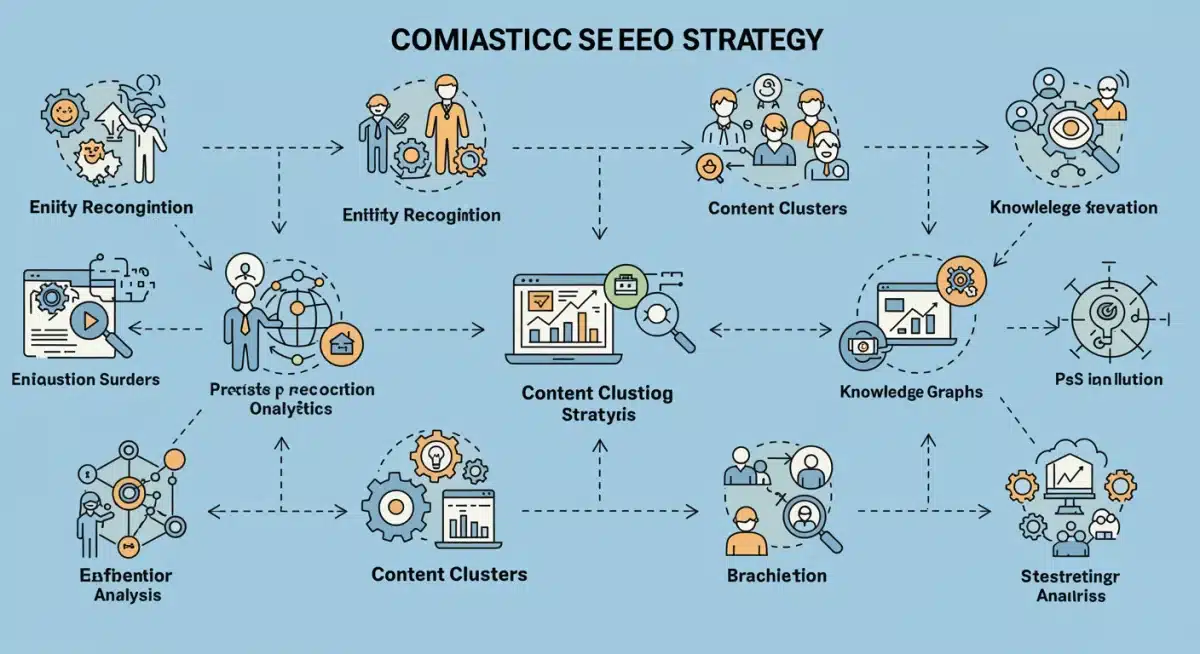
Moving beyond individual keywords, semantic SEO emphasizes building comprehensive content clusters around broad topics. This strategy involves creating a central “pillar page” that covers a wide subject area, supported by numerous “cluster content” pieces that delve into specific subtopics related to the pillar. This interconnected structure signals to search engines your authority on the overarching topic.
The goal is to answer every possible question a user might have about a particular subject, positioning your website as the go-to resource. This not only boosts your organic visibility for a wider range of queries but also enhances user engagement by providing a seamless journey through related content.
Building Pillar Pages
A pillar page serves as the foundational piece of content for a broad topic. It should be extensive, offering a high-level overview of the subject and linking out to more detailed cluster content. Think of it as a table of contents for your chosen topic. For example, a pillar page on “digital marketing” might cover SEO, content marketing, social media marketing, and email marketing, with each section linking to dedicated articles.
- Comprehensive Overview: Covers all major aspects of a broad topic.
- Internal Linking Hub: Links to numerous supporting cluster articles.
- High-Value Content: Provides significant value and answers initial user questions.
The effectiveness of a pillar page lies in its ability to organize information logically and provide a clear path for users to explore related subtopics. This structure not only benefits user experience but also helps search engines understand the depth and breadth of your content, leading to improved topical authority.
Developing Cluster Content
Cluster content pieces are individual blog posts or articles that dive deep into specific subtopics mentioned on your pillar page. Each cluster article should link back to the pillar page, reinforcing the topical connection. For instance, if your pillar page is about “digital marketing,” a cluster article might focus specifically on “advanced SEO techniques” or “crafting engaging social media campaigns.”
These articles should be highly detailed, addressing specific long-tail keywords and user queries related to their subtopic. The internal linking structure between the pillar page and its clusters creates a robust network that signals to search engines that your site is an authoritative source on the subject. This interconnectedness is crucial for gaining a competitive edge in 2025’s semantic search environment.
Leveraging Structured Data and Schema Markup
Structured data and Schema Markup are essential tools in semantic SEO, acting as a bridge between human-readable content and machine-understandable information. By adding specific code to your website, you provide search engines with explicit cues about the meaning and context of your content, going beyond what they can infer from text alone.
This direct communication helps search engines display your content more effectively, often resulting in rich snippets, carousels, or knowledge panel entries in search results. These enhanced listings not only improve visibility but also increase click-through rates, making structured data a non-negotiable aspect of any forward-thinking SEO strategy.
Implementing Schema Markup
Schema.org is a collaborative, community-driven effort that provides a universal vocabulary for structured data. There are various types of schema markup, each designed for different content types. For example, there’s schema for articles, products, reviews, events, FAQs, and local businesses.
- Article Schema: Provides details like author, publication date, and headline for blog posts.
- Product Schema: Includes price, availability, and review ratings for e-commerce items.
- FAQ Schema: Enables questions and answers to appear directly in search results.
Proper implementation involves adding JSON-LD (JavaScript Object Notation for Linked Data) code directly into your HTML. While it might sound technical, many content management systems offer plugins or built-in functionalities to simplify the process. Google’s Structured Data Testing Tool can help validate your markup and identify any errors.
Benefits of Rich Snippets
The primary benefit of using structured data is the potential for rich snippets. These are enhanced search results that provide additional information directly on the SERP (Search Engine Results Page). For instance, a recipe might show cooking time and star ratings, or an event might display dates and locations.
Rich snippets make your listing stand out, capturing user attention and increasing the likelihood of a click. This improved visibility and higher CTR contribute directly to the 20% organic visibility increase target. Furthermore, by providing clear, structured information, you help search engines better understand your content, reinforcing your site’s authority and relevance within your niche.
Analyzing Performance and Adapting Strategy
A robust semantic SEO strategy isn’t a set-it-and-forget-it endeavor; it requires continuous monitoring, analysis, and adaptation. The digital landscape, user behaviors, and search engine algorithms are constantly shifting, making ongoing performance analysis crucial for maintaining and increasing organic visibility. Regularly reviewing your data allows you to identify what’s working, what isn’t, and where opportunities for improvement lie.
By tracking key metrics and understanding the nuances of your audience’s interaction with your content, you can refine your approach, optimize existing content, and discover new areas for semantic expansion. This iterative process is fundamental to achieving and sustaining a 20% increase in organic visibility by 2025.
Key Metrics for Semantic SEO
Beyond traditional SEO metrics like keyword rankings and organic traffic, semantic SEO requires a deeper look into user engagement and topic coverage.
- Organic Traffic: Overall increase in visitors from search engines.
- Bounce Rate: A lower bounce rate indicates content relevance and user satisfaction.
- Time on Page: Longer durations suggest users are finding value in your content.
- Page Depth/Session Duration: Users navigating through multiple related articles within a content cluster.
- SERP Features: Monitoring if your content appears in rich snippets, featured snippets, or knowledge panels.
- Topical Authority Score: While not a direct metric, tools can estimate your site’s authority on specific topics.
Google Analytics, Google Search Console, and various third-party SEO tools provide the data necessary to track these metrics. Pay close attention to how users interact with your content clusters and pillar pages, as this provides invaluable feedback on the effectiveness of your semantic structure.
Iterative Optimization and Content Refresh
Based on your performance analysis, continually optimize and refresh your content. This involves updating outdated information, expanding on sections that show high engagement, or improving clarity where users drop off. Semantic optimization also means identifying new related entities or subtopics that emerge in your niche and integrating them into your content clusters.
Don’t be afraid to restructure existing articles to fit better within a semantic framework. This might mean breaking down a long article into several smaller, more focused pieces of cluster content, or consolidating several related posts into a single, comprehensive pillar page. Regular content audits and strategic refreshes ensure your semantic SEO strategy remains agile and effective in the ever-changing digital landscape.
Integrating AI Tools for Semantic SEO
The advent of artificial intelligence has revolutionized many aspects of digital marketing, and semantic SEO is no exception. AI-powered tools can significantly streamline the process of understanding user intent, identifying entities, and mapping out content clusters, making it easier for marketers to implement sophisticated semantic strategies. By leveraging these tools, businesses can gain a competitive edge, optimize their efforts, and achieve their organic visibility goals more efficiently.
From advanced keyword research platforms to content optimization suites, AI is becoming an indispensable partner in the quest for semantic relevance. These tools not only save time but also provide deeper insights that might be difficult or impossible to uncover manually, allowing for a more data-driven approach to content creation.
AI for Intent and Entity Analysis
Modern AI tools can analyze vast amounts of search data to pinpoint specific user intents behind queries, revealing patterns and relationships that human analysis might miss. They can also identify relevant entities within a topic, helping you understand the full scope of what search engines expect to find in comprehensive content.
- Topic Modeling: AI algorithms can identify overarching themes and subtopics from large datasets.
- Sentiment Analysis: Understanding the emotional tone associated with keywords and entities.
- NLP-powered Keyword Research: Discovering semantically related terms and phrases beyond exact matches.
These capabilities enable you to create highly targeted content that addresses the precise needs of your audience, ensuring every piece of content contributes to your overall topical authority. The ability of AI to process and interpret complex language data makes it an invaluable asset for any semantic SEO practitioner.
Content Optimization with AI
AI writing assistants and content optimization platforms are increasingly sophisticated, offering suggestions to improve the semantic relevance and comprehensiveness of your articles. They can analyze your content against top-ranking pages, identify gaps in coverage, and recommend related entities, questions, and topics to include.
For example, an AI tool might suggest adding a section on “eco-friendly packaging” if your article is about “sustainable products” and its analysis shows that top-ranking pages cover this entity. This not only enhances the depth of your content but also ensures it aligns with what search engines consider authoritative and relevant. Embracing AI in your content workflow will be a key differentiator for semantic SEO success in 2025.
Future-Proofing Your Digital Strategy for 2025
As we look towards 2025, the digital landscape will continue its rapid evolution, with search engines becoming even more sophisticated in their understanding of language and user intent. Future-proofing your digital strategy means embracing a proactive approach to SEO, one that prioritizes long-term relevance over short-term keyword gains. Semantic SEO is not just a trend; it’s the foundational methodology for staying competitive and visible in the years to come.
By continually refining your understanding of user needs, building comprehensive content ecosystems, and leveraging technological advancements, you ensure your online presence remains robust and adaptable. This forward-thinking mindset is what will drive your organic visibility and cement your authority in your respective niche.
Anticipating Search Trends
The future of search will likely involve even greater personalization and integration with voice search, visual search, and augmented reality. Semantic SEO provides the robust framework needed to adapt to these emerging trends. Content that is semantically rich and well-structured is inherently more adaptable to new search interfaces and methods of query interpretation.
- Voice Search Optimization: Content structured for natural language queries.
- Visual Search Readiness: Well-described images with relevant semantic context.
- Hyper-Personalization: Content that addresses specific user segments and their detailed intents.
Staying ahead involves not just reacting to algorithm updates but anticipating how users will interact with information in the future. By focusing on comprehensive topic coverage and entity relationships now, you are building a content base that will naturally perform well across diverse search modalities.
The Role of E-E-A-T in Semantic SEO
Experience, Expertise, Authoritativeness, and Trustworthiness (E-E-A-T) will continue to be paramount. Semantic SEO inherently supports E-E-A-T by encouraging the creation of deep, well-researched, and interconnected content. When your site demonstrates a comprehensive understanding of a topic, backed by clear authorship and factual accuracy, search engines recognize and reward this.
Investing in thought leadership, publishing original research, and ensuring your content is reviewed by subject matter experts are all ways to bolster your E-E-A-T signals. These efforts, combined with a strong semantic strategy, will solidify your position as a trusted source of information, driving organic visibility and ensuring long-term success in the competitive digital landscape of 2025 and beyond.
| Key Concept | Brief Description |
|---|---|
| User Intent | Understanding the ‘why’ behind a search query to deliver highly relevant content. |
| Content Clustering | Organizing content around broad topics with pillar pages and supporting articles to build authority. |
| Structured Data | Using Schema Markup to provide explicit context to search engines, enhancing visibility with rich snippets. |
| AI Integration | Utilizing AI tools for advanced intent analysis, entity recognition, and content optimization. |
Frequently asked questions about semantic SEO
Semantic SEO focuses on the meaning and context of words rather than just keywords. For 2025, it’s vital because search engines prioritize understanding user intent and delivering comprehensive, contextually relevant results, which directly impacts organic visibility and ranking.
Identify user intent by analyzing search queries, observing SERP features (like featured snippets and “People also ask” sections), and categorizing queries into informational, navigational, transactional, or commercial investigation. Tools like Google Search Console and AI-powered platforms can assist in this analysis.
Content clusters consist of a central pillar page covering a broad topic, linked to several supporting cluster articles that delve into specific subtopics. This structure signals topical authority to search engines, improving rankings for a wider range of related keywords and enhancing user experience.
Yes, structured data (Schema Markup) is crucial. It explicitly tells search engines the meaning of your content, helping them display rich snippets and other enhanced search features. This direct communication boosts visibility and click-through rates, making it an indispensable part of a modern SEO strategy.
AI tools can streamline semantic SEO by performing advanced intent and entity analysis, identifying content gaps, and suggesting optimization opportunities. They help uncover complex relationships between topics and provide data-driven recommendations for creating comprehensive and contextually rich content more efficiently.
Conclusion
Embracing semantic SEO is no longer an option but a necessity for any business aiming to thrive in the digital landscape of 2025. By shifting focus from mere keywords to understanding the intricate web of user intent, entities, and topical relationships, you can build a more resilient and effective digital strategy. The journey involves creating comprehensive content clusters, leveraging structured data for enhanced visibility, and continuously analyzing performance to adapt and refine your approach. Integrating AI tools further empowers these efforts, providing deeper insights and streamlining optimization. Ultimately, a strong semantic SEO strategy, underpinned by E-E-A-T principles, will not only help you achieve a significant increase in organic visibility but also future-proof your online presence against evolving search engine algorithms and user behaviors. Start implementing these practices today to secure your competitive edge and lead in the ever-changing world of digital marketing.