Schema Markup for Enhanced SERP Features: A 2025 Guide to Boosting CTR

Implementing schema markup SERP features is critical for digital marketers in 2025, enabling websites to display rich results that can significantly boost click-through rates by up to 30% by providing search engines with explicit contextual information about web page content.
In the rapidly evolving landscape of search engine optimization, staying ahead means embracing powerful tools that transform how your content appears on search results pages. This 2025 guide explores how Schema Markup for Enhanced SERP Features: A 2025 Guide to Implementing Structured Data for a 30% Click-Through Rate Improvement can dramatically improve your website’s visibility and user engagement. Discover how this sophisticated form of structured data helps search engines understand your content better, leading to more prominent and appealing search results that capture user attention and drive higher click-through rates.
Understanding Schema Markup and Its Evolution
Schema Markup, often referred to as structured data, is a vocabulary (set of tags or microdata) that you can add to your HTML to improve the way search engines read and interpret your information. This semantic vocabulary helps search engines understand the meaning and context of your content, rather than just the keywords. In 2025, its importance has escalated, moving beyond a mere recommendation to a fundamental requirement for competitive SEO strategies.
The evolution of Schema Markup has been driven by search engines’ continuous efforts to provide more precise and helpful answers to user queries. Initially, it was a way to categorize basic information like reviews or recipes. Today, it encompasses a vast array of data types, enabling rich, interactive results that directly influence user behavior on the Search Engine Results Pages (SERPs).
The Core Principles of Structured Data
Structured data works by providing explicit clues about the meaning of a page’s content. Instead of search engines guessing what a date or person’s name refers to, Schema Markup tells them directly. This clarity is crucial for displaying rich snippets and other enhanced SERP features.
- Contextual Understanding: It helps search engines grasp the relationships between entities on your page.
- Standardized Vocabulary: Built on Schema.org, it provides a universal language for web content.
- Enhanced Presentation: Leads to visually appealing and informative search results.
Key Milestones in Schema’s Journey
From its inception, Schema.org has grown significantly, incorporating new types and properties to accommodate the diverse nature of web content. The collaboration between Google, Bing, Yahoo!, and Yandex ensures its widespread adoption and consistent interpretation. As AI and machine learning become more sophisticated, the role of structured data in feeding these algorithms with understandable information becomes even more vital, shaping the future of search.
The continuous updates to Schema.org reflect the dynamic nature of information on the web and the evolving needs of both users and search engines. Keeping up with these changes is paramount for maintaining and improving your site’s visibility.
The Impact of Enhanced SERP Features on CTR
Enhanced SERP features are the visually distinct results that appear on Google and other search engines, going beyond the traditional blue link. These features, powered by Schema Markup, include rich snippets, knowledge panels, carousels, and featured snippets. Their primary benefit lies in their ability to make your listing stand out, commanding more attention and, consequently, a higher click-through rate (CTR).
When a search result offers more information directly on the SERP, users are more likely to perceive it as relevant and authoritative. This pre-selection process means that by the time a user clicks on your link, they are already highly qualified and interested in your content, leading to better engagement metrics post-click as well.
Types of Enhanced SERP Features and Their Benefits
Understanding the different types of rich results is the first step to leveraging them effectively. Each type serves a specific purpose and can be applied to different content formats.
- Rich Snippets: Display extra details like star ratings, prices, or availability directly under the title.
- Featured Snippets: Directly answer a user’s question, often appearing at the top of the SERP.
- Knowledge Panels: Provide comprehensive information about entities (people, places, organizations) in a sidebar.
- Carousels: Present a scrollable list of related items, common for recipes, movies, or products.
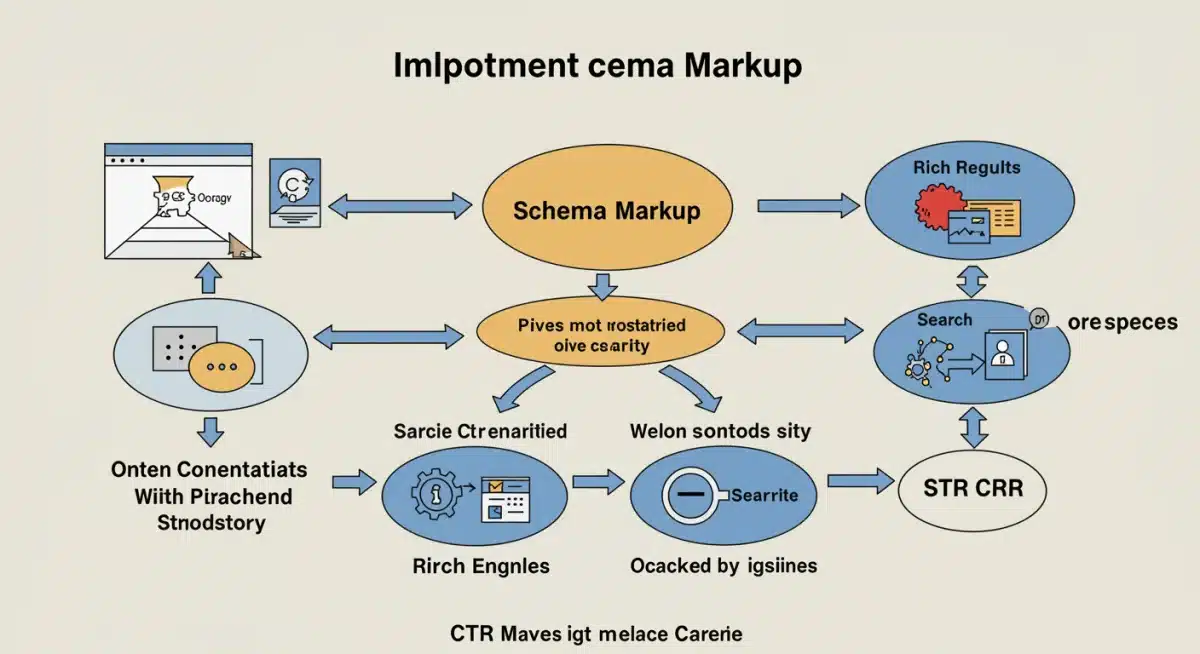
The visual prominence and informational value of these features are undeniable. They not only inform but also entice users, making your listing appear more credible and useful than plain text results. This direct appeal is what translates into a tangible increase in CTR, often exceeding 30% for well-optimized pages.
Optimizing for enhanced SERP features is not just about getting more clicks; it’s about getting the right clicks. By providing relevant information upfront, you reduce bounce rates and improve the overall user experience, signaling positive engagement to search engines.
Strategic Implementation of Structured Data in 2025
Implementing structured data strategically in 2025 requires a thoughtful approach that goes beyond simply adding basic Schema types. It demands an understanding of your content’s unique value proposition and how to best communicate that to search engines. The goal is to create a rich, semantic web presence that anticipates user needs and delivers immediate value, even before a click occurs.
The focus should be on accuracy and completeness. Incomplete or incorrect Schema Markup can be detrimental, leading to penalties or, at best, neglected rich results. Therefore, thorough testing and validation are crucial components of any successful implementation strategy.
Choosing the Right Schema Types
With hundreds of Schema types available, selecting the most appropriate ones for your content is key. Begin by identifying the core entities and actions on your pages. For an e-commerce site, Product and Offer Schema are essential. For a blog, Article and Person Schema might be more relevant.
- Content-Specific Schema: Match schema types precisely to the content on the page (e.g., Article, Product, Event, Recipe).
- Entity-Level Schema: Describe specific entities like organizations, people, or places relevant to your business.
- Action-Oriented Schema: Enable interactive features like ‘how-to’ guides or ‘local business’ lookups.
Technical Considerations and Best Practices
JSON-LD is the recommended format for implementing structured data due to its flexibility and ease of use. It allows you to inject the Schema Markup directly into the HTML without altering the visible content of the page. Ensure your Schema is valid using Google’s Rich Results Test tool. Regular audits are also necessary to catch any errors or outdated information.
Beyond technical implementation, think about the user journey. What information would be most helpful to a user scanning search results? Prioritize those details in your Schema to maximize its impact on CTR and overall search performance. This user-centric approach will yield the best results.
Measuring and Optimizing Your Schema Markup Performance
Implementing Schema Markup is only half the battle; measuring its performance and continuously optimizing it is equally vital. Without proper tracking, you cannot ascertain the true impact of your structured data efforts or identify areas for improvement. Data-driven decisions are paramount in achieving and sustaining a 30% click-through rate improvement.
Google Search Console is your primary tool for monitoring rich result performance. It provides insights into which rich results are appearing, any errors detected, and their performance metrics. Analyzing these reports allows you to fine-tune your Schema strategy.
Key Metrics for Schema Performance
Focus on metrics that directly correlate with the goals of Schema Markup: improved visibility and increased CTR.
- Rich Results Impressions: How often your content appears with enhanced features.
- Rich Results Clicks: The number of times users click on these enhanced listings.
- Rich Results CTR: The percentage of impressions that result in a click.
- Average Position: While Schema doesn’t directly boost rankings, improved CTR can indirectly influence it.
Iterative Optimization and A/B Testing
Optimization is an ongoing process. Test different Schema types or properties to see which ones resonate most with your audience and search engines. For example, if you’re using Product Schema, experiment with including different attributes like ‘aggregateRating’ versus ‘reviewCount’ to see which drives higher engagement.
Consider A/B testing variations of your Schema Markup on similar pages, if possible, to gather empirical data on what works best. This methodical approach ensures that your structured data implementation is not a one-time task but a dynamic strategy that adapts to performance insights and evolving search algorithms.
Common Pitfalls and How to Avoid Them
While Schema Markup offers significant advantages, it’s not without its challenges. Many websites encounter common pitfalls that can undermine their efforts or even lead to negative consequences. Awareness of these issues and proactive measures to avoid them are essential for a successful structured data strategy in 2025.
One of the most frequent mistakes is implementing incorrect or incomplete Schema. This can confuse search engines, leading to rich results not appearing or, worse, manual actions against your site if Google perceives it as deceptive.
Misconceptions and Common Errors
It’s crucial to distinguish between what Schema Markup actually does and what it doesn’t. It’s not a ranking factor in itself, but an enabler for enhanced presentation that indirectly impacts rankings through improved CTR.
- Over-optimizing: Stuffing too much irrelevant Schema can be seen as spammy.
- Incorrect Nesting: Ensuring properties are correctly nested within their parent types is vital.
- Outdated Schema: Schema.org is regularly updated; using old properties can lead to errors.
- Missing Required Properties: Each Schema type has mandatory properties that must be included.
Validation and Regular Audits
To avoid these pitfalls, make Google’s Rich Results Test a regular part of your workflow. This tool validates your structured data and highlights any errors or warnings. Beyond initial validation, conduct periodic audits of your Schema Markup across your entire site. As content changes or Schema.org updates, your existing structured data might become invalid or less effective.
Consider using Schema Markup generators to ensure syntax accuracy, especially for complex types. Furthermore, staying informed about Google’s guidelines for structured data is paramount. These guidelines are frequently updated, and adherence is key to leveraging Schema effectively without incurring penalties.
The Future of Schema Markup and AI in Search
Looking towards the future, the synergy between Schema Markup and artificial intelligence (AI) is set to redefine search engine capabilities. As AI models become more sophisticated in understanding natural language and context, structured data will play an even more critical role in feeding these systems with precise, machine-readable information. This evolution promises even richer, more personalized, and predictive search experiences for users.
The trajectory points towards a search environment where AI not only processes explicit Schema but also infers relationships and context from well-structured content, bridging the gap between explicit and implicit data. This will empower search engines to answer complex queries with unprecedented accuracy.
Schema as the Language for AI Understanding
Think of Schema Markup as the universal language for AI to understand the web. It translates human-readable content into a format that AI algorithms can process efficiently and accurately. This fundamental role will only grow as AI becomes more integrated into every aspect of search.
- Enhanced Knowledge Graphs: Schema contributes directly to building more comprehensive and accurate knowledge graphs.
- Personalized Search: AI uses structured data to tailor search results based on individual user preferences and history.
- Voice Search Optimization: Structured data provides direct answers, crucial for voice assistants.
- Predictive Search: Helps AI anticipate user needs and offer proactive information.
Preparing for the Next Wave of Search Innovation
To prepare for this future, digital marketers should focus on creating not just keyword-rich content, but context-rich content supported by robust Schema Markup. This means thinking about how your content contributes to a larger knowledge domain and how it can be understood by an intelligent agent. The emphasis will shift from mere visibility to comprehensive understanding and utility.
Embracing new Schema types as they emerge, particularly those related to emerging technologies and user behaviors, will be crucial. Continuous learning and adaptation will ensure your website remains at the forefront of search innovation, capable of leveraging AI-driven enhancements for continued CTR improvements.
| Key Point | Brief Description |
|---|---|
| Schema Markup Core | Structured data vocabulary helping search engines understand content contextually, crucial for 2025 SEO. |
| Enhanced SERP Features | Rich snippets, knowledge panels, carousels, and featured snippets powered by Schema, increasing visibility and CTR. |
| Strategic Implementation | Accurate and complete JSON-LD implementation, selecting correct Schema types, and regular validation for optimal results. |
| Measuring Performance | Utilizing Google Search Console to track rich result impressions, clicks, and CTR for continuous optimization. |
Frequently Asked Questions About Schema Markup
Schema Markup is a form of structured data that provides search engines with explicit information about your website’s content. In 2025, it’s crucial for SEO because it enables enhanced SERP features, making your listings more appealing and boosting click-through rates by providing direct answers and rich visual elements.
Schema Markup enhances CTR by enabling rich results like star ratings, product prices, and event details directly on the SERP. These visually prominent and informative snippets attract more user attention, making your listing stand out from competitors and increasing the likelihood of a click.
For local businesses, ‘LocalBusiness’ Schema is paramount, including details like address, phone number, and opening hours. Additionally, ‘Product’ or ‘Service’ Schema can be highly effective for specific offerings, and ‘Review’ Schema helps showcase customer feedback, building trust and authority.
Yes, incorrect or deceptive Schema Markup can harm your SEO. It can lead to your rich results not being displayed, or in severe cases, result in manual penalties from search engines. Always validate your Schema using Google’s Rich Results Test and adhere to their structured data guidelines.
You should review and update your Schema Markup regularly, ideally whenever your content changes significantly or when Schema.org introduces new types or properties. A quarterly audit is a good practice to ensure accuracy and compliance with evolving search engine guidelines, maintaining optimal performance.
Conclusion
In conclusion, the strategic implementation of Schema Markup for enhanced SERP features is no longer an optional SEO tactic but a fundamental requirement for digital success in 2025. By providing search engines with explicit, contextual information about your content, you unlock the potential for visually compelling rich results that significantly improve click-through rates. This guide has illuminated the path to understanding, implementing, and optimizing structured data, emphasizing the importance of accuracy, continuous monitoring, and adaptation to the evolving landscape of AI-driven search. Embracing Schema Markup not only elevates your online presence but also positions your brand for sustained visibility and engagement in the competitive digital realm.