Measuring Cross-Channel Campaign Performance: A 5-Step Model for 2025

Measuring cross-channel campaign performance is essential for optimizing marketing efforts, demanding a sophisticated 5-step data attribution model to accurately assess impact across diverse touchpoints and prepare for 2025’s evolving digital landscape.
In today’s hyper-connected digital realm, understanding how your marketing efforts contribute to business goals across various platforms is no longer optional—it’s imperative. Effectively measuring cross-channel campaign performance is the bedrock of strategic decision-making, allowing marketers to optimize budgets, refine messaging, and ultimately drive superior return on investment. As we look towards 2025, the complexity of customer journeys necessitates a more sophisticated, data-driven approach to attribution.
The imperative of understanding cross-channel performance
In the dynamic digital landscape, customers interact with brands across numerous touchpoints before making a purchase. From social media ads and email campaigns to search engine results and influencer collaborations, each channel plays a unique role in shaping the customer journey. Without a clear understanding of how these channels interrelate and contribute to conversions, marketers risk misallocating resources and missing valuable optimization opportunities.
The traditional siloed view of marketing channels is rapidly becoming obsolete. Modern consumers do not experience brands in isolation; their journey is a fluid, often non-linear progression across devices and platforms. This interconnectedness means that the impact of one channel can significantly influence the effectiveness of another, creating a complex web of interactions that demands a holistic measurement strategy. Ignoring this reality can lead to incomplete data, flawed conclusions, and ultimately, suboptimal marketing outcomes.
Why traditional attribution falls short
Many organizations still rely on last-click attribution models, which credit the final touchpoint before a conversion with 100% of the success. While simple to implement, this model severely undervalues the crucial role played by earlier interactions that introduced the customer to the brand or nurtured their interest. It fails to acknowledge the cumulative effect of various marketing efforts leading to the final action.
- Inaccurate ROI: Misrepresents the true return on investment for channels contributing earlier in the funnel.
- Suboptimal budget allocation: Leads to overspending on last-touch channels and underinvesting in foundational awareness or consideration stages.
- Limited strategic insights: Prevents marketers from understanding the full customer journey and identifying critical touchpoints.
- Missed optimization opportunities: Hinders the ability to fine-tune campaigns across the entire marketing ecosystem.
Moving beyond these simplistic models is not just about getting more data; it’s about gaining actionable intelligence. It’s about understanding which combination of channels works best, at what stage of the journey, and for which customer segments. This deeper insight empowers marketers to build more effective, customer-centric strategies that resonate and convert.
Step 1: defining clear objectives and KPIs for multi-channel success
Before diving into data and attribution models, the foundational step for accurately measuring cross-channel campaign performance is to establish crystal-clear objectives and key performance indicators (KPIs). Without a precise understanding of what success looks like, any measurement effort will lack direction and produce ambiguous results. This initial phase sets the stage for meaningful analysis and strategic alignment across all marketing activities.
Defining objectives goes beyond generic statements like ‘increase sales.’ Instead, it requires specific, measurable, achievable, relevant, and time-bound (SMART) goals. For instance, an objective might be ‘increase qualified leads by 20% in Q3 through a combination of social media and email marketing efforts.’ Such specificity provides a tangible target against which performance can be evaluated.
Aligning objectives with business goals
Every marketing objective should directly support broader business goals. If the business aims to expand market share, marketing objectives might focus on brand awareness and new customer acquisition. If the goal is customer retention, then objectives would center on engagement, loyalty, and repeat purchases. This alignment ensures that marketing efforts are not just busywork but are genuinely contributing to the company’s strategic direction.
- Brand awareness: KPIs could include unique reach, impressions, brand mentions, and website traffic from new visitors.
- Lead generation: Track metrics like conversion rates for lead forms, cost per lead, and lead quality scores.
- Customer acquisition: Focus on customer acquisition cost (CAC), new customer revenue, and first-purchase conversion rates.
- Customer retention: Monitor repeat purchase rates, customer lifetime value (CLTV), churn rate, and engagement metrics.
- Revenue growth: Direct correlation with sales figures, average order value, and overall revenue generated by campaigns.
Once objectives are set, the next critical step is identifying the right KPIs to track progress. KPIs are quantifiable metrics that reflect how effectively you are achieving your objectives. The selection of KPIs should be tailored to each specific campaign and its role within the larger cross-channel strategy. For example, a brand awareness campaign on social media might prioritize reach and engagement, while a bottom-of-funnel email campaign would focus on click-through rates and conversions.
Step 2: centralizing data and implementing robust tracking
The success of any advanced attribution model hinges on the quality and completeness of your data. Step two involves centralizing all relevant marketing data and establishing robust tracking mechanisms across every customer touchpoint. Fragmented data sources and inconsistent tracking are significant impediments to gaining an accurate, holistic view of cross-channel campaign performance.
Modern marketing ecosystems often involve a myriad of platforms: CRM systems, email marketing software, social media analytics, web analytics platforms, advertising dashboards, and more. Each of these generates valuable data, but their true power is unleashed when they are integrated into a unified data repository. This centralization allows for a comprehensive understanding of the customer journey, from initial interaction to final conversion.
Key data centralization strategies
Implementing a customer data platform (CDP) or a data warehouse can serve as the central hub for all your customer interactions. These platforms aggregate data from various sources, normalize it, and create a single, unified customer profile. This unified view is essential for understanding how individual customers interact with your brand across different channels and over time.
- CRM integration: Connect your CRM to marketing platforms to track customer interactions and sales data.
- Web analytics setup: Ensure Google Analytics 4 (GA4) or similar tools are correctly configured with event tracking for all key actions.
- Ad platform APIs: Utilize APIs from platforms like Google Ads, Meta Ads, and LinkedIn Ads to pull detailed campaign performance data.
- Email and social media analytics: Integrate data from email service providers and social media management tools.
Beyond centralization, robust tracking is paramount. This includes implementing consistent UTM parameters across all campaign links, setting up event tracking for micro-conversions (e.g., video views, content downloads), and ensuring cross-device tracking where possible. The goal is to capture every meaningful interaction a customer has with your brand, regardless of the channel or device they use. This detailed data forms the backbone of any effective attribution model, providing the granular insights needed to understand complex customer journeys and the true impact of each marketing effort.
Step 3: selecting the right attribution model for 2025
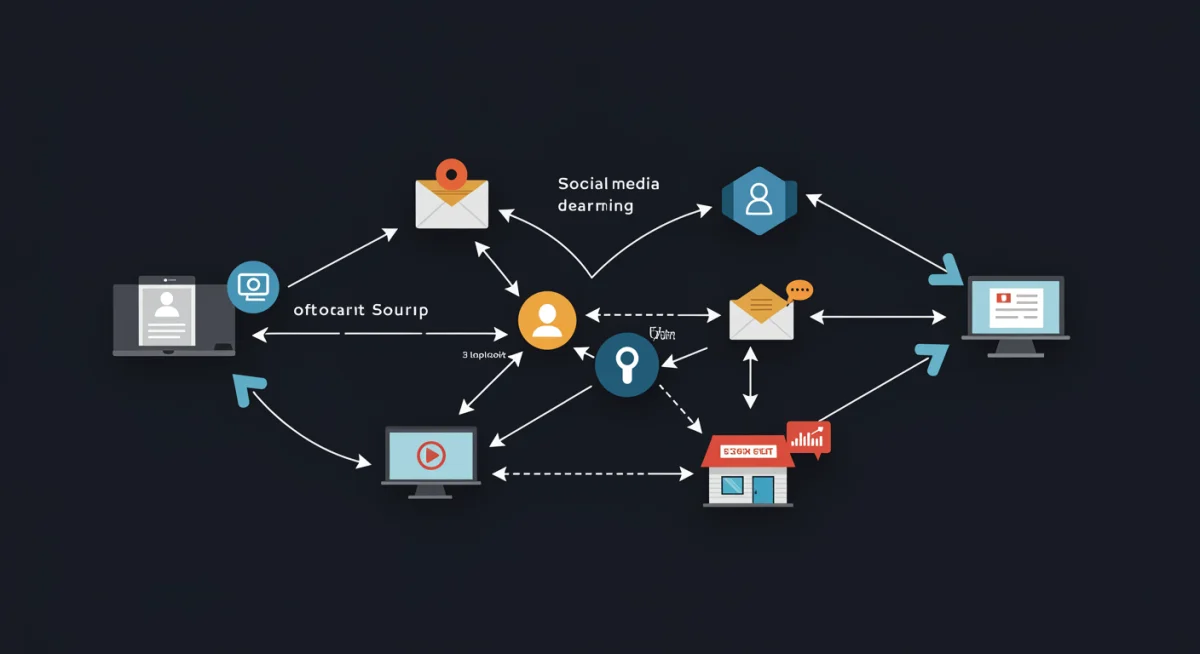
With clear objectives defined and comprehensive data centralized, the third step is to choose the most appropriate data attribution model. This is a critical decision, as the chosen model will dictate how credit is assigned to different marketing touchpoints and, consequently, how campaign performance is evaluated. As we move towards 2025, marketers must evolve beyond simplistic models to embrace more sophisticated approaches that reflect the complexity of modern customer journeys.
No single attribution model is universally perfect; the ‘right’ model depends on your specific business objectives, the length of your sales cycle, and the nature of your marketing channels. A blend of models or a custom approach often provides the most nuanced insights. The key is to move away from last-click or first-click models that fail to acknowledge the multi-touch nature of most conversions.
Exploring advanced attribution models
As digital marketing matures, so too do the methods for attributing value. Here are some models to consider for a comprehensive view of your cross-channel efforts:
- Linear attribution: Assigns equal credit to every touchpoint in the customer journey. This model acknowledges all interactions but doesn’t differentiate their importance.
- Time decay attribution: Gives more credit to touchpoints that occur closer in time to the conversion. This is useful for shorter sales cycles where recent interactions are more influential.
- Position-based (U-shaped) attribution: Allocates 40% credit to the first and last touchpoints, distributing the remaining 20% across middle interactions. This model recognizes the importance of both initial awareness and final conversion drivers.
- Data-driven attribution (DDA): Leverages machine learning to analyze all conversion paths and dynamically assign credit based on the actual impact of each touchpoint. This is often the most accurate and sophisticated model, adapting to unique customer behaviors.
For 2025, data-driven attribution (DDA) is becoming the gold standard, particularly for organizations with sufficient data volume. DDA models, often powered by platforms like Google Analytics 4, analyze your unique conversion paths to determine the actual contribution of each touchpoint. This approach offers unparalleled accuracy by evaluating the incremental impact of each interaction, moving beyond predefined rules to a model that learns from your specific customer data. Experimenting with different models and comparing their insights can also be highly beneficial, providing a more rounded understanding of your campaign effectiveness.
Step 4: analyzing insights and optimizing campaigns
Once an attribution model is in place and data is flowing, the real work of analysis begins. Step four focuses on dissecting the insights derived from your chosen model and translating them into actionable optimizations for your cross-channel campaigns. This iterative process of analysis and adjustment is crucial for continuously improving performance and maximizing ROI.
Effective analysis goes beyond simply looking at raw numbers. It involves identifying patterns, understanding correlations, and pinpointing areas of both strength and weakness within your marketing ecosystem. The goal is to move from ‘what happened’ to ‘why it happened’ and ‘what we can do about it.’ This requires a blend of analytical rigor and strategic thinking.
Translating data into action
Attribution data provides a powerful lens through which to view your marketing spend. It reveals which channels are most effective at different stages of the customer journey and which combinations of channels work best together. This information is invaluable for making informed decisions about budget allocation, creative development, and audience targeting.
- Budget reallocation: Shift spend from underperforming channels or stages to those showing higher attributed value.
- Content optimization: Tailor content and messaging to specific channels and customer journey stages based on their attributed impact.
- Channel synergy: Identify channel combinations that frequently lead to conversions and invest in optimizing their interplay.
- Audience refinement: Use attribution data to better understand which segments respond best to certain touchpoints and adjust targeting accordingly.
- Testing and experimentation: Implement A/B tests and multivariate tests based on attribution insights to validate hypotheses and discover new opportunities.
Continuous optimization is not a one-time task but an ongoing cycle. The digital landscape, customer behaviors, and market conditions are constantly evolving. Regular review of attribution data, ideally on a monthly or quarterly basis, allows marketers to stay agile and responsive. By consistently analyzing insights and making data-driven adjustments, you can ensure your cross-channel campaigns remain highly effective and aligned with your evolving business objectives, staying ahead in the competitive environment of 2025.
Step 5: forecasting future trends and adapting for 2025
The final step in our 5-step data attribution model for 2025 is not just about looking back at past performance but actively forecasting future trends and proactively adapting your strategies. The marketing landscape is in constant flux, driven by technological advancements, evolving consumer behaviors, and new privacy regulations. Staying ahead means anticipating these changes and building flexibility into your measurement and campaign planning.
For 2025 and beyond, several key trends will significantly impact how cross-channel campaign performance is measured. These include further advancements in AI and machine learning, the deprecation of third-party cookies, increased emphasis on data privacy, and the continued rise of new digital channels like the metaverse or advanced augmented reality integrations. Marketers must not only be aware of these shifts but actively plan for their implications.
Key trends shaping attribution in 2025
Anticipating these shifts is crucial for maintaining a competitive edge. Here are some areas to focus on for future-proofing your attribution strategy:
- AI and machine learning: Expect AI to play an even larger role in data-driven attribution, offering more sophisticated models that can predict future customer behavior and optimize campaign performance in real-time.
- Privacy-centric measurement: With the decline of third-party cookies, first-party data strategies, consent management platforms, and privacy-enhancing technologies will become paramount for accurate tracking and attribution.
- Cookieless solutions: Investigate and implement cookieless tracking solutions, such as server-side tagging, contextual advertising, and privacy-preserving APIs, to ensure continued data capture.
- Integrated customer experience: The line between marketing, sales, and service will blur further, requiring attribution models that can track and credit interactions across the entire customer experience, not just traditional marketing touchpoints.
- New channel integration: Be prepared to integrate data from emerging channels and immersive experiences into your attribution models, ensuring a comprehensive view as the digital world expands.
Adapting for 2025 means continuously refining your data infrastructure, exploring new measurement technologies, and fostering a culture of experimentation. It’s about building a resilient attribution framework that can evolve with the industry, ensuring that your ability to measure cross-channel campaign performance remains accurate, actionable, and aligned with the future of digital marketing. Proactive adaptation ensures sustained growth and strategic advantage in an increasingly complex environment.
| Key Step | Brief Description |
|---|---|
| Define Objectives & KPIs | Establish clear, measurable goals and key performance indicators to guide campaign measurement. |
| Centralize Data & Track | Aggregate data from all channels into a unified platform with robust, consistent tracking. |
| Select Attribution Model | Choose an appropriate model (e.g., Data-Driven) to accurately assign credit across touchpoints. |
| Analyze & Optimize | Translate attribution insights into actionable strategies to continuously improve campaign performance. |
Frequently asked questions about cross-channel campaign performance
Measuring cross-channel campaign performance is crucial because customers interact with brands across multiple touchpoints. Accurate measurement allows marketers to understand the true impact of each channel, optimize budget allocation, and refine strategies to improve overall ROI by crediting all contributing interactions, not just the last one.
Data-driven attribution (DDA) is an advanced model that uses machine learning to analyze all conversion paths and dynamically assign credit to each touchpoint based on its actual contribution. Unlike rule-based models, DDA adapts to unique customer behaviors, offering a more precise and accurate understanding of campaign effectiveness and optimizing resource allocation.
Centralizing marketing data can be achieved by integrating various platforms like CRM, web analytics, email marketing, and ad platforms into a unified system. Utilizing a Customer Data Platform (CDP) or a data warehouse can serve as a central hub, aggregating and normalizing data to create a single, comprehensive view of customer interactions across all channels.
Key Performance Indicators (KPIs) are essential for measuring cross-channel performance as they provide quantifiable metrics to track progress towards specific objectives. Without clearly defined KPIs, it’s impossible to objectively assess the success of campaigns, identify areas for improvement, or justify marketing spend across different channels effectively.
Privacy changes, particularly the deprecation of third-party cookies, will significantly impact attribution in 2025. Marketers will need to shift towards first-party data strategies, server-side tagging, and privacy-enhancing technologies. Adapting to these changes is crucial to maintain accurate tracking, ensure compliance, and continue to gain actionable insights into customer journeys.
Conclusion
Mastering the measurement of cross-channel campaign performance is no longer a luxury but a fundamental requirement for any successful marketing strategy in 2025. By meticulously following a 5-step data attribution model—defining clear objectives, centralizing robust data, selecting the right attribution model, continuously analyzing and optimizing, and proactively adapting to future trends—organizations can unlock profound insights into their marketing effectiveness. This holistic approach ensures that every marketing dollar is spent wisely, driving greater ROI and fostering deeper, more valuable customer relationships in an increasingly complex digital world. The future of marketing success lies in intelligent, integrated, and adaptive measurement.