International SEO for US Businesses: Global Reach 2025

International SEO for US businesses is crucial for capturing a 20% larger global audience by 2025, demanding comprehensive content localization and strategic market targeting for effective worldwide expansion.
Are you a US business owner looking to significantly expand your market footprint? The landscape of digital commerce is increasingly global, and understanding how to implement effective international SEO localization is no longer optional but a strategic imperative. By 2025, businesses that master this intricate art stand to capture a 20% larger audience, transforming their potential for growth and revenue.
Understanding the Core of International SEO for US Businesses
International SEO goes far beyond simply translating your website into different languages. It encompasses a holistic approach to optimizing your online presence for search engines across various countries and linguistic regions. For US businesses, this means strategically adapting your digital content and technical infrastructure to resonate with diverse global audiences, ensuring maximum visibility and relevance in local search results.
The goal is not just to be found, but to be understood and trusted by potential customers in their own cultural context. This involves a deep dive into local search behaviors, competitor landscapes, and regulatory environments, all of which vary significantly from one market to another.
Beyond Translation: The Nuances of Localization
- Linguistic Adaptation: This involves not just direct translation but transcreation, ensuring that messages, tone, and humor are culturally appropriate and impactful.
- Cultural Sensitivity: Understanding local customs, traditions, and taboos is critical to avoid missteps and build genuine connections with target audiences.
- Market-Specific Keyword Research: Keywords popular in the US might not be relevant or even used in other countries, necessitating dedicated research for each target market.
- Local Search Engine Preferences: While Google dominates in many regions, other search engines like Baidu in China or Yandex in Russia hold significant market share, requiring tailored strategies.
Ultimately, a robust international SEO strategy allows US businesses to transcend geographical boundaries, tapping into new revenue streams and fostering global brand recognition. It’s about building bridges, not just translating words, to connect with a worldwide customer base.
Strategic Market Identification and Research
Before embarking on any international SEO endeavor, US businesses must first identify which markets offer the most promising opportunities. This isn’t a shot-in-the-dark process but a data-driven decision, analyzing market potential, competitive intensity, and logistical feasibility. A thorough market research phase lays the groundwork for a successful global expansion, preventing wasted resources and maximizing return on investment.
Understanding where your product or service has the highest demand and the least saturation is paramount. This initial assessment will guide subsequent decisions on language, content, and technical optimizations.
Key Data Points for Market Selection
- Demand Analysis: Evaluate search volume for relevant keywords in different regions to gauge interest in your offerings.
- Competitive Landscape: Assess the strength and strategies of local competitors to identify potential entry barriers and unique selling propositions.
- Economic Indicators: Consider GDP per capita, internet penetration rates, and consumer spending habits to determine market viability.
- Logistical Feasibility: Factor in shipping, payment processing, legal restrictions, and customer support capabilities for each potential market.
Once target markets are identified, detailed research into local SEO trends, preferred social media platforms, and cultural communication styles becomes essential. This granular understanding ensures that localization efforts are precise and effective, directly addressing the needs and preferences of each specific audience.
Technical SEO Foundations for Global Reach
A strong technical SEO framework is the backbone of any successful international expansion. For US businesses aiming for global reach, this involves careful consideration of website architecture, hosting, and how search engines crawl and index content across different linguistic and geographical versions of your site. Ignoring these technical aspects can severely hinder visibility, even with perfectly localized content.
Implementing the correct technical configurations ensures that search engines understand which version of your content is intended for which audience, preventing duplicate content issues and improving local search rankings.
Implementing Hreflang Tags and Canonicalization
Hreflang tags are critical for multilingual and multinational websites. They tell search engines which URL serves which language and region, helping them display the correct version of a page to users based on their location and language preferences. Without proper hreflang implementation, international users might be served the wrong language version, leading to a poor user experience and higher bounce rates.
Canonicalization, especially in conjunction with hreflang, helps consolidate ranking signals for similar content, ensuring that search engines attribute authority to the primary version of a page. This is particularly important when content is localized, but still maintains significant similarities across different language versions.
- Correct Hreflang Implementation: Ensure tags are reciprocal and accurate, pointing to all available language/region variations.
- Server Location (Hosting): While not as critical as it once was, hosting your website in or near your target market can still offer slight speed advantages for local users, improving user experience.
- Domain Strategy: Choosing between ccTLDs (country code top-level domains like .de, .fr), subdomains (fr.example.com), or subdirectories (example.com/fr/) has SEO implications for geo-targeting and brand perception.
Establishing these technical foundations correctly from the outset prevents future headaches and ensures that all localized content has the best possible chance of ranking well in its respective target markets. It’s an investment that pays dividends in global visibility.
Content Localization: More Than Just Translation
Content localization is the art and science of adapting your content to be culturally and linguistically appropriate for specific target markets. For US businesses, this means moving beyond direct translation to truly resonate with local audiences, addressing their unique needs, preferences, and cultural nuances. This deep level of adaptation is what separates successful global brands from those that merely exist internationally.
Authenticity is key. Users can quickly detect content that feels generic or poorly translated, leading to a lack of trust and engagement. Effective localization builds bridges, fostering a sense of familiarity and relevance.
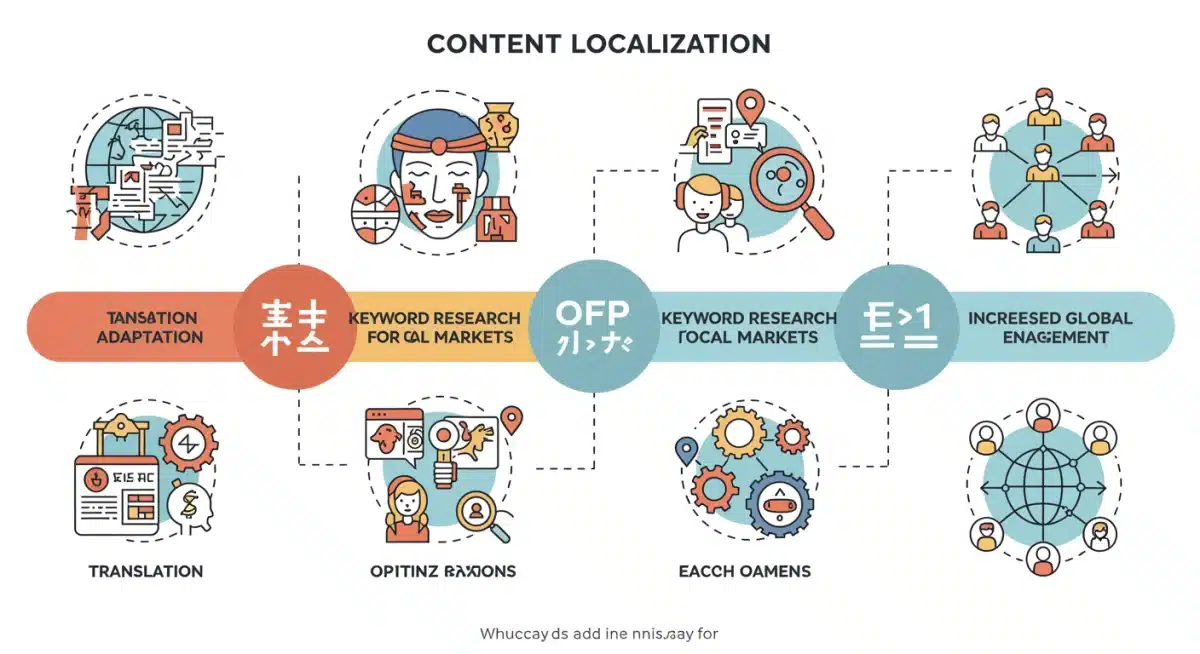
The localization process involves several critical steps, each contributing to the overall effectiveness of your international SEO strategy. It’s not a one-time task but an ongoing commitment to understanding and serving your global customers.
Crafting Culturally Relevant Content
- Transcreation for Marketing Messages: Recreating marketing copy to evoke the same emotions and impact in the target language as the original, rather than a literal translation.
- Localizing Visuals and Imagery: Ensuring images, videos, and graphics are culturally appropriate and appealing to the local audience, avoiding any potentially offensive or irrelevant elements.
- Adapting Calls-to-Action (CTAs): Tailoring CTAs to local purchasing habits and linguistic conventions to maximize conversion rates.
- Currency and Measurement Units: Displaying prices in local currency and using relevant measurement units (e.g., metric vs. imperial) is essential for user convenience.
By meticulously localizing content, US businesses can establish a strong, trustworthy presence in international markets, demonstrating a genuine understanding and respect for their global customers. This builds brand loyalty and drives sustained growth.
Local Link Building and Authority in International Markets
Just as with domestic SEO, building a strong backlink profile is crucial for international SEO. However, for US businesses expanding globally, this means acquiring high-quality backlinks from authoritative local websites in each target market. Local link building signals to search engines that your website is relevant and trusted within that specific region, significantly boosting your local search rankings.
The strategy for acquiring these links often differs from traditional domestic link building, requiring a nuanced approach tailored to each country’s digital ecosystem and relationship-building practices.
Strategies for Local Link Acquisition
- Partnerships with Local Businesses: Collaborating with complementary local businesses for content co-creation or resource sharing can generate valuable backlinks.
- Local Directories and Citations: Listing your business in prominent local online directories and industry-specific platforms helps build local relevance and authority.
- Sponsoring Local Events or Charities: Engaging with the local community through sponsorships can lead to natural mentions and links from local news outlets and event pages.
- Guest Blogging on Local Publications: Contributing high-quality, localized content to relevant industry blogs or news sites in the target country can secure powerful contextual backlinks.
Developing a robust local link building strategy is a long-term investment that strengthens your international SEO efforts. It enhances your website’s authority in specific regions, driving organic traffic and improving overall search performance in diverse global markets.
Measuring Success and Adapting Your International Strategy
Successfully navigating the complexities of international SEO for US businesses requires continuous monitoring, analysis, and adaptation. Simply launching localized content is not enough; you must track key performance indicators (KPIs) to understand what’s working, what’s not, and where adjustments are needed. This iterative process ensures your global strategy remains agile and effective in an ever-evolving digital landscape.
Regularly reviewing your international SEO performance allows you to optimize your efforts, identify new opportunities, and mitigate potential issues before they impact your global reach.
Key Metrics for International SEO Performance
- Organic Traffic by Region/Language: Track visits from target countries and language versions to assess the effectiveness of your localization efforts.
- Local Search Rankings: Monitor keyword positions in local search results to see how your content is performing against local competitors.
- Conversion Rates by Market: Analyze how well localized content and user experiences are converting visitors into customers in each target market.
- Bounce Rate and Time on Site: High bounce rates or short time on site for specific localized pages might indicate cultural misalignment or poor content relevance.
Utilizing tools like Google Analytics, Google Search Console, and various international SEO platforms can provide invaluable insights into your global audience’s behavior. This data empowers US businesses to refine their strategies, ensuring they are not just reaching a global audience, but truly engaging and converting them, ultimately capturing that desired 20% larger market share by 2025.
| Key Aspect | Brief Description |
|---|---|
| Content Localization | Adapting content culturally and linguistically beyond mere translation for global resonance. |
| Technical SEO Setup | Implementing hreflang tags and proper domain strategy for search engine clarity and geo-targeting. |
| Market Research | Identifying high-potential international markets based on demand, competition, and economic factors. |
| Local Link Building | Acquiring authoritative backlinks from local websites to boost regional search visibility. |
Frequently Asked Questions About International SEO
Content localization goes beyond literal translation by adapting your message culturally, considering local idioms, humor, and sensitivities. This ensures your content resonates authentically with the target audience, building trust and engagement, which direct translation often fails to achieve.
Hreflang tags are HTML attributes that tell search engines which language and geographical region a particular page is targeting. They are crucial for international SEO as they help search engines serve the correct language version of a page to users, preventing duplicate content issues and improving user experience.
Identifying target markets involves comprehensive research. Businesses should analyze demand for their products/services, assess the competitive landscape, evaluate economic indicators like internet penetration and consumer spending, and consider logistical feasibility for each potential country to prioritize expansion efforts effectively.
Absolutely. Local link building remains highly relevant. Acquiring high-quality backlinks from authoritative local websites in your target markets signals to search engines that your site is a credible and trusted resource within that specific region, significantly boosting your local search rankings and visibility.
Key metrics include organic traffic by region/language, local search rankings for target keywords, conversion rates per market, and user engagement metrics like bounce rate and time on site. Monitoring these KPIs helps refine strategies and ensure effective global audience engagement and conversion.
Conclusion
For US businesses, embracing international SEO and content localization is not merely about expanding; it’s about strategically positioning for significant growth in the global marketplace. By meticulously researching target markets, establishing robust technical foundations, crafting culturally resonant content, and building local authority, companies can confidently capture a 20% larger audience by 2025. This comprehensive approach transforms potential challenges into unparalleled opportunities, cementing a strong, lasting presence on the world stage.