Google Helpful Content System 2025: 3 Critical Checks

To successfully navigate Google’s Helpful Content System in 2025, content creators must meticulously assess their content for genuine user value, demonstrable expertise, and alignment with search intent, ensuring sustained ranking success.
In the ever-evolving landscape of search engine optimization, understanding and adapting to Google’s core algorithm updates is paramount. With the latest refinements to the Google Helpful Content System in 2025, marketers and content creators face new challenges and opportunities. This system prioritizes content created for people, not search engines, demanding a fundamental shift in strategy. Ensuring your content ranks now requires a deeper understanding of user intent, authority, and continuous relevance.
Understanding the Evolution of Google’s Helpful Content System
Google’s Helpful Content System has steadily evolved since its introduction, becoming a cornerstone of how content is evaluated and ranked. Initially aimed at reducing unhelpful, search-engine-first content, the 2025 updates bring increased sophistication and a more granular approach to assessing content quality. This means that generic, rehashed, or AI-generated content lacking genuine human insight will struggle more than ever to gain visibility.
The system’s evolution is a direct response to the proliferation of low-quality content that prioritizes keyword stuffing and algorithmic manipulation over providing real value to users. Google’s goal remains consistent: to reward content that genuinely helps people, answers their questions thoroughly, and demonstrates clear expertise. This focus has only intensified, pushing content creators to think beyond simple SEO tactics and embrace a user-centric methodology.
Key Milestones in Helpful Content Updates
- Initial Rollout (2022): Focused on broadly identifying and demoting content primarily created for search engines.
- Continuous Refinements (2023-2024): Integrated more deeply with core ranking systems, affecting a wider range of queries and content types.
- 2025 Enhancements: Heightened emphasis on E-E-A-T (Experience, Expertise, Authoritativeness, Trustworthiness) and nuanced understanding of user intent, making it more challenging for AI-generated content without human oversight to rank.
These updates underscore a long-term commitment from Google to improve search results by prioritizing high-quality, human-first content. For businesses and publishers, this translates into a need for robust content strategies that align with these principles, ensuring that every piece of content serves a clear purpose for the user.
Ultimately, the Helpful Content System’s evolution signifies a move towards a more discerning search algorithm. Content that genuinely helps, informs, or entertains its target audience, backed by credible sources and clear expertise, will be increasingly favored. Staying abreast of these changes is not just about avoiding penalties, but about building a sustainable and effective online presence.
Critical Check 1: Is Your Content Truly User-Centric?
The first and arguably most crucial check for your content in 2025 is to honestly assess if it is truly user-centric. This goes beyond merely including relevant keywords; it involves understanding the user’s underlying need, their questions, and how your content provides a comprehensive, satisfying answer. Google’s algorithm is increasingly adept at discerning whether content is written for people or primarily to manipulate search rankings.
To achieve user-centricity, you must step into your audience’s shoes. What problem are they trying to solve? What information are they seeking? Is your content presented in a way that is easy to understand, engaging, and actionable? Generic or superficial content, even if well-optimized for keywords, will fall short if it doesn’t address the user’s intent with depth and clarity.
Evaluating User Intent and Content Depth
One effective method is to analyze the search queries that lead users to your content. Are you answering the precise questions implied by those queries? Do you cover the topic thoroughly, anticipating follow-up questions, and providing solutions or further resources? Shallow content that skims the surface will not satisfy the Helpful Content System’s requirements.
- Identify the core user need: What specific problem or question does your content solve?
- Provide comprehensive answers: Go beyond basic information; offer depth, context, and actionable advice.
- Anticipate follow-up questions: Address related queries within the same content piece to keep users engaged.
- Consider user experience: Is the content easy to read, navigate, and visually appealing?
Moreover, user-centric content is often conversational and approachable. It avoids overly technical jargon where unnecessary and explains complex concepts in simple terms. The tone should be helpful and empathetic, making the reader feel understood and well-served. This human touch is what differentiates truly helpful content from automated or purely SEO-driven outputs.
Ensuring your content is user-centric means consistently auditing your existing material and planning new content with the audience at the forefront. This proactive approach not only satisfies Google’s guidelines but also builds trust and loyalty with your readership, leading to better engagement metrics and ultimately, improved rankings.
Critical Check 2: Demonstrating E-E-A-T (Experience, Expertise, Authoritativeness, Trustworthiness)
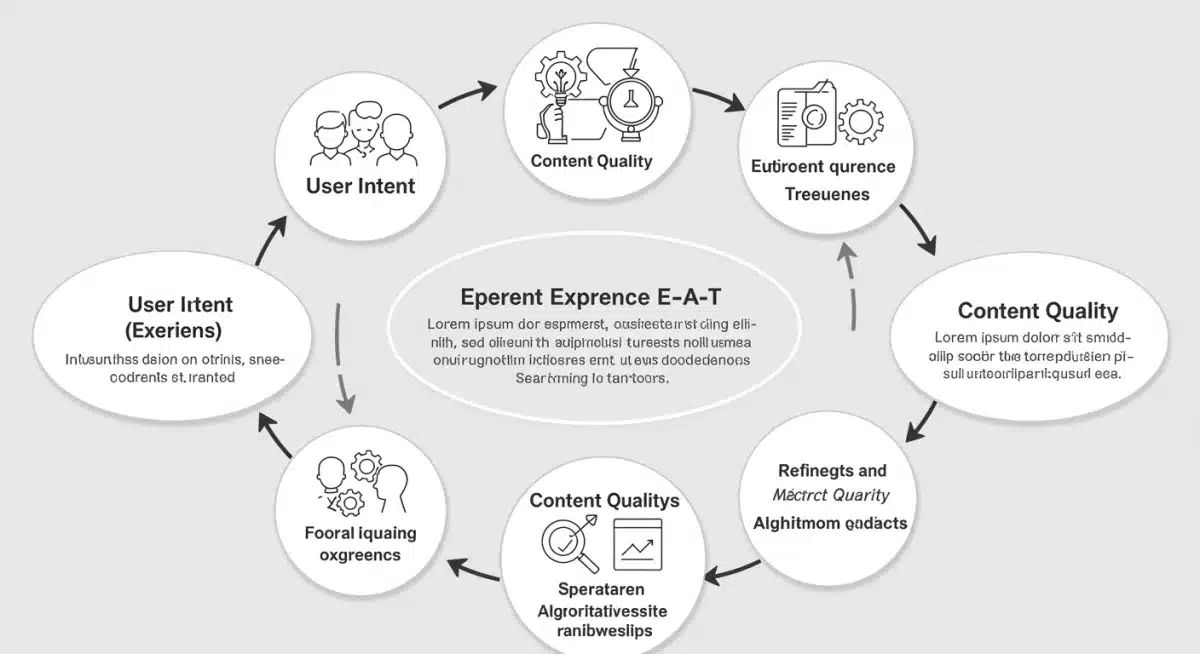
The second critical check revolves around Google’s E-E-A-T framework, which has been significantly amplified in the 2025 Helpful Content System updates. E-E-A-T stands for Experience, Expertise, Authoritativeness, and Trustworthiness, and it’s how Google assesses the credibility and quality of your content and its creators. For your content to rank, it must clearly demonstrate these attributes, especially for YMYL (Your Money or Your Life) topics.
Experience refers to direct, personal knowledge of the topic. Has the author actually done or used what they are writing about? Expertise means having high-level knowledge or skill in a particular field. This is often demonstrated through qualifications, professional roles, or a track record of insightful contributions. Authoritativeness is about being recognized as a go-to source for a topic, both by other experts and the general public. Finally, Trustworthiness is the foundation of E-E-A-T, ensuring that your content is accurate, honest, safe, and reliable.
Building and Showcasing Your E-E-A-T
To satisfy this critical check, you need to actively build and showcase your E-E-A-T. This isn’t just about having qualified authors; it’s about making that qualification evident to both users and search engines. Author bios, links to professional profiles, and citations of reputable sources all contribute to this. For businesses, transparent ‘About Us’ pages, customer testimonials, and clear contact information enhance trustworthiness.
- Feature author credentials: Clearly display author bios with relevant experience and qualifications.
- Cite reputable sources: Back up claims with links to authoritative studies, institutions, or experts.
- Showcase real-world experience: Include case studies, personal anecdotes, or practical examples.
- Maintain transparency: Provide clear contact information, privacy policies, and disclosure statements.
For content touching on YMYL topics—such as health, finance, or legal advice—the bar for E-E-A-T is exceptionally high. Google demands content from verifiable experts in these fields, ensuring that the information provided is not only accurate but also safe and beneficial to the user. Generic advice from anonymous sources will struggle immensely in these categories.
Ultimately, demonstrating E-E-A-T is about establishing credibility. It’s about ensuring that when a user lands on your page, they immediately recognize that the information comes from a reliable, knowledgeable, and experienced source. This builds confidence in your content, which is a powerful signal to Google’s ranking systems.
Critical Check 3: Continuous Content Refinement and Relevance
The third critical check for navigating Google’s Helpful Content System in 2025 is the commitment to continuous content refinement and maintaining relevance. Content is not a static asset; it needs to evolve with new information, changing user needs, and algorithm updates. Stagnant content, even if initially high-quality, can quickly become outdated, less helpful, and consequently, less visible in search results.
Google favors fresh, accurate, and comprehensive content. This doesn’t mean you need to rewrite everything constantly, but it does imply a strategic approach to content maintenance. Regularly reviewing and updating your existing articles ensures they remain current, address any new developments in their respective fields, and continue to provide the best possible answer to user queries.
Strategies for Maintaining Content Relevance
A proactive content audit schedule is essential. Identify your evergreen content pieces and schedule periodic reviews to update statistics, add new insights, or expand on topics where new information has emerged. This not only keeps your content relevant but also signals to Google that your site is a dynamic and reliable source of information.
- Schedule regular content audits: Identify and prioritize content for updates based on performance and relevance.
- Update statistics and facts: Replace outdated data with the latest information.
- Expand on evolving topics: Add new sections or details as industries and knowledge bases grow.
- Improve user experience: Enhance readability, add new media, or refine internal linking.
Furthermore, relevance extends to how your content aligns with current search trends and user behavior. Are there new keywords or long-tail queries emerging that your existing content could address with minor tweaks? Is there a shift in how users consume information in your niche that warrants a change in content format or presentation?
Continuous refinement also involves improving the overall user experience. This might include optimizing for mobile devices, enhancing page load speed, or ensuring accessibility. A well-maintained site with regularly updated, relevant content not only pleases Google but also provides a superior experience for your audience, fostering repeat visits and higher engagement.
By consistently refining and updating your content, you demonstrate a commitment to providing the most accurate and helpful information possible. This proactive approach is a strong signal to Google’s Helpful Content System that your site is a valuable resource, deserving of higher rankings and sustained visibility.
The Impact of AI-Generated Content on Helpful Content Ranking
The rise of AI-generated content has significantly influenced Google’s Helpful Content System, particularly with the 2025 updates. While AI tools offer efficiency, Google’s stance remains clear: content should be created for people, not primarily for search engine manipulation. The challenge now lies in discerning between AI-assisted content that genuinely adds value and AI-generated content that is merely a rehash of existing information, lacking originality or human insight.
Google has explicitly stated that the use of AI itself is not inherently a problem, but the quality and purpose behind the content are paramount. If AI is used to produce content that meets E-E-A-T standards, is truly helpful, and fulfills user intent, it can still rank. However, if AI is employed to mass-produce low-quality, generic, or factually incorrect content, it will almost certainly be penalized by the Helpful Content System.
Navigating AI in Content Creation
For content creators, this means a strategic integration of AI. Instead of relying on AI to generate entire articles without oversight, consider using it as a tool for research, brainstorming, outlining, or drafting. The critical step is always human review, editing, and enhancement to inject unique perspectives, personal experiences, and expert insights that AI alone cannot provide.
- Use AI for ideation and outlines: Leverage AI to kickstart your content creation process.
- Humanize AI drafts: Infuse personal experience, unique voice, and expert analysis into AI-generated text.
- Fact-check rigorously: Verify all information provided by AI tools to ensure accuracy and trustworthiness.
- Focus on value addition: Ensure the final content offers more than what a raw AI output could provide.
The 2025 updates to the Helpful Content System are more sophisticated in identifying patterns indicative of unhelpful, AI-spam content. This includes repetitive phrases, lack of original research, generic conclusions, and a general absence of depth or nuance. Content that reads like it was generated solely by a machine, without a human editor’s touch, will likely struggle to gain traction.
Therefore, the key is to ensure that any AI-assisted content production maintains the core principles of the Helpful Content System. The human element—experience, expertise, and a genuine desire to help the audience—must always be the driving force. This approach allows creators to leverage AI’s benefits while adhering to Google’s quality guidelines and ensuring their content remains competitive.
Implementing a Holistic Content Strategy for 2025
Successfully navigating Google’s Helpful Content System in 2025 demands more than just isolated adjustments; it requires a holistic content strategy. This means integrating user-centricity, E-E-A-T, and continuous refinement into every stage of your content lifecycle, from planning and creation to publication and maintenance. A fragmented approach will likely lead to inconsistent results and missed opportunities for ranking.
A holistic strategy begins with a deep understanding of your audience and their needs, extending to a clear articulation of your brand’s unique expertise and how it can serve that audience. It also involves establishing robust processes for content creation, ensuring that every piece is reviewed for quality, accuracy, and adherence to Helpful Content guidelines before it ever goes live.
Components of a Holistic Content Strategy
Consider your content as a cohesive ecosystem, where each piece supports the others and contributes to the overall authority and value of your site. This includes internal linking strategies that guide users deeper into your helpful content, as well as external outreach to build your site’s authority and trustworthiness within your niche. A well-thought-out strategy also incorporates feedback loops, allowing you to learn from user engagement and search performance to continually improve.
- Audience research: Continuously understand user needs, pain points, and search behaviors.
- E-E-A-T integration: Ensure all content is created or overseen by credible experts, with their credentials clearly visible.
- Content quality control: Implement rigorous editing and fact-checking processes.
- Regular updates and audits: Maintain a schedule for refreshing and optimizing existing content.
- Technical SEO alignment: Ensure your site’s technical foundation supports content visibility and user experience.
Furthermore, a holistic strategy for 2025 also recognizes the importance of diverse content formats. While articles are crucial, consider how videos, infographics, podcasts, and interactive tools can further enhance user experience and provide helpful information in varied ways. Each format should still adhere to the core principles of user-centricity and E-E-A-T.
By adopting a holistic content strategy, you create a resilient and adaptable framework that can withstand future algorithm changes. It shifts the focus from chasing individual ranking factors to building a genuinely valuable and authoritative online presence, which is the ultimate goal of Google’s Helpful Content System.
Future-Proofing Your Content for Google’s Evolving Algorithms
As Google’s algorithms continue to evolve, particularly with the ongoing refinements to the Helpful Content System, future-proofing your content strategy becomes imperative. This isn’t about predicting every specific update but rather building a foundation that is inherently aligned with Google’s overarching goal: to deliver the best possible search results to users. The 2025 updates reinforce the idea that content quality, user satisfaction, and genuine expertise are timeless ranking factors.
Future-proofing involves a mindset shift from short-term SEO hacks to long-term investment in quality content and user experience. It means creating a brand known for its reliability, depth of knowledge, and commitment to its audience. Such a reputation is far more resilient to algorithm shifts than a strategy built on transient tactics.
Key Principles for Long-Term Content Success
One of the most effective ways to future-proof is to focus on creating unique, original content that cannot be easily replicated by competitors or AI. This includes proprietary research, unique insights derived from experience, and original perspectives that add new value to a topic. Content that stands out for its individuality and depth will always have an advantage.
- Prioritize originality: Develop unique insights, conduct original research, and offer fresh perspectives.
- Invest in E-E-A-T: Continuously build and showcase the expertise and trustworthiness of your creators.
- Embrace user feedback: Use analytics and direct feedback to understand and address user needs.
- Adapt to new technologies: Integrate new tools and formats responsibly to enhance content delivery.
- Build a strong brand presence: Cultivate a reputation as a trusted authority in your niche.
Moreover, future-proofing your content means fostering a deep understanding of your audience’s evolving needs and behaviors. As technology changes, so too do the ways people search for and consume information. Staying agile and responsive to these shifts, while maintaining your core principles of helpfulness and expertise, will ensure your content remains relevant and discoverable.
Ultimately, Google’s Helpful Content System, particularly with its 2025 enhancements, is pushing the digital landscape towards a quality-first approach. By consistently producing content that is genuinely helpful, expertly crafted, and continuously refined, you not only meet Google’s current demands but also build a sustainable and authoritative online presence that is resilient to future algorithmic changes.
| Key Check | Brief Description |
|---|---|
| User-Centricity | Ensure content genuinely solves user problems and addresses their underlying search intent, going beyond mere keywords. |
| E-E-A-T Demonstration | Clearly showcase Experience, Expertise, Authoritativeness, and Trustworthiness through author credentials and credible sources. |
| Continuous Refinement | Regularly update and refresh content to maintain accuracy, relevance, and comprehensive coverage of evolving topics. |
| Strategic AI Use | Integrate AI for efficiency while ensuring human oversight injects unique insights and maintains high quality. |
Frequently Asked Questions About Google’s Helpful Content System
Google’s Helpful Content System is an algorithm designed to identify and reward content created primarily for people, not search engines. It aims to demote content that offers little value, is generic, or is solely designed to rank, ensuring users find more satisfying and useful information.
The 2025 updates bring increased sophistication and a deeper integration with core ranking systems. This means a stronger emphasis on E-E-A-T and user intent. Existing content needs rigorous auditing to ensure it meets these elevated quality standards and demonstrates clear value.
Yes, if used strategically. AI-generated content can rank if it is heavily edited, fact-checked, and enhanced by human expertise to provide unique value, demonstrate E-E-A-T, and truly satisfy user intent. Raw, unedited AI output is unlikely to perform well.
The critical checks for E-E-A-T involve demonstrating genuine experience, verifiable expertise, recognized authoritativeness through citations and reputation, and overall trustworthiness via transparency and accuracy. Clearly showcasing author credentials and reliable sources is key.
Content should be updated regularly, especially evergreen pieces. A good practice is to schedule periodic audits (e.g., quarterly or semi-annually) to refresh statistics, add new insights, address evolving user needs, and ensure all information remains accurate and comprehensive.
Conclusion
Navigating Google’s Helpful Content System in 2025 is less about chasing fleeting SEO trends and more about embracing fundamental principles of quality content creation. The three critical checks—user-centricity, E-E-A-T demonstration, and continuous content refinement—form the bedrock of a successful strategy. By prioritizing genuine value for your audience, showcasing credible expertise, and committing to ongoing content maintenance, you not only align with Google’s evolving algorithms but also build a more resilient and authoritative online presence. The future of ranking belongs to content that truly helps, informs, and engages its human audience.