Google Discover 2025: 3 Principles for 50% Organic Spike

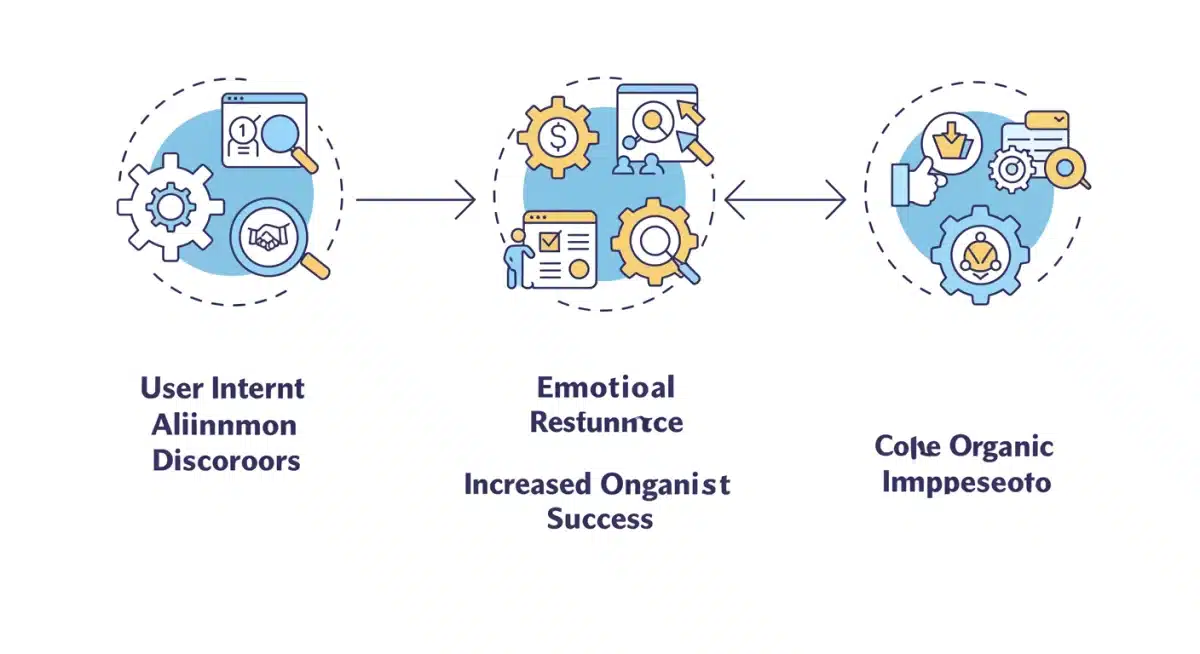
Achieving a 50% spike in organic impressions on Google Discover in 2025 necessitates a strategic focus on three core content principles: user intent alignment, emotional resonance, and demonstrable content authority.
In the rapidly evolving digital landscape, Google Discover 2025 presents an unparalleled opportunity for content creators to significantly boost their organic impressions. This personalized content feed, distinct from traditional search, rewards content that deeply resonates with individual user interests. Understanding and mastering its nuances can unlock substantial growth for your digital presence.
Understanding Google Discover’s Unique Algorithm in 2025
Google Discover operates on a fundamentally different premise than standard organic search. Instead of users actively searching for information, Discover proactively presents content it believes users will find interesting and relevant, based on their past activity, device settings, and broader interests. In 2025, this predictive capability has become even more sophisticated, leveraging advanced AI and machine learning to anticipate user needs before they are explicitly expressed.
To truly leverage this platform, content creators must shift their mindset from answering queries to anticipating desires. This involves a deep dive into audience psychology and behavioral patterns, moving beyond keywords to contextual relevance. The algorithm prioritizes fresh, engaging content that aligns with trending topics and individual user journeys.
The Evolution of User Intent Prediction
Google’s ability to predict user intent has grown exponentially. It no longer just looks at explicit search queries but analyzes a myriad of signals. This includes the types of articles read, videos watched, locations visited, and even apps used. For content creators, this means understanding the broader interests and lifestyle segments their audience falls into, not just their immediate information needs.
- Behavioral Analysis: Google tracks implicit signals like scrolling speed, time on page, and engagement with similar content categories.
- Contextual Understanding: Location, time of day, and current events all play a role in shaping the Discover feed.
- Topic Authority: Consistently producing high-quality content on specific topics builds your authority in Google’s eyes, increasing your chances of being featured.
The algorithm’s evolution emphasizes a holistic view of the user. Therefore, your content strategy must also be holistic, aiming to provide value across various touchpoints of a user’s digital life. This foundational understanding is crucial for any content looking to thrive on Discover.
In conclusion, Google Discover in 2025 is a sophisticated content delivery system built on predictive analytics. Success hinges on recognizing its proactive nature and tailoring content to align with unspoken user interests and behaviors, rather than merely responding to explicit queries.
Principle 1: Aligning Content with Deep User Intent and Context
The first and arguably most critical principle for success on Google Discover in 2025 is to deeply align your content with user intent and context. This goes beyond basic keyword research; it requires an empathetic understanding of what your audience truly cares about, what problems they are trying to solve, or what passions they are pursuing, even when they aren’t actively searching for it. Content that resonates on a personal level is far more likely to be featured and engaged with.
Consider the broader context of your audience’s lives. Are they commuters looking for quick reads? Parents seeking practical advice? Hobbyists exploring new techniques? Each scenario dictates a different content format, tone, and depth. Your content should feel like a timely, personalized recommendation from a trusted friend, not a generic article.
Leveraging Trends and Timeliness
Discover thrives on fresh, relevant content, particularly that which aligns with current trends or seasonal interests. This doesn’t mean chasing every fleeting fad, but rather understanding how your core topics intersect with broader conversations. For instance, if you write about finance, an article linking financial planning to upcoming tax season or holiday spending trends would be highly relevant.
- Seasonal Content: Plan content around holidays, major events, or seasonal shifts relevant to your niche.
- Trending Topics: Monitor news and social media for emerging conversations that you can credibly contribute to.
- Evergreen with a Twist: Update evergreen content with current data or a timely angle to give it new life.
Furthermore, the context of consumption matters. A user browsing Discover on a Monday morning commute might be looking for different content than someone relaxing on a Sunday afternoon. While you can’t control the exact moment of discovery, crafting diverse content types (short-form, long-form, visual) increases your chances of fitting various contexts.
Ultimately, aligning content with deep user intent and context means creating content that feels inherently valuable and timely to the individual, even without an explicit search prompt. This personal connection is the bedrock of Discover visibility.
Principle 2: Crafting Emotionally Resonant and Engaging Narratives
Beyond relevance, content on Google Discover must evoke an emotional response to truly capture attention and drive engagement. In a feed saturated with information, stories that connect on a human level stand out. This principle emphasizes the power of narrative, compelling visuals, and a tone that speaks directly to the reader’s feelings, aspirations, or challenges.
Emotionally resonant content isn’t necessarily about sensationalism; it’s about authenticity and relatability. It can be inspiring, thought-provoking, humorous, or deeply informative in a way that truly impacts the reader. The goal is to create a memorable experience that encourages further interaction, whether through a click, a share, or more time spent on your site.
The Power of Visual Storytelling
Visuals are paramount on Google Discover. They are often the first point of contact and can instantly communicate the emotional tone and subject matter of your article. High-quality, captivating images and videos are not just supplementary; they are integral to the storytelling process and essential for drawing users in.
- Compelling Thumbnails: Invest in eye-catching, high-resolution images that accurately represent your content and spark curiosity.
- Infographics and Data Visualization: Make complex information digestible and visually appealing, enhancing understanding and engagement.
- Video Integration: Embed relevant videos to offer a richer multimedia experience and cater to diverse consumption preferences.
The narrative itself should be structured to build anticipation and maintain interest. Use clear, concise language, and consider how your headlines and introductory paragraphs can hook the reader. A strong narrative arc, even in a short article, can create a lasting impression and foster a deeper connection with your audience.
In essence, crafting emotionally resonant and engaging narratives means going beyond mere facts. It involves weaving a story that captures the reader’s imagination, evokes feelings, and provides a compelling reason to explore your content further, significantly boosting your chances on Discover.
Principle 3: Establishing and Demonstrating Content Authority and Trustworthiness
In an era of ubiquitous information, Google places immense value on content authority and trustworthiness. This is particularly true for platforms like Discover, where users are presented with content they haven’t explicitly sought out. Establishing yourself as a credible source is the third crucial principle for securing consistent visibility and a significant spike in organic impressions in 2025.
Authority isn’t built overnight; it’s the result of consistent effort in producing high-quality, accurate, and well-researched content. It involves demonstrating expertise, citing reliable sources, and ensuring your content is factually sound. Google’s E-E-A-T guidelines (Experience, Expertise, Authoritativeness, Trustworthiness) are more relevant than ever for Discover success.
Showcasing Expertise and Credibility
Your content should clearly communicate who is behind the information and why they are qualified to speak on the topic. This includes author bios, clear editorial policies, and a commitment to accuracy. For businesses, this means highlighting your unique insights and industry leadership.
- Author Bios: Provide detailed author profiles with relevant credentials and experience.
- Citations and Sources: Back up claims with links to reputable studies, data, and expert opinions.
- Editorial Standards: Maintain high journalistic standards, including fact-checking and clear disclosure of any potential biases.
Beyond individual articles, your overall website authority plays a significant role. A well-maintained, secure website with a strong backlink profile signals trustworthiness to Google. User experience, site speed, and mobile responsiveness also contribute to how Google perceives your authority and willingness to provide value.
Ultimately, demonstrating content authority and trustworthiness means building a reputation as a reliable and knowledgeable source. This not only satisfies Google’s algorithms but, more importantly, builds lasting trust with your audience, encouraging repeat engagement and reinforcing your position in the Discover feed.
Optimizing Content Formats for Google Discover
While the three core principles guide content creation, the format in which that content is presented is equally vital for Discover success. Google Discover favors certain content types and structures that enhance user experience and facilitate quick consumption. Adapting your content to these preferred formats can significantly increase its chances of being featured and engaged with.
Think about how users interact with their mobile devices – often in short bursts, while multitasking. This necessitates content that is easily scannable, visually appealing, and delivers value efficiently. Long, dense blocks of text are less likely to perform well compared to content broken up with headings, bullet points, and strong visuals.
Beyond Text: Visuals, Videos, and Interactive Elements
Google Discover is a highly visual platform. Static text-only pages often get overlooked. Integrating rich media is not just a recommendation; it’s a necessity. This includes high-quality images, embedded videos, infographics, and even interactive elements that capture attention.
- High-Resolution Imagery: Always use captivating, relevant images that are optimized for fast loading on mobile.
- Short-Form Video: Create concise, engaging video content that can stand alone or complement a written piece.
- Web Stories: Explore Google Web Stories for immersive, tap-through content experiences that are highly favored on Discover.
Furthermore, ensure your content is structured for readability on mobile devices. This means using short paragraphs, clear headings (H2, H3), and bulleted or numbered lists to break up information. A smooth, intuitive user experience on mobile is a non-negotiable aspect of Discover optimization, directly impacting dwell time and engagement signals.
Optimizing content formats for Google Discover is about understanding and catering to mobile-first consumption habits. By embracing visual storytelling and user-friendly layouts, you can significantly enhance your content’s appeal and performance on this dynamic platform.
Measuring Success and Adapting Your Discover Strategy
To truly achieve a 50% spike in organic impressions on Google Discover, continuous measurement and adaptation are essential. This isn’t a one-time setup; it’s an ongoing process of analysis, learning, and refinement. Understanding which content performs best, identifying patterns, and iterating on your strategy will be key to sustained growth in 2025 and beyond.
Google Search Console provides invaluable data specifically for Discover performance. This includes impressions, clicks, and click-through rates (CTR). Beyond these metrics, consider tracking on-page engagement signals like scroll depth, time on page, and bounce rate, as these indirectly influence Discover’s algorithm.
Key Metrics and Analytics for Discover Performance
Focusing on the right metrics allows for data-driven decisions. While raw impressions are important, a high CTR indicates that your headlines and visuals are effectively capturing user interest. Analyzing which topics and formats yield the highest engagement can inform future content creation.
- Impressions: The total number of times your content was shown in Discover feeds.
- Clicks: The number of times users clicked on your content from Discover.
- Click-Through Rate (CTR): A crucial indicator of how appealing your content titles and visuals are.
- Average Position: While less direct than traditional search, understanding where your content appears can offer insights.
Don’t be afraid to experiment with different headline styles, image types, and content formats. A/B testing can provide clear insights into what resonates most with your audience on Discover. The digital landscape is always changing, and your Discover strategy should be agile enough to evolve with it, ensuring you remain competitive and visible.
Measuring success and adapting your Discover strategy is a continuous loop of creation, analysis, and optimization. By diligently tracking performance and being willing to iterate, you can maximize your organic impressions and achieve significant growth on Google Discover.
Overcoming Common Google Discover Challenges in 2025
While Google Discover offers immense potential, it also presents unique challenges that content creators must navigate. Unlike traditional SEO, where specific keyword targeting can yield predictable results, Discover’s algorithmic nature can sometimes feel opaque. Overcoming these hurdles requires a nuanced understanding of the platform and a commitment to quality and user experience.
One primary challenge is the unpredictable nature of content visibility. A piece that performs exceptionally well one day might see reduced impressions the next, even without significant changes. This highlights the importance of a consistent stream of high-quality content rather than relying on a few viral hits.
Addressing Volatility and Algorithmic Shifts
Google’s algorithms are constantly evolving. What worked effectively last year might be less impactful in 2025. Staying informed about Google’s updates and shifts in content preferences is crucial. This means regularly reviewing official Google guidance and observing trends in successful Discover content.
- Diversify Content Types: Don’t put all your eggs in one basket. Experiment with articles, videos, Web Stories, and image galleries.
- Focus on Core Principles: While algorithms change, the underlying principles of relevance, engagement, and authority remain constant.
- Monitor Performance Closely: Use Search Console data to spot trends and react quickly to drops or spikes in impressions.
Another challenge is the potential for content to be misunderstood by the algorithm. Ambiguous headlines or visuals might lead to your content being shown to an irrelevant audience, resulting in low engagement. Clarity and directness, while still maintaining emotional appeal, are vital to ensure your content reaches the right users.
Overcoming Google Discover challenges in 2025 demands resilience, adaptability, and a relentless focus on delivering genuine value to the user. By understanding the platform’s nuances and continuously refining your approach, you can mitigate risks and unlock its full potential for organic growth.
| Key Principle | Brief Description |
|---|---|
| User Intent Alignment | Create content that anticipates user interests, behaviors, and contextual needs, moving beyond explicit search queries. |
| Emotional Resonance | Craft narratives and use visuals that evoke feelings, build connection, and encourage deeper engagement with your audience. |
| Content Authority | Demonstrate expertise, trustworthiness, and credibility through well-researched, accurate content and clear authorial backing. |
| Format Optimization | Adapt content for mobile-first consumption with compelling visuals, short paragraphs, and interactive elements for Discover. |
Frequently asked questions about Google Discover
Google Search is pull-based, meaning users actively search for information. Discover is push-based, proactively showing content based on inferred user interests and past behavior, without explicit search queries. It uses advanced AI to anticipate what users want to see.
Content that is highly engaging, visually rich, timely, and emotionally resonant tends to perform best. This includes articles, videos, and especially Web Stories, all optimized for mobile consumption and deep user intent alignment.
Focus on the three key principles: aligning with deep user intent, crafting emotionally engaging narratives with strong visuals, and establishing clear content authority. Also, ensure your site is mobile-friendly and fast.
Yes, for many publishers and websites, Google Discover can be a significant source of organic impressions and traffic, often complementing traditional search. Its personalized nature can drive highly engaged users to your content.
You can track your content’s performance specifically within Google Search Console. It provides dedicated reports on Discover impressions, clicks, and click-through rates, offering valuable insights for optimization.
Conclusion
Leveraging Google Discover in 2025 is no longer an optional strategy but a critical component for any content creator aiming for significant organic growth. By diligently applying the three key principles—aligning with deep user intent, crafting emotionally resonant narratives, and establishing unwavering content authority—you can position your content for consistent visibility and a substantial increase in organic impressions. The future of digital discovery is personalized, and mastering these principles is your pathway to unlocking its full potential.