First-Party Data Strategies: 10% Higher Conversions by 2025
Implementing advanced first-party data strategies is crucial for businesses aiming to achieve a significant 10% higher conversion rate by 2025, providing a competitive edge through enhanced customer understanding and tailored engagement.
In an increasingly privacy-centric digital landscape, the strategic use of first-party data strategies has become paramount for businesses striving for sustainable growth and improved marketing performance. As the industry moves away from third-party cookies, understanding and leveraging your proprietary customer information is not just an advantage, but a necessity, especially when targeting ambitious goals like a 10% higher conversion rate by 2025.
The evolving landscape of data privacy and its implications
The digital marketing world is undergoing a significant transformation, driven primarily by heightened consumer awareness regarding data privacy and stricter regulatory frameworks. This shift is fundamentally reshaping how businesses collect, process, and utilize customer information, making the reliance on third-party data increasingly precarious and, in many cases, obsolete.
Consumers are more discerning about their personal data, demanding greater transparency and control. This sentiment, coupled with regulations like GDPR and CCPA, has forced a reevaluation of traditional data practices. Marketers who once relied heavily on third-party cookies for targeting and personalization are now faced with the challenge of finding alternative, privacy-compliant solutions. This evolution underscores the urgent need for a robust first-party data strategy.
The decline of third-party cookies
- Browser restrictions: Major browsers like Safari and Firefox have already phased out third-party cookies, with Google Chrome slated to follow suit, significantly impacting broad-reaching ad targeting.
- Consumer distrust: A growing number of consumers are opting out of tracking, reducing the effectiveness and reach of third-party data-driven campaigns.
- Regulatory pressure: Global privacy regulations continue to tighten, imposing severe penalties for non-compliance and pushing businesses towards more ethical data practices.
In this new era, businesses must pivot from external data reliance to cultivating their own rich, consensual, and directly collected customer data. This not only builds trust with consumers but also provides a more accurate and actionable view of their audience, paving the way for more effective personalization and, ultimately, higher conversion rates.
Defining first-party data and its distinct advantages
First-party data refers to information a company collects directly from its customers through its own channels. This can include data from websites, apps, CRM systems, email interactions, surveys, and in-store purchases. Unlike second-party or third-party data, first-party data is owned by the business, offering unparalleled accuracy, relevance, and exclusivity.
The primary advantage of first-party data lies in its direct relationship with the customer. This direct connection ensures higher data quality and relevance, as it reflects actual interactions and preferences with your brand. This intimate understanding allows for hyper-personalization, leading to more meaningful customer experiences and stronger brand loyalty.
Key benefits of first-party data
- Accuracy and reliability: Directly collected data minimizes inaccuracies and provides a truthful representation of customer behavior and preferences.
- Enhanced personalization: Deep insights enable highly tailored marketing messages, product recommendations, and customer service interactions.
- Cost-effectiveness: Eliminates the need to purchase external data, optimizing marketing budgets and improving ROI.
- Competitive edge: Unique data insights provide a distinct advantage, as competitors cannot easily replicate proprietary customer understanding.
By focusing on first-party data, businesses can build a foundation of trust with their audience, ensuring that data collection is transparent and value-driven. This approach not only complies with privacy regulations but also fosters a more engaged and loyal customer base, directly contributing to improved conversion metrics.
Strategic collection methods for robust first-party data
Effective first-party data collection is the cornerstone of a successful data strategy. It involves identifying various touchpoints where customers interact with your brand and implementing mechanisms to gather valuable information ethically and efficiently. This goes beyond simple website analytics, encompassing a holistic view of the customer journey.
A comprehensive collection strategy should prioritize transparency and offer clear value in exchange for data. Customers are more willing to share information when they understand how it will be used to enhance their experience. This can be achieved through various digital and physical channels, creating a rich tapestry of customer insights.
Diverse data collection channels
- Website and app analytics: Tracking user behavior, navigation paths, search queries, and content consumption provides rich behavioral data.
- CRM systems: Centralizing customer interactions, purchase history, and demographic information creates a unified customer view.
- Email and loyalty programs: Obtaining preferences, engagement metrics, and feedback through direct communication channels.
- Surveys and feedback forms: Directly asking customers about their needs, preferences, and satisfaction levels.
- Offline interactions: Capturing data from in-store purchases, events, and customer service calls, integrating it with digital profiles.
Implementing a consent management platform (CMP) is crucial to ensure compliance with privacy regulations and to build trust. A well-designed CMP allows customers to easily manage their data preferences, demonstrating a commitment to their privacy rights while still enabling valuable data collection for personalized experiences. This strategic approach to data gathering forms the bedrock for achieving higher conversion rates.
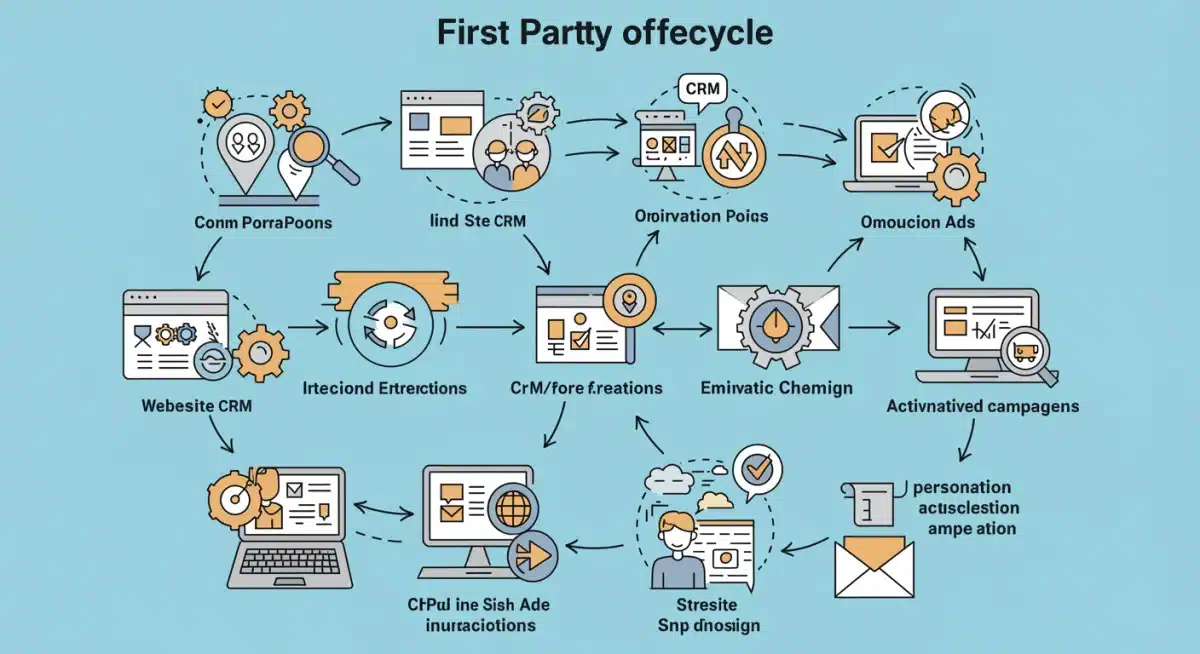
Activating first-party data for personalized customer journeys
Collecting first-party data is only half the battle; the true power lies in its activation. Activating this data means using it to inform and personalize every stage of the customer journey, from initial awareness to post-purchase engagement. This personalization is what drives relevance, enhances user experience, and ultimately boosts conversion rates.
By understanding individual customer preferences, behaviors, and needs, businesses can deliver tailored content, product recommendations, and offers that resonate deeply. This move away from generic, one-size-fits-all marketing significantly improves the likelihood of conversion, as customers feel understood and valued.
Personalization strategies powered by first-party data
- Dynamic content on websites: Displaying personalized product carousels, articles, or offers based on past browsing behavior.
- Targeted email campaigns: Sending automated emails with relevant promotions or abandoned cart reminders.
- Customized ad experiences: Serving ads that reflect a user’s previous interactions or expressed interests across different platforms.
- Proactive customer service: Using customer history to anticipate needs and provide more efficient support.
The key to successful data activation is integration. Ensuring that all customer data flows seamlessly across various marketing and sales platforms allows for a unified view of the customer and enables consistent, personalized experiences across all touchpoints. This cohesive approach significantly enhances the customer journey, directly contributing to the goal of achieving a 10% higher conversion rate.
Measuring the impact: metrics for conversion rate improvement
To truly understand the value of first-party data strategies, it is essential to establish clear metrics and consistently measure their impact on conversion rates. This involves tracking key performance indicators (KPIs) that directly reflect the effectiveness of your data-driven personalization efforts and identifying areas for continuous optimization.
Measuring success goes beyond just looking at the final conversion number; it involves analyzing the entire funnel and understanding how first-party data influences each stage. This granular analysis provides insights into what’s working and what needs adjustment, ensuring that your data strategy is continuously refined for maximum impact.
Key metrics to monitor
- Conversion rate by segment: Analyzing how different customer segments, identified through first-party data, convert.
- Customer lifetime value (CLTV): Assessing the long-term revenue generated by customers acquired or retained through data-driven strategies.
- Engagement rates: Tracking email open rates, click-through rates, and website interaction metrics for personalized content.
- Bounce rate and time on site: Evaluating how personalized experiences impact user engagement and retention on your digital properties.
Attribution modeling also plays a crucial role in understanding the contribution of various touchpoints influenced by first-party data. By accurately attributing conversions, businesses can optimize their marketing spend and refine their strategies to focus on the most effective channels. Regular analysis and reporting are critical for demonstrating ROI and driving ongoing improvements towards the 10% conversion rate goal by 2025.
Overcoming challenges and future-proofing your data strategy
While the benefits of first-party data are clear, implementing and maintaining an effective strategy comes with its own set of challenges. These include data silos, integration complexities, ensuring data quality, and staying ahead of evolving privacy regulations. Addressing these challenges proactively is vital for future-proofing your data initiatives.
A successful first-party data strategy requires a holistic approach that involves technology, processes, and people. It’s not a one-time project but an ongoing commitment to data governance, continuous improvement, and adapting to the dynamic digital landscape. Investing in the right tools and talent is crucial for long-term success.
Common challenges and solutions
- Data silos: Implement a Customer Data Platform (CDP) to unify data from various sources into a single, comprehensive customer view.
- Data quality: Establish data governance policies, regular audits, and validation processes to ensure accuracy and completeness.
- Consent management: Utilize robust Consent Management Platforms (CMPs) to manage customer preferences and ensure compliance with privacy laws.
- Skill gaps: Invest in training for marketing and analytics teams or hire data specialists to effectively manage and activate first-party data.
Looking ahead, businesses must continuously monitor regulatory changes and technological advancements to ensure their first-party data strategy remains effective and compliant. Building a culture of data-driven decision-making and fostering cross-departmental collaboration will be key to leveraging first-party data to its fullest potential and achieving ambitious conversion rate targets by 2025 and beyond.
| Key Aspect | Brief Description |
|---|---|
| Data Privacy Shift | The decline of third-party cookies and increasing regulations necessitate a pivot to first-party data for ethical and effective marketing. |
| First-Party Data Advantages | Directly collected data offers superior accuracy, personalization capabilities, cost-effectiveness, and a unique competitive edge. |
| Strategic Collection | Utilizing diverse channels (website, CRM, email) and consent management builds trust and a rich customer profile. |
| Conversion Metrics | Tracking conversion rates by segment, CLTV, and engagement rates helps measure the direct impact on business goals. |
Frequently asked questions about first-party data strategies
First-party data is information an organization collects directly from its own customers. This includes data from website interactions, app usage, CRM systems, customer surveys, and direct communications. It is considered the most valuable and reliable type of data because it comes straight from the source and reflects actual customer engagement with your brand.
First-party data is gaining importance due to the deprecation of third-party cookies by major browsers and stricter global privacy regulations. It offers a privacy-compliant way to understand customers deeply, enabling highly personalized experiences that are more effective than broad targeting based on third-party data, leading to better conversion rates.
By providing accurate and relevant insights into customer preferences and behaviors, first-party data allows businesses to create highly personalized marketing messages, product recommendations, and user experiences. This tailored approach resonates more with individual customers, making them more likely to convert, whether it’s a purchase, a sign-up, or another desired action.
Key challenges include integrating data from disparate sources (data silos), ensuring data quality and accuracy, obtaining explicit customer consent for data collection, and having the right technological infrastructure and skilled personnel. Overcoming these requires a strategic investment in Customer Data Platforms (CDPs) and robust data governance practices.
Essential tools for managing first-party data include Customer Relationship Management (CRM) systems for customer interactions, Customer Data Platforms (CDPs) for unifying data, web analytics platforms for behavioral insights, and Consent Management Platforms (CMPs) for privacy compliance. These tools work together to create a comprehensive and actionable data ecosystem.
Conclusion
The journey towards achieving a 10% higher conversion rate by 2025 is intricately linked to the successful adoption and optimization of first-party data strategies. As the digital landscape continues its rapid evolution, marked by increased privacy concerns and the phasing out of third-party cookies, businesses that proactively embrace and master their proprietary data will undoubtedly gain a significant competitive advantage. By focusing on ethical collection, intelligent activation, and continuous measurement, companies can build deeper customer relationships, deliver unparalleled personalized experiences, and drive sustainable growth in the years to come. The future of marketing is personal, and it’s powered by the data you own.