Ethical Data Collection 2025: Trust & Analytics for US Brands

By 2025, ethical data collection is paramount for U.S. brands to build trust and unlock valuable analytics insights, necessitating robust privacy frameworks and transparent practices.
In the rapidly evolving digital landscape, the approach to ethical data collection in 2025 is no longer just about compliance; it’s a fundamental pillar for U.S. brands aiming to build unwavering consumer trust and extract meaningful analytics insights. This shift demands a proactive and transparent strategy, moving beyond mere regulatory adherence to fostering genuine consumer relationships.
The Evolving Landscape of Data Privacy in the U.S.
The regulatory environment for data privacy in the United States continues to mature, presenting both challenges and opportunities for brands. What began with state-specific initiatives like CCPA and CPRA is now converging towards a more unified, albeit still complex, framework. Understanding these shifts is crucial for any brand operating within the U.S. market.
Consumer expectations have also risen significantly. Users are increasingly aware of their digital footprints and the value of their personal information. They demand greater transparency and control over how their data is collected, used, and shared. Brands that fail to meet these expectations risk not only regulatory penalties but also significant damage to their reputation and customer loyalty.
Key Regulatory Developments
Several legislative actions are shaping the future of data privacy. While a comprehensive federal privacy law remains elusive, states are forging ahead, creating a patchwork of regulations that brands must navigate.
- State-level expansion: More states are enacting their own privacy laws, often with unique requirements, making a “one-size-fits-all” approach increasingly difficult for national brands.
- Enforcement trends: Regulatory bodies are demonstrating a greater willingness to enforce privacy laws, leading to substantial fines for non-compliant organizations.
- Sector-specific rules: Industries like healthcare (HIPAA) and finance continue to have specialized data protection mandates, which are also undergoing modernization.
The push for data privacy isn’t just about avoiding penalties; it’s about establishing a competitive advantage. Brands that prioritize privacy are better positioned to earn and maintain consumer trust, a priceless asset in today’s digital economy. This involves not only understanding the letter of the law but also embracing its spirit.
Building Consumer Trust Through Transparency
In an age of data breaches and privacy scandals, trust has become the most valuable currency for U.S. brands. Transparency in data collection practices is not merely a good-to-have; it’s a non-negotiable imperative for long-term success. Consumers want to understand what data is being collected, why it’s being collected, and how it will be used.
Clear communication is at the heart of building this trust. Brands must move away from legalese-filled privacy policies that few understand, towards plain-language explanations that empower users to make informed decisions about their data. This involves making consent processes straightforward and unambiguous.
Strategies for Enhanced Transparency
Effective transparency goes beyond simply providing a privacy policy. It requires a commitment to openness throughout the entire data lifecycle. This means integrating transparency into every customer touchpoint and operational process.
- Simplified privacy notices: Create concise, easy-to-understand summaries of your data practices, complementing the full legal privacy policy.
- Granular consent options: Allow users to choose exactly what data they share and for what purposes, rather than relying on all-or-nothing agreements.
- Data dashboards: Provide customers with personalized portals where they can view, manage, and delete their collected data.
Ultimately, transparency fosters a sense of control for the consumer, which in turn nurtures trust. When brands are upfront about their data practices, consumers are more likely to engage willingly, knowing their privacy is respected. This proactive approach to trust-building can significantly enhance brand reputation and customer loyalty.
Maximizing Analytics Insights Responsibly
The quest for deeper analytics insights often feels at odds with ethical data collection, but the two are not mutually exclusive. U.S. brands can and must achieve both. The key lies in adopting methodologies that respect privacy while still yielding valuable, actionable intelligence. It’s about working smarter, not just collecting more data.
Responsible analytics begins with a clear purpose for data collection. Before gathering any data, brands should define specific, legitimate business objectives. This helps prevent the accumulation of unnecessary data, reducing privacy risks and improving data quality. Furthermore, focusing on aggregate or anonymized data can often provide sufficient insights without compromising individual privacy.
Privacy-enhancing Technologies and Techniques
Technological advancements offer powerful tools to balance analytics needs with privacy obligations. Implementing these can transform how brands approach data processing, ensuring compliance and ethical standards are met.
- Differential privacy: Add statistical noise to datasets to protect individual records while still allowing for accurate aggregate analysis.
- Homomorphic encryption: Perform computations on encrypted data without decrypting it, maintaining confidentiality throughout the analysis process.
- Federated learning: Train AI models on decentralized datasets without directly accessing raw user data, keeping information on individual devices.
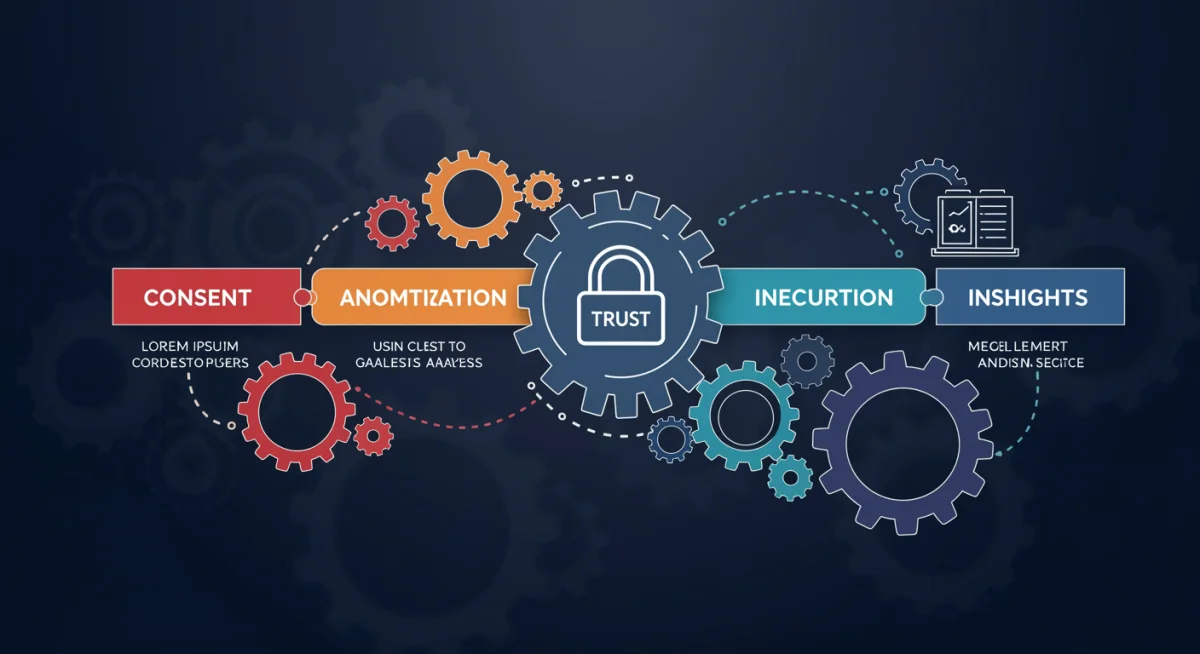
These techniques allow brands to extract valuable trends and patterns without exposing sensitive personal information. By embracing such privacy-enhancing methods, U.S. brands can continue to innovate with data, drive business growth, and maintain consumer confidence simultaneously. The future of analytics is inherently privacy-preserving.
Implementing Robust Data Governance Frameworks
Effective data governance is the bedrock upon which ethical data collection and responsible analytics are built. For U.S. brands, this means establishing comprehensive policies, processes, and structures to manage data throughout its lifecycle. A strong framework ensures consistency, accountability, and compliance across the entire organization.
Data governance isn’t a one-time project; it’s an ongoing commitment that requires continuous monitoring and adaptation. It involves defining data ownership, establishing data quality standards, and implementing clear protocols for data access, storage, and deletion. Without a robust framework, even the best intentions for ethical data practices can falter.
Essential Components of Data Governance
A well-structured data governance framework encompasses several critical elements that work in concert to uphold ethical standards and regulatory compliance.
- Data inventory and mapping: Understand what data you collect, where it’s stored, and how it flows through your systems.
- Policy development: Create clear policies for data collection, usage, retention, and deletion, aligned with privacy regulations and ethical principles.
- Role-based access control: Implement strict controls to ensure only authorized personnel can access sensitive data, based on their job functions.
- Regular audits and assessments: Conduct periodic reviews of data practices to identify vulnerabilities, ensure compliance, and refine procedures.
By establishing and maintaining a strong data governance framework, U.S. brands can proactively mitigate risks, ensure data integrity, and demonstrate a genuine commitment to ethical data practices. This foundational work provides the necessary structure for sustainable and trustworthy data operations.
The Role of Consent Management Platforms (CMPs)
In the intricate landscape of 2025, managing user consent effectively is a significant challenge for U.S. brands, especially with varied state regulations. Consent Management Platforms (CMPs) have emerged as indispensable tools, simplifying the process of obtaining, recording, and honoring user preferences regarding data collection and usage. These platforms are crucial for ensuring compliance and building consumer trust.
A well-implemented CMP allows brands to present clear, granular consent options to users, giving them control over their data. It also provides an auditable trail of consent, which is vital for demonstrating compliance to regulatory bodies. Beyond compliance, CMPs enhance the user experience by making privacy choices transparent and easy to manage, fostering a more positive relationship between brand and consumer.
Advantages of Modern CMPs
Investing in a robust CMP offers numerous benefits, streamlining operations while bolstering a brand’s ethical standing.
- Automated compliance: CMPs help automate the process of adhering to various privacy laws by dynamically adjusting consent requests based on user location and applicable regulations.
- Improved user experience: Intuitive consent banners and preference centers make it easy for users to understand and manage their data choices, reducing friction.
- Centralized record-keeping: All consent decisions are securely stored, providing a clear audit trail for compliance purposes.
- Enhanced data quality: When users willingly provide consent, the collected data is more likely to be accurate and relevant, leading to better analytics insights.
Ultimately, CMPs empower U.S. brands to navigate the complexities of consent gracefully, turning a compliance burden into an opportunity to strengthen customer relationships. They are a cornerstone of an ethical data collection strategy, ensuring that user autonomy is respected at every turn.
Future-Proofing Your Data Strategy for 2025 and Beyond
As 2025 unfolds, U.S. brands must adopt a forward-thinking approach to their data strategies to remain competitive and trusted. The pace of technological change and evolving consumer expectations demands continuous adaptation. Future-proofing means anticipating upcoming privacy trends, investing in flexible technologies, and fostering a culture of data ethics within the organization.
A key aspect of this involves moving beyond reactive compliance to proactive ethical leadership. Brands that actively champion consumer privacy will differentiate themselves in the market. This requires ongoing education for employees, regular review of data practices, and a willingness to embrace new privacy-enhancing innovations as they emerge.
Key Considerations for Long-Term Data Ethics
To ensure a resilient and ethical data strategy, brands should focus on several foundational principles that transcend current regulatory requirements.
- Privacy by design: Integrate privacy considerations into the very earliest stages of product and service development, rather than as an afterthought.
- Regular privacy impact assessments: Routinely evaluate how new data initiatives might affect user privacy and implement safeguards accordingly.
- Cross-functional collaboration: Ensure legal, marketing, IT, and product teams work together to embed ethical data practices across the entire business.
- Continuous learning and adaptation: Stay informed about emerging privacy technologies, regulatory changes, and evolving consumer sentiment.
By embedding these principles into their core operations, U.S. brands can build a data strategy that is not only compliant but also genuinely ethical and sustainable. This proactive stance will be critical for maintaining trust and maximizing analytics insights in the dynamic digital landscape of 2025 and beyond.
| Key Aspect | Brief Description |
|---|---|
| Evolving U.S. Regulations | Navigating a patchwork of state privacy laws and preparing for potential federal shifts. |
| Consumer Trust & Transparency | Building loyalty through clear communication and granular consent options. |
| Responsible Analytics | Utilizing privacy-enhancing technologies to gain insights without compromising privacy. |
| Data Governance & CMPs | Implementing robust frameworks and tools for consistent, ethical data management. |
Frequently Asked Questions About Ethical Data Collection
Ethical data collection is crucial because consumers are more privacy-aware, regulations are stricter, and trust is a key differentiator. Brands demonstrating ethical practices gain a competitive edge and avoid costly penalties, ensuring long-term customer loyalty and sustainable growth in the U.S. market.
Transparency can be achieved by providing clear, plain-language privacy notices, offering granular consent options, and giving users access to data dashboards. This approach empowers consumers to understand and control their data, fostering trust and a positive brand perception. Avoid complex legal jargon.
Privacy-enhancing technologies (PETs) like differential privacy or homomorphic encryption allow brands to extract valuable insights from data without exposing individual user identities. They enable responsible analytics by protecting sensitive information while still facilitating data-driven decision-making and innovation.
CMPs streamline the process of obtaining, managing, and documenting user consent for data collection. They help brands comply with diverse privacy regulations, provide an auditable record of consent, and enhance user experience by offering clear and manageable privacy preferences, building consumer confidence.
Future-proofing involves adopting a “privacy by design” philosophy, conducting regular privacy impact assessments, fostering cross-functional collaboration on data ethics, and continuously adapting to new technologies and regulations. This proactive approach ensures long-term compliance and maintains consumer trust.
Conclusion
The imperative for ethical data collection in 2025 for U.S. brands is clear: it is no longer an optional add-on but a foundational element for sustainable growth and competitive advantage. By prioritizing transparency, implementing robust data governance, leveraging privacy-enhancing technologies, and adopting a proactive, consumer-centric approach, brands can navigate the complex regulatory environment. This commitment not only ensures compliance but also cultivates deep-seated trust with consumers, transforming data from a potential liability into a powerful asset for maximizing analytics insights and fostering lasting brand loyalty.