Conquering Ad Fraud: Essential Tools for 2025 Paid Advertising

Effectively protecting your 2025 paid advertising budget from ad fraud requires leveraging essential tools that offer practical solutions to mitigate financial impact and ensure campaign integrity, safeguarding your marketing investments.
In the dynamic landscape of digital advertising, the threat of conquering ad fraud looms large, posing a significant risk to marketing budgets and campaign efficacy. As we look towards 2025, understanding and implementing robust protection strategies becomes not just an option, but a necessity for any business investing in paid advertising.
the pervasive threat of ad fraud in 2025
Ad fraud continues to evolve, becoming more sophisticated and harder to detect with traditional methods. In 2025, marketers face an increasingly complex array of fraudulent activities designed to siphon off advertising spend without delivering any genuine value. This pervasive threat not only wastes budget but also distorts campaign data, leading to misinformed strategic decisions.
Understanding the various forms of ad fraud is the first step in building an effective defense. From bot networks generating fake clicks and impressions to domain spoofing and ad stacking, fraudsters employ diverse tactics. These illicit activities can inflate metrics, deplete budgets prematurely, and ultimately undermine the trust in digital advertising as a viable marketing channel.
types of ad fraud impacting budgets
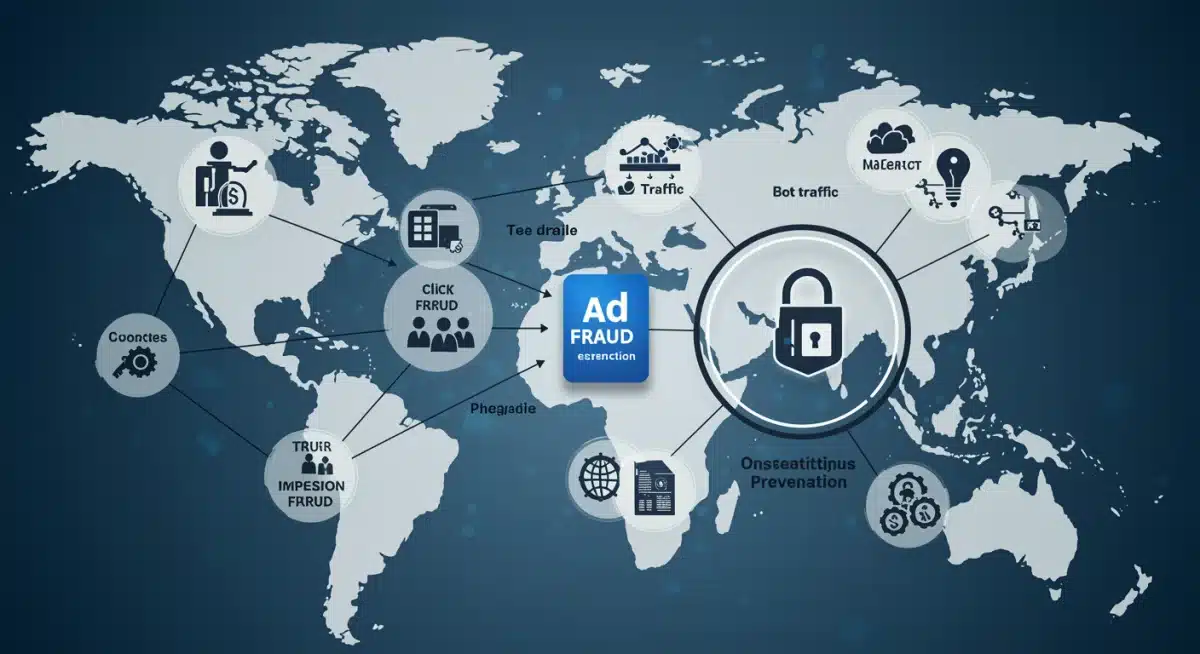
Ad fraud manifests in several forms, each designed to exploit vulnerabilities in the digital advertising ecosystem. Recognizing these types is crucial for effective prevention.
- Click Fraud: Automated bots or fraudulent human activity generating fake clicks on ads, exhausting budgets without actual user engagement.
- Impression Fraud: Falsely generated ad impressions, often through bots loading ads in hidden or non-viewable players, leading to charges for unseen ads.
- Domain Spoofing: Fraudsters disguising low-quality inventory as premium publisher sites to command higher ad prices, deceiving advertisers about where their ads are displayed.
- Ad Stacking: Multiple ads are loaded in a single ad placement, with only the top ad being visible to the user, while advertisers are charged for all stacked ads.
The financial ramifications of ad fraud are substantial, costing advertisers billions annually. Beyond the direct monetary loss, it also leads to skewed analytics, making it difficult to accurately assess campaign performance and optimize future strategies. Protecting against these threats is paramount for maintaining a healthy return on investment (ROI) in paid advertising.
the financial impact of unchecked ad fraud
The monetary drain caused by ad fraud is staggering, impacting businesses of all sizes from startups to multinational corporations. Every dollar spent on fraudulent clicks or impressions is a dollar lost that could have been invested in reaching genuine customers, developing better products, or enhancing customer experience. This direct financial loss is just the tip of the iceberg when considering the broader implications.
Beyond the immediate budget depletion, unchecked ad fraud corrupts data integrity. Marketers rely heavily on accurate performance metrics to make informed decisions about targeting, bidding strategies, and creative optimization. When these metrics are polluted by fraudulent activity, the entire decision-making process is compromised, leading to suboptimal campaign performance and wasted resources in the long run.
distorted analytics and strategic missteps
When fraudulent traffic skews your analytics, it paints a false picture of your campaign’s effectiveness. High click-through rates (CTRs) or conversion rates might seem impressive, but if they’re driven by bots, they don’t translate into actual business growth. This can lead to:
- Misallocation of Resources: Investing more in channels or campaigns that appear successful but are actually plagued by fraud.
- Ineffective Optimization: Making changes to creative or targeting based on fraudulent data, diverting efforts from what truly works.
- Damaged Brand Reputation: Ads appearing on low-quality, fraudulent sites can inadvertently associate your brand with undesirable content, eroding trust.
The long-term effects can include a significant reduction in ROI, a loss of confidence in digital marketing channels, and an overall decrease in marketing efficiency. Addressing ad fraud is therefore not merely about saving money, but about preserving the integrity and effectiveness of your entire marketing strategy.
essential tool 1: click fraud detection and prevention platforms
One of the most immediate and impactful steps to take in conquering ad fraud is implementing a robust click fraud detection and prevention platform. These specialized tools are designed to identify and block fraudulent clicks in real-time, ensuring that your ad spend reaches legitimate users. They employ advanced algorithms, machine learning, and IP blacklisting to distinguish between human interaction and bot activity.
These platforms integrate seamlessly with major ad networks like Google Ads, Facebook Ads, and others, providing a crucial layer of protection across your entire paid advertising portfolio. By actively monitoring traffic and filtering out suspicious clicks, they preserve your budget and enhance the accuracy of your campaign data. This proactive approach allows marketers to reallocate saved funds towards genuine engagement and optimize for better results.
how these platforms work
Click fraud detection platforms operate by analyzing various data points associated with each click. This includes IP addresses, user behavior patterns, device fingerprints, and geographical locations. When anomalies are detected that suggest non-human or malicious intent, the platform takes action.
- IP Blacklisting: Automatically blocking known fraudulent IP addresses from clicking on your ads.
- Behavioral Analysis: Identifying suspicious patterns, such as rapid clicks from the same source or unusual navigation paths, indicative of bot activity.
- Geo-targeting Validation: Ensuring clicks originate from the intended geographical regions, preventing fraud from outside target markets.
- Real-time Blocking: Preventing fraudulent clicks from being charged to your account as they happen, saving budget instantly.
The implementation of such a tool is a fundamental step for any advertiser serious about protecting their investments. It provides peace of mind and allows marketing teams to focus on strategy and creativity, rather than constantly worrying about fraudulent activity impacting their campaigns.
essential tool 2: advanced bot detection and traffic verification
Beyond simple click fraud, sophisticated bot networks represent a significant portion of ad fraud. These bots are often designed to mimic human behavior, making them harder to detect without specialized tools. Advanced bot detection and traffic verification platforms go a step further than basic click fraud solutions, employing more complex methodologies to identify and neutralize these threats.
These tools leverage behavioral biometrics, device recognition, and sophisticated machine learning models to analyze traffic patterns at a granular level. They can differentiate between legitimate human users and highly advanced bots that might bypass simpler detection methods. By verifying the authenticity of traffic, these platforms ensure that every impression and click is generated by a real, engaged user, thus maximizing the value of your ad spend.
leveraging AI and machine learning for superior defense
The core strength of advanced bot detection lies in its use of artificial intelligence and machine learning. These technologies enable platforms to continuously learn and adapt to new fraud tactics, staying ahead of evolving threats.
- AI-driven Anomaly Detection: Identifying unusual patterns in user behavior that deviate from typical human interaction, signaling potential bot activity.
- Device Fingerprinting: Creating unique identifiers for devices to track and block repeat offenders, even if they change IP addresses.
- Real-time Behavioral Analysis: Monitoring user interactions with ads and websites to confirm genuine engagement versus automated scripts.
By implementing such a tool, advertisers gain a comprehensive understanding of their traffic quality. This not only helps in preventing fraud but also provides clearer insights into audience engagement, allowing for more precise targeting and campaign optimization. It’s an indispensable component for securing your paid advertising budget in 2025.
essential tool 3: programmatic advertising fraud prevention
Programmatic advertising, while offering immense efficiency and reach, is also a fertile ground for ad fraud due to its automated nature and complex supply chain. Conquering ad fraud in this ecosystem requires specialized tools designed to scrutinize every step of the programmatic buying process. These platforms focus on verifying inventory quality, detecting domain spoofing, and ensuring ads are displayed in brand-safe environments.
Programmatic fraud prevention tools work by integrating directly into the ad exchange or demand-side platform (DSP) workflow. They analyze bid requests and impressions in real-time, cross-referencing data against extensive databases of known fraudulent publishers, domains, and IP ranges. This ensures that advertisers’ bids are placed on legitimate inventory, significantly reducing exposure to fraudulent traffic and non-human impressions.
securing the programmatic supply chain
The programmatic advertising supply chain involves numerous intermediaries, each presenting a potential vulnerability for fraudsters. Effective prevention tools address these weak points:
- Inventory Verification: Ensuring that ad impressions are served on legitimate websites and apps, matching the advertised publisher.
- Brand Safety Filters: Preventing ads from appearing next to inappropriate or harmful content, protecting brand reputation.
- Viewability Measurement: Confirming that ads are actually visible to users, rather than hidden or loaded off-screen by fraudulent tactics.
- Supply Path Optimization (SPO): Helping advertisers identify and prioritize trusted, high-quality inventory sources, reducing the risk of fraud.
Investing in programmatic fraud prevention is crucial for advertisers leveraging automated ad buying. It not only protects the budget from being wasted on fake impressions but also ensures that campaigns maintain their effectiveness and deliver true value by reaching real audiences in appropriate contexts.
essential tool 4: comprehensive fraud analytics and reporting
While prevention is key, understanding the nature and sources of ad fraud is equally vital for long-term protection. Comprehensive fraud analytics and reporting tools provide invaluable insights into the types of fraud impacting your campaigns, where it’s coming from, and how it’s evolving. These platforms offer detailed dashboards and customizable reports that allow marketers to visualize fraud patterns, identify trends, and make data-driven decisions to strengthen their defenses.
These tools often integrate with other prevention platforms, consolidating data to offer a holistic view of your ad fraud landscape. They provide actionable intelligence that can be used to refine targeting, adjust bidding strategies, and even challenge ad networks for refunds on fraudulent spend. The ability to analyze and report on fraud effectively transforms a reactive defense into a proactive strategy for conquering ad fraud.
actionable insights for continuous improvement
Effective fraud analytics goes beyond simply showing numbers; it provides context and recommendations for improvement.
- Granular Data Breakdown: Reports detailing fraud by source, campaign, device, geography, and more, pinpointing specific vulnerabilities.
- Trend Analysis: Identifying recurring patterns of fraudulent activity, allowing for predictive defense mechanisms.
- Refund Justification: Providing concrete evidence of fraud to ad networks, facilitating the recovery of wasted ad spend.
- Performance Benchmarking: Comparing your fraud rates against industry averages to gauge the effectiveness of your protection measures.
By regularly reviewing these reports, marketing teams can continuously adapt their strategies, block new fraudulent sources, and optimize their ad spend for maximum legitimate reach and impact. This continuous feedback loop is essential for maintaining a resilient defense against the ever-changing tactics of ad fraudsters.
integrating tools for a holistic defense strategy
No single tool can provide a complete solution to the multifaceted problem of ad fraud. The most effective strategy for conquering ad fraud in 2025 involves integrating a suite of tools that work in concert to offer a holistic defense. Combining click fraud prevention, advanced bot detection, programmatic fraud prevention, and comprehensive analytics creates a layered security approach that significantly reduces your exposure to fraudulent activity.
Integration means that data from one tool can inform and enhance the capabilities of another. For example, insights from fraud analytics can be used to fine-tune the blocking rules in a click fraud prevention platform. This synergy not only improves detection rates but also streamlines the management of your fraud prevention efforts, making your defense more efficient and powerful.
building a resilient anti-fraud ecosystem
A well-integrated anti-fraud ecosystem offers several key benefits:
- Enhanced Detection: Multiple layers of defense catch fraud that might slip past a single solution.
- Improved Efficiency: Automated processes and shared data reduce manual effort in monitoring and responding to fraud.
- Greater Accuracy: More robust data and analytics lead to better decision-making and campaign optimization.
- Maximized ROI: By minimizing wasted spend, more budget is directed towards legitimate engagement, boosting campaign effectiveness.
The future of paid advertising demands a proactive and integrated approach to fraud prevention. By strategically combining these essential tools, businesses can build a resilient defense that protects their financial investments, preserves data integrity, and ensures their marketing efforts yield genuine results in the competitive landscape of 2025.
| Key Tool | Primary Function |
|---|---|
| Click Fraud Prevention | Blocks fake clicks from bots and malicious sources in real-time. |
| Advanced Bot Detection | Identifies and neutralizes sophisticated bot networks mimicking human behavior. |
| Programmatic Fraud Prevention | Verifies inventory quality and ensures brand safety in programmatic ad buying. |
| Fraud Analytics & Reporting | Provides insights into fraud patterns for informed decision-making and strategy refinement. |
frequently asked questions about ad fraud protection
Ad fraud is evolving with more sophisticated tactics, making it harder to detect and increasingly costly. As digital ad spend rises, fraudsters are more incentivized, posing a greater threat to budget efficiency and data accuracy for 2025 campaigns.
They identify and block non-human clicks in real-time, preventing advertisers from paying for fraudulent interactions. By filtering out these invalid clicks, the platforms ensure that ad spend is directed only towards genuine potential customers, optimizing budget allocation.
While no tool can guarantee 100% detection against every evolving threat, advanced bot detection uses AI and machine learning to constantly adapt. This allows them to identify a wide range of sophisticated bots that mimic human behavior, offering robust protection.
Programmatic fraud prevention ensures ads are served on legitimate, brand-safe sites. It prevents ads from appearing alongside inappropriate content or on fake domains, thereby protecting a brand’s image and maintaining consumer trust in the advertising ecosystem.
Ad fraud is multi-faceted, requiring a layered defense. Integrating tools creates synergy, where each tool’s strengths compensate for others’ weaknesses, offering a more comprehensive, resilient, and adaptive protection against diverse and evolving fraud tactics.
conclusion
The journey towards conquering ad fraud is an ongoing commitment, not a one-time fix. As digital advertising continues its rapid evolution, so too do the methods employed by fraudsters. For businesses aiming to protect their 2025 paid advertising budgets, a multi-faceted approach leveraging specialized tools is indispensable. From real-time click fraud prevention and advanced bot detection to securing programmatic campaigns and providing comprehensive analytics, each tool plays a critical role in building a robust defense. By strategically implementing and integrating these solutions, advertisers can safeguard their investments, ensure data integrity, and ultimately drive more effective, genuine results from their digital marketing efforts, fostering a healthier and more trustworthy advertising ecosystem.