Authentic Brand Voice: Data-Driven Engagement 2025

Building an authentic brand voice in 2025 is crucial for increasing customer engagement by at least 15%, requiring a data-driven approach that aligns values with consumer expectations and personalizes interactions effectively.
In today’s hyper-connected digital landscape, simply having a product or service is no longer enough to capture consumer attention. Businesses must cultivate a distinct and relatable identity, and at the heart of this lies authentic brand voice. This isn’t just about what you say, but how you say it, reflecting your core values and resonating deeply with your target audience. In 2025, a data-driven approach to developing and refining this voice is paramount, aiming to increase engagement by a significant 15%.
Understanding the Essence of Authentic Brand Voice
An authentic brand voice goes beyond mere slogans or marketing copy; it’s the consistent personality and emotion conveyed in all your communications, both online and offline. It’s about being genuine, transparent, and true to your brand’s core values. Consumers today are increasingly savvy and can quickly discern between genuine interactions and contrived messaging. A truly authentic voice builds trust, fostering a deeper connection that transcends transactional relationships.
Developing this voice requires introspection and a clear understanding of who your brand is, what it stands for, and the unique value it brings to the market. It’s the embodiment of your brand’s mission, vision, and values, translated into words, tone, and style. Without authenticity, even the most innovative products can struggle to gain traction in a crowded marketplace.
Defining Your Brand’s Core Identity
Before you can articulate your brand’s voice, you must first define its core identity. This involves a deep dive into your brand’s purpose, what problems it solves, and the unique benefits it offers. Consider your brand’s history, its aspirations, and the emotional impact you want to create.
- Purpose: Why does your brand exist beyond making profit?
- Values: What principles guide your brand’s decisions and actions?
- Personality: If your brand were a person, what would its characteristics be?
- Mission: What is your brand striving to achieve in the long term?
Once these foundational elements are clearly established, they will serve as the guiding principles for every aspect of your brand’s communication, ensuring consistency and authenticity across all touchpoints.
In conclusion, an authentic brand voice is not just a marketing tactic; it’s a fundamental pillar of brand identity. It’s the consistent expression of your brand’s true self, vital for building trust and resonating with modern consumers who prioritize genuine connections. This deeper understanding forms the bedrock for all subsequent data-driven strategies.
Leveraging Data for Brand Voice Development
In 2025, a truly effective brand voice isn’t just crafted; it’s informed and refined by data. Moving beyond intuition, businesses can now tap into a wealth of information to understand their audience, analyze market trends, and measure the impact of their communication strategies. This data-driven approach allows for precise adjustments, ensuring the brand voice evolves to remain relevant and impactful.
The key lies in collecting and interpreting both quantitative and qualitative data. Quantitative data, such as website analytics, social media engagement rates, and customer feedback surveys, provides measurable insights into what performs well. Qualitative data, gathered through focus groups, customer interviews, and sentiment analysis, offers a deeper understanding of audience perceptions and emotional responses.
Audience Segmentation and Persona Development
Understanding your audience is paramount. Data allows you to segment your audience into distinct groups based on demographics, psychographics, behavior, and preferences. This segmentation is crucial for developing detailed buyer personas, which are semi-fictional representations of your ideal customers.
- Demographic Data: Age, gender, location, income, education.
- Psychographic Data: Interests, values, attitudes, lifestyle.
- Behavioral Data: Purchase history, website interactions, content consumption.
- Feedback Data: Survey responses, social media comments, reviews.
By analyzing this data, you can identify patterns and preferences that inform not only what you say, but also how you say it, ensuring your brand voice resonates specifically with each segment. This precision is a cornerstone of increasing engagement.
Furthermore, sentiment analysis tools can process vast amounts of text from social media, reviews, and forums to gauge public perception of your brand and competitors. This provides invaluable insights into the language and tone that resonate positively or negatively with your target audience, allowing you to tailor your brand’s communication style accordingly and avoid missteps. The iterative process of data collection, analysis, and refinement ensures that your brand voice remains dynamic and aligned with consumer expectations.
In essence, data serves as the compass guiding your brand voice development. It provides objective insights into audience preferences, market dynamics, and communication effectiveness, enabling you to build a voice that is not only authentic but also strategically impactful and capable of driving significant engagement.
Crafting a Consistent and Engaging Tone
Consistency is the bedrock of an effective brand voice. Once your core identity and data-driven insights are established, the next critical step is to craft a tone that is consistently applied across all communication channels. This consistency builds familiarity and trust, making your brand instantly recognizable and relatable. A fluctuating tone can confuse your audience and dilute your brand’s message, hindering engagement efforts.
The tone of your brand voice should reflect your brand’s personality. Is your brand playful and witty, or serious and authoritative? Is it empathetic and supportive, or bold and innovative? These characteristics should be evident in every piece of content, from social media posts and email newsletters to website copy and customer service interactions. Developing a comprehensive brand style guide is essential for maintaining this consistency across different teams and platforms.
Developing a Brand Style Guide
A detailed brand style guide acts as the definitive rulebook for your brand’s communication. It outlines not just visual elements, but also the specific linguistic choices that define your brand voice. This guide ensures that every team member, from marketing to customer support, speaks with a unified voice.
- Vocabulary: Specific words or phrases to use or avoid.
- Grammar and Punctuation: Preferred style guide (e.g., AP style, Chicago Manual of Style).
- Tone Descriptors: Adjectives that describe your brand’s desired tone (e.g., friendly, expert, humorous).
- Examples: Good and bad examples of brand communication.
By providing clear guidelines and examples, a style guide empowers your team to consistently embody the brand’s personality, fostering a cohesive and impactful communication strategy. This internal alignment is crucial for projecting authenticity externally.
Furthermore, regular training and workshops for all employees who interact with customers or create content can reinforce the importance of adhering to the brand style guide. This ensures that the authentic brand voice is not just a document but a living, breathing aspect of your organizational culture. When every interaction reflects the same consistent tone, customers develop a clearer understanding and deeper appreciation for your brand, ultimately driving higher engagement.
In conclusion, crafting a consistent and engaging tone is about translating your brand’s personality into every communication. A robust brand style guide, coupled with continuous training, ensures this consistency, building recognition and trust that are vital for fostering strong customer connections and increasing engagement.
Personalization and Emotional Connection
In 2025, the ability to personalize interactions and forge genuine emotional connections is a powerful driver of engagement, especially when underpinned by an authentic brand voice. Consumers are no longer satisfied with generic messaging; they expect brands to understand their individual needs and communicate with them in a way that feels personal and relevant. Data plays a crucial role in enabling this level of personalization, transforming broad marketing efforts into tailored conversations.
Personalization goes beyond simply addressing a customer by their first name. It involves understanding their past behaviors, preferences, and even their emotional state, then using this insight to deliver content and messages that truly resonate. When a brand demonstrates this level of understanding, it fosters a sense of being valued and heard, deepening the emotional bond with the consumer.
Implementing Data-Driven Personalization Strategies
Leveraging customer data to personalize experiences is not just about technology; it’s about empathy. By analyzing browsing history, purchase patterns, and engagement with previous communications, brands can anticipate needs and offer highly relevant content. This approach makes interactions more meaningful and less intrusive.
- Dynamic Content: Website content that changes based on user behavior.
- Personalized Email Campaigns: Tailored product recommendations and offers.
- Targeted Social Media Ads: Messages designed for specific audience segments.
- AI-Driven Chatbots: Providing relevant and empathetic responses.
These strategies, when executed with an authentic brand voice, transform routine interactions into opportunities for deeper connection. The brand’s personality shines through, even in automated responses, making the experience feel more human and less transactional.
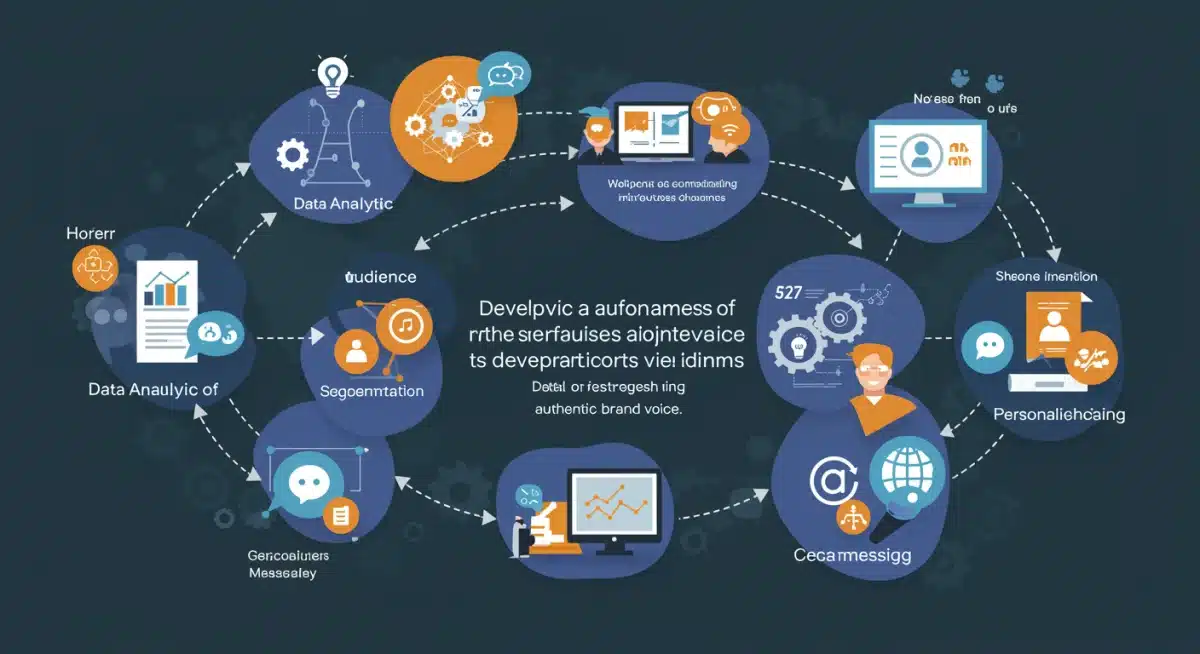
Moreover, emotional connection is built through storytelling that aligns with your brand’s values and resonates with your audience’s aspirations and challenges. By sharing authentic narratives, brands can evoke emotions, build empathy, and create a sense of community. This storytelling should be woven into all communication, reinforcing the brand’s purpose and values. When consumers feel an emotional tie to a brand, their loyalty and engagement naturally increase, directly contributing to the targeted 15% engagement growth.
Ultimately, personalization and emotional connection are two sides of the same coin when it comes to brand engagement. By using data to understand individual customers and communicating with an authentic voice that speaks to their emotions, brands can create lasting relationships that drive loyalty and advocacy.
Measuring and Optimizing Brand Voice Impact
Building an authentic brand voice is an ongoing process, not a one-time project. To ensure it consistently drives engagement and meets objectives, continuous measurement and optimization are essential. In 2025, relying on data to track the impact of your brand voice allows for agile adjustments, ensuring your communication remains relevant, effective, and truly authentic. This iterative approach is critical for achieving and sustaining the target 15% increase in engagement.
Measuring brand voice impact involves more than just tracking sales figures. It requires a holistic view of how your audience perceives your brand and how they interact with your content. Key performance indicators (KPIs) should be established to monitor aspects like sentiment, engagement rates, brand recall, and customer loyalty. These metrics provide tangible evidence of your brand voice’s effectiveness and areas for improvement.
Key Metrics for Brand Voice Effectiveness
To effectively measure the impact of your brand voice, focus on a combination of quantitative and qualitative metrics. These metrics offer a comprehensive view of how your audience is receiving and responding to your communication.
- Social Media Engagement: Likes, shares, comments, mentions, sentiment analysis.
- Website Analytics: Time on page, bounce rate, conversion rates influenced by copy.
- Customer Feedback: Survey responses, reviews, direct feedback on communication style.
- Brand Mentions and Sentiment: Tracking brand mentions across platforms and analyzing the tone of these conversations.
- Email Open and Click-Through Rates: Indicating resonance of email subject lines and content.
Regularly reviewing these metrics allows you to identify trends, pinpoint successful communication tactics, and detect potential misalignments in your brand voice. This data-driven feedback loop is indispensable for continuous improvement.
Moreover, A/B testing different variations of your brand voice in specific campaigns can provide direct insights into what resonates most effectively with your audience. For example, testing two different tones in email subject lines can reveal which approach drives higher open rates. This empirical evidence allows you to refine your brand voice with precision, moving beyond assumptions and towards verifiable impact. The goal is to continuously optimize your communication to deepen connections and ensure your brand voice remains a powerful asset in driving engagement and achieving your business objectives.
In summary, measuring and optimizing brand voice impact is a continuous cycle of analysis and refinement. By leveraging a comprehensive set of metrics and embracing A/B testing, brands can ensure their voice remains authentic, engaging, and highly effective in fostering strong customer relationships.
Challenges and Future Trends in Brand Voice
While the benefits of an authentic brand voice are clear, the path to achieving and maintaining it in 2025 is not without its challenges. The rapidly evolving digital landscape, coupled with shifting consumer expectations, demands constant vigilance and adaptation. Understanding these challenges and anticipating future trends is crucial for any brand aiming to sustain high engagement and relevance.
One significant challenge is navigating the proliferation of AI-generated content. As AI tools become more sophisticated, the line between human and machine communication blurs. Brands must ensure that their AI-powered interactions, such as chatbots or automated email responses, consistently reflect their authentic voice and don’t come across as generic or robotic. Maintaining a human touch and genuine empathy in an increasingly automated world is a delicate balance.
Overcoming AI Integration Challenges
Integrating AI into brand communication requires careful consideration to preserve authenticity. The goal is to augment human capabilities, not replace genuine connection.
- AI Training Data: Ensure AI models are trained on content that embodies your authentic voice.
- Human Oversight: Implement human review for critical AI-generated communications.
- Transparency: Be transparent with customers when they are interacting with AI.
- Personalization with AI: Use AI to deliver personalized experiences that still feel human-crafted.
By thoughtfully integrating AI, brands can enhance efficiency without sacrificing the authenticity that consumers crave. The focus remains on delivering value and fostering connection, regardless of the technology used.
Looking ahead, future trends will likely emphasize even greater personalization, hyper-contextualized messaging, and the rise of conversational commerce, all of which will place new demands on brand voice. Brands will need to be agile, ready to adapt their voice to new platforms and interaction models while always staying true to their core identity. The ability to engage in dynamic, real-time conversations with customers, where the brand’s personality shines through, will be a key differentiator. Furthermore, ethical considerations around data privacy and responsible AI use will become increasingly intertwined with brand authenticity, shaping how brands communicate and build trust.
In conclusion, while the future presents challenges, it also offers immense opportunities for brands willing to embrace data-driven strategies and ethical AI integration. By staying attuned to evolving trends and continuously refining their authentic brand voice, businesses can navigate these complexities and continue to deepen customer engagement.
Building Trust and Loyalty Through Authenticity
In an era marked by information overload and skepticism, building trust and fostering loyalty are paramount for brand longevity and success. An authentic brand voice serves as a powerful conduit for achieving these goals, creating a foundation of credibility that resonates deeply with consumers. When a brand consistently communicates with honesty, transparency, and genuine empathy, it cultivates a loyal community that not only engages with its content but also advocates for its values.
Trust is not something that can be bought; it is earned through consistent, transparent actions and communications. An authentic brand voice signals that a brand is genuine, stands by its promises, and genuinely cares about its audience. This leads to a virtuous cycle: trust leads to loyalty, and loyalty, in turn, drives sustained engagement and positive word-of-mouth, contributing significantly to the targeted 15% engagement increase.
Strategies for Trust-Building Communication
To effectively build trust and loyalty through your brand voice, focus on communication strategies that prioritize transparency, empathy, and consistency. These elements are crucial for demonstrating genuine care and commitment to your audience.
- Transparency: Be open about your processes, values, and even your mistakes.
- Empathy: Show understanding and compassion for your customers’ needs and challenges.
- Consistency: Maintain a unified message and tone across all touchpoints.
- Ethical Storytelling: Share stories that reflect your brand’s values and positive impact.
By actively practicing these communication principles, brands can solidify their reputation as trustworthy entities, fostering stronger emotional bonds with their audience. This proactive approach to trust-building is far more effective than reactive measures when issues arise.
Moreover, encouraging user-generated content and actively engaging with customer feedback, both positive and negative, further reinforces authenticity. When brands listen, respond genuinely, and incorporate customer insights, it demonstrates that their voice is not just a monologue but a true dialogue. This participatory approach transforms customers into co-creators and advocates, strengthening their loyalty and amplifying the brand’s message organically. The long-term impact of a trusted and loved brand voice extends far beyond immediate engagement metrics, building a resilient brand identity that withstands market fluctuations and competitive pressures.
In conclusion, building trust and loyalty through an authentic brand voice is a strategic imperative. By consistently demonstrating transparency, empathy, and genuine engagement, brands can cultivate deep connections that translate into enduring relationships and a strong, resilient market presence.
| Key Aspect | Brief Description |
|---|---|
| Data-Driven Insights | Utilizing analytics and sentiment analysis to understand audience preferences and market trends for voice refinement. |
| Consistent Tone | Developing and maintaining a unified brand personality across all communication channels through style guides. |
| Personalization | Tailoring messages and experiences based on individual customer data to foster deeper emotional connections. |
| Impact Measurement | Tracking KPIs like engagement rates, sentiment, and conversions to optimize brand voice strategies continuously. |
Frequently Asked Questions About Brand Voice
An authentic brand voice is the consistent personality and emotion conveyed in all brand communications, reflecting core values. In 2025, it’s crucial for building trust, fostering genuine connections, and increasing customer engagement by at least 15% in a competitive digital landscape.
Data, both quantitative and qualitative, provides insights into audience preferences, market trends, and communication effectiveness. It allows brands to segment audiences, develop precise buyer personas, and refine their voice to resonate more deeply and authentically with specific groups.
Personalization tailors messages to individual customer needs and behaviors, making interactions more relevant and meaningful. When combined with an authentic brand voice, it fosters a deeper emotional connection, making customers feel valued and heard, thereby boosting engagement significantly.
Consistency is achieved by developing a comprehensive brand style guide that outlines specific linguistic choices, tone, and examples. Regular training for all employees involved in communication also helps ensure that the brand’s personality is unified across all touchpoints.
Future challenges include navigating AI-generated content to maintain a human touch, adapting to new communication platforms, and addressing evolving ethical considerations around data privacy. Brands must remain agile and committed to transparency to preserve authenticity.
Conclusion
Building an authentic brand voice in 2025 is no longer a luxury but a strategic imperative for any brand aiming to thrive in a competitive and demanding market. As explored throughout this article, a data-driven approach is the cornerstone of this endeavor, enabling brands to move beyond guesswork and craft a voice that genuinely resonates with their audience. By meticulously analyzing consumer data, maintaining unwavering consistency, and prioritizing personalization, businesses can cultivate trust and foster deep emotional connections. The target of increasing engagement by 15% is not just an arbitrary number; it’s a measurable outcome of a well-executed brand voice strategy that puts authenticity at its core. As the digital landscape continues to evolve, the brands that remain true to themselves while intelligently adapting to change will be the ones that capture hearts, minds, and lasting loyalty.