Beyond Backlinks: Off-Page SEO for Top 3 Rankings in 2025

Building a robust off-page SEO strategy for 2025 requires moving beyond mere backlink acquisition, focusing instead on diverse digital signals and brand authority to secure top 3 search engine positions.
In the rapidly evolving landscape of search engine optimization, the traditional focus on backlinks as the sole pillar of off-page SEO is becoming increasingly outdated. To truly secure top 3 positions in 2025 and beyond, businesses must adopt a more holistic and nuanced off-page SEO strategy that encompasses a wider array of digital signals and brand-building activities. This article delves into four unconventional tactics designed to elevate your online presence and authority.
The evolving landscape of off-page SEO
Off-page SEO has always been about building authority and relevance outside of your website, signaling to search engines that your content is valuable and trustworthy. While backlinks remain a component, their quality and context are now paramount, far surpassing sheer quantity. The shift is towards understanding how a brand is perceived across the entire digital ecosystem, not just through inbound links.
Search algorithms are becoming more sophisticated, capable of discerning genuine brand mentions, expert contributions, and community engagement. This means that a comprehensive off-page strategy must now weave together elements that enhance brand visibility, establish thought leadership, and foster authentic user interaction. Neglecting these broader signals risks leaving significant ranking potential untapped.
Beyond the backlink: a paradigm shift
The days of simply acquiring links from any available source are long gone. Search engines now scrutinize the relevance, authority, and naturalness of backlinks with intense precision. A single high-quality, contextually relevant link from an authoritative source can outweigh dozens of low-quality, spammy links.
- Quality over quantity: Focus on earning links from reputable, industry-specific websites.
- Contextual relevance: Ensure links are embedded within content that is directly related to your niche.
- Natural link profiles: Avoid sudden spikes in link acquisition that can signal manipulative practices.
Understanding this paradigm shift is crucial for any business aiming for sustained top rankings. It requires a strategic and patient approach, prioritizing genuine relationships and value creation over quick wins.
Ultimately, the evolving landscape demands a more integrated approach to off-page SEO. It’s about building a digital footprint that authentically reflects your brand’s expertise and value, extending far beyond the confines of traditional link-building tactics. This holistic view prepares your site for future algorithm updates and solidifies its authoritative position.
Tactic 1: strategic brand mention cultivation
In an era where search engines are increasingly sophisticated, explicit backlinks are not the only signals of authority. Unlinked brand mentions, especially from high-authority sources, can significantly contribute to your off-page SEO strategy. These mentions indicate brand recognition and trust, even without a direct hyperlink.
The key is to actively seek out and encourage these mentions across various reputable platforms. This isn’t about spamming forums or comment sections; it’s about genuine engagement and providing value that naturally leads to your brand being discussed and cited. Think of it as reputation management meeting SEO.
Monitoring and leveraging unlinked mentions
Firstly, you need to know where your brand is being mentioned. Utilizing brand monitoring tools is essential for tracking both linked and unlinked mentions across the web. Once identified, these unlinked mentions present opportunities for engagement or even conversion into backlinks.
- Set up alerts: Use tools like Google Alerts, Brandwatch, or Ahrefs to track brand name mentions.
- Assess mention quality: Prioritize mentions from industry leaders, news sites, and influential blogs.
- Strategic outreach: For high-value unlinked mentions, consider politely reaching out to the author or publisher to suggest adding a link, if appropriate and natural.
Beyond direct outreach, simply being mentioned positively can boost your brand’s perceived authority in the eyes of search engines. These signals, when aggregated, contribute to a stronger overall digital presence.
Cultivating strategic brand mentions is a long-term play that builds organic authority. It requires consistent effort in creating high-quality content, fostering industry relationships, and actively participating in relevant conversations. This approach moves beyond transactional link-building to a more organic, reputation-driven SEO. 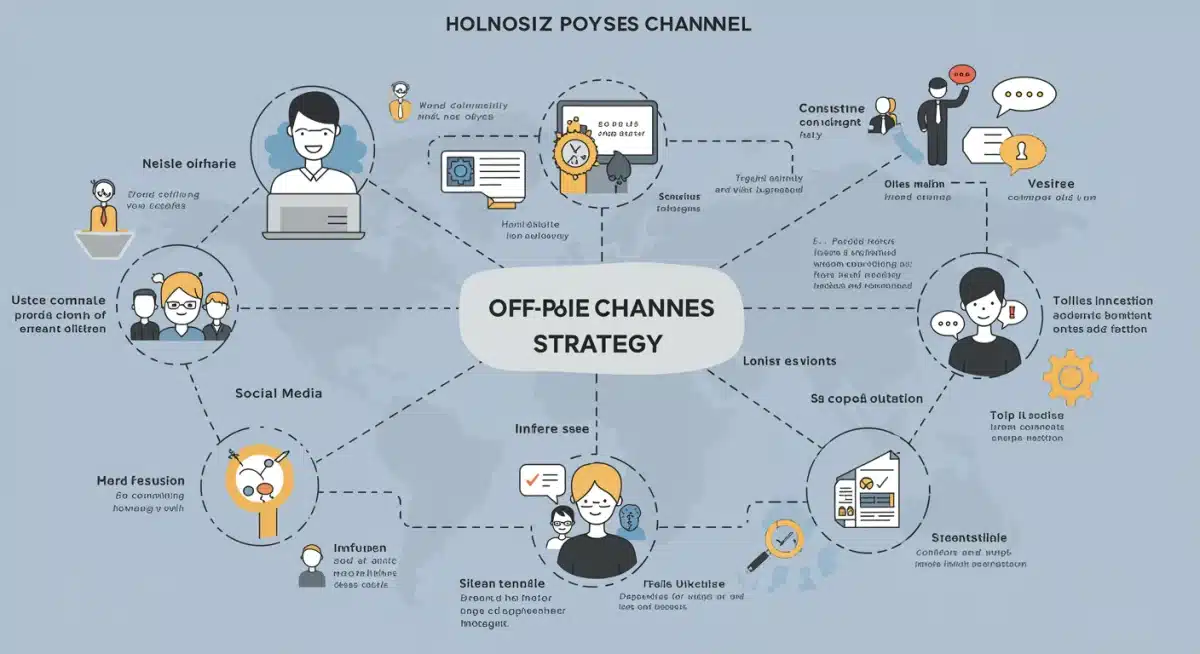
Tactic 2: community and forum engagement
Engaging actively in online communities, forums, and Q&A platforms relevant to your niche offers a powerful, yet often overlooked, off-page SEO advantage. This isn’t about dropping spammy links; it’s about establishing your brand or personal expertise as a valuable resource within these communities. When you consistently provide insightful answers and contribute meaningfully, you build trust and authority.
This engagement can lead to organic brand mentions, direct traffic, and even indirect signals of authority that search engines pick up. Platforms like Reddit, Quora, and industry-specific forums are goldmines for understanding your audience’s pain points and demonstrating your expertise.
Building genuine relationships and thought leadership
The goal here is not immediate link acquisition but long-term brand building. By helping others, you position yourself as a thought leader. This genuine interaction naturally leads to people seeking out your brand or website for more information.
When participating, ensure your contributions are well-researched, helpful, and directly address the user’s query. Over time, this consistent value addition can result in:
- Increased brand visibility: Your brand becomes associated with helpful, expert advice.
- Organic traffic: Users seeking more information may visit your site directly.
- Indirect authority signals: Search engines can interpret this consistent, positive engagement as a sign of your brand’s expertise and trustworthiness.
It’s important to select communities where your target audience congregates and where you can genuinely add value. Authenticity is key; communities are quick to identify and disregard self-promotional tactics.
Successful community engagement requires patience and a commitment to providing value without expecting immediate returns. The cumulative effect of these interactions, however, can significantly bolster your off-page SEO profile by reinforcing your brand’s authority and relevance in the eyes of both users and search engines.
Tactic 3: optimizing for digital public relations (DPR)
Digital Public Relations (DPR) has evolved into a critical component of a modern off-page SEO strategy. Unlike traditional PR, DPR focuses on securing online coverage, brand mentions, and high-quality editorial links from influential digital publications, blogs, and news sites. This strategy not only drives referral traffic but also builds significant domain authority and trust signals.
The goal is to generate positive media attention for your brand through compelling stories, expert opinions, and valuable data. This often involves proactive outreach to journalists and editors, providing them with newsworthy content that aligns with their audience’s interests.
Crafting newsworthy content and outreach
To succeed with DPR, your brand needs to have something genuinely newsworthy to share. This could be original research, an innovative product launch, a unique company initiative, or expert commentary on trending industry topics. The content must be compelling enough to warrant coverage without requiring payment.
Effective DPR involves:
- Developing unique angles: Identify what makes your story stand out and appeal to journalists.
- Building media relationships: Forge connections with relevant journalists and influencers in your niche.
- Providing value: Offer journalists exclusive data, expert interviews, or compelling narratives.
Successful DPR campaigns result in high-quality placements that not only provide valuable backlinks but also enhance your brand’s reputation and visibility across the digital sphere. These mentions from authoritative news sources carry significant weight with search engines.
DPR is a sophisticated strategy that combines strategic communication with SEO objectives. It requires a deep understanding of media relations and the ability to craft narratives that resonate with both journalists and their audiences. When executed effectively, DPR can be a game-changer for off-page SEO, establishing your brand as a credible and influential voice.
Tactic 4: influencer collaborations and content syndication
Leveraging influencer collaborations and strategic content syndication represents a powerful, yet often underutilized, approach to off-page SEO. These tactics extend your content’s reach and associate your brand with established voices, thereby boosting authority and visibility. Influencers, with their engaged audiences, can drive significant brand mentions, traffic, and even organic links, while syndication ensures your valuable content reaches new audiences on reputable platforms.
The synergy between influencer marketing and SEO lies in the amplified reach and the implicit endorsement of your brand. When an influencer shares your content or mentions your brand, it’s a strong signal of credibility to both their audience and search engines.
Selecting the right influencers and platforms
The success of influencer collaborations hinges on selecting partners whose audience aligns perfectly with your target demographic and whose values resonate with your brand. Authenticity is paramount; a genuine endorsement from a relevant influencer is far more valuable than a paid promotion from someone disconnected from your niche.
- Audience alignment: Ensure the influencer’s followers are your potential customers.
- Authenticity and trust: Partner with influencers who genuinely believe in your product or service.
- Diverse platforms: Consider collaborations across blogs, social media, podcasts, and video channels.
For content syndication, identify high-authority platforms that regularly republish content from external sources. These could be industry news aggregators, professional networks, or prominent blogs. The goal is to get your content in front of a wider, relevant audience, often resulting in increased brand visibility and potential referral traffic, even if direct backlinks are not always guaranteed.
Both influencer collaborations and content syndication require careful planning and execution. They are not merely promotional activities but strategic components of an off-page SEO strategy that aim to build brand authority, expand reach, and generate valuable digital signals that contribute to higher search rankings.
Measuring success and adapting your strategy
Implementing unconventional off-page SEO tactics is only half the battle; the other half involves diligently measuring their impact and being prepared to adapt your strategy based on performance data. Without robust analytics, it’s impossible to discern which efforts are yielding the best results and where adjustments are needed. This iterative process ensures that your resources are always directed towards the most effective channels.
Success in off-page SEO is rarely instantaneous. It requires patience, continuous monitoring, and a willingness to refine your approach. The digital landscape is always shifting, and your strategy must be agile enough to shift with it.
Key performance indicators and tools
To effectively measure the success of your off-page SEO efforts, you need to track a range of KPIs beyond just keyword rankings. These include brand mentions, referral traffic, domain authority improvements, social engagement, and sentiment analysis. Various tools can assist in this tracking:
- Brand monitoring tools: For tracking mentions and sentiment (e.g., Brandwatch, Mention).
- SEO analytics platforms: For monitoring domain authority, referral traffic, and link profiles (e.g., Ahrefs, SEMrush, Moz).
- Social media analytics: For gauging engagement and reach of influencer campaigns.
Regularly review these metrics to identify trends and patterns. For example, a surge in unlinked brand mentions after a DPR campaign might indicate its success, even if direct backlinks are not immediately apparent. Similarly, increased referral traffic from a community forum could signal effective engagement.
Adapting your strategy means being proactive. If one tactic isn’t performing as expected, analyze why and pivot. Perhaps your influencer selection needs refinement, or your community engagement approach is too promotional. The ability to learn from data and make informed adjustments is what separates a good off-page SEO strategy from a truly exceptional one.
Integrating off-page with overall SEO for 2025
For 2025, the most successful SEO strategies will be those that seamlessly integrate off-page efforts with on-page optimization, technical SEO, and user experience. Off-page signals, such as brand authority and mentions, significantly amplify the impact of well-optimized on-page content. A technically sound website with excellent user experience will struggle to rank highly without the external validation provided by a robust off-page strategy.
Conversely, even the strongest off-page signals cannot fully compensate for a poorly optimized website. The synergy between these elements creates a powerful feedback loop that signals comprehensive authority and relevance to search engines, ultimately driving higher rankings and sustained visibility.
The holistic SEO ecosystem
Think of your SEO efforts as an interconnected ecosystem where each component supports and strengthens the others. Off-page activities, especially the unconventional ones discussed, contribute to this ecosystem by:
- Enhancing brand trust: Expert contributions and positive mentions build credibility.
- Driving diverse traffic: Community engagement and DPR bring new audiences to your site.
- Boosting domain authority: High-quality external signals reinforce your site’s overall strength.
This holistic approach means that decisions made in one area of SEO should always consider their impact on others. For instance, creating exceptional content (on-page) makes it far easier to earn valuable brand mentions and links (off-page). A fast, mobile-friendly website (technical SEO) enhances the user experience for visitors arriving from influencer promotions (off-page).
Ultimately, integrating off-page SEO with your broader strategy is about building a cohesive and resilient online presence. It’s about demonstrating to search engines that your brand is not just optimizing for keywords, but is a valuable, authoritative, and trusted entity within its industry. This comprehensive view is essential for securing and maintaining top 3 positions in the competitive digital landscape of 2025.
| Key Tactic | Brief Description |
|---|---|
| Brand Mention Cultivation | Actively seeking and encouraging unlinked mentions from authoritative sources to build brand recognition and trust. |
| Community Engagement | Participating in forums and Q&A platforms to establish expertise, drive organic traffic, and gain indirect authority signals. |
| Digital Public Relations | Securing online coverage and editorial links from influential digital publications through newsworthy content and strategic outreach. |
| Influencer Collaborations | Partnering with relevant influencers and syndicating content to extend reach, build authority, and generate valuable digital signals. |
Frequently Asked Questions About Off-Page SEO
The primary difference is a shift from solely focusing on backlink quantity to emphasizing diverse digital signals like brand mentions, community engagement, and digital PR. Modern off-page SEO prioritizes building overall brand authority and trust across the web, rather than just accumulating links.
Unlinked brand mentions signal brand recognition and trust to search engines, even without a direct hyperlink. When an authoritative source mentions your brand, it contributes to your perceived credibility and expertise, influencing search rankings as a strong indirect signal of authority.
Active and genuine community engagement establishes your brand as a knowledgeable resource, leading to organic brand mentions, direct traffic, and implicit authority signals. By consistently providing value in relevant forums, you build trust and visibility, which search engines recognize as positive indicators.
DPR secures online coverage and editorial links from influential digital publications, significantly boosting domain authority and trust signals. It’s about generating positive media attention through newsworthy content, which not only drives referral traffic but also enhances brand reputation in the eyes of search engines.
Influencer collaborations extend content reach and associate your brand with established voices, boosting authority and visibility. They drive brand mentions, traffic, and organic links. A genuine endorsement from a relevant influencer acts as a powerful credibility signal to both their audience and search engines.
Conclusion
The journey to securing top 3 positions in search engine results for 2025 demands a sophisticated and multi-faceted off-page SEO strategy that transcends the traditional focus on backlinks. By embracing unconventional tactics such as strategic brand mention cultivation, genuine community engagement, proactive Digital Public Relations, and well-planned influencer collaborations, businesses can build a robust digital footprint. This holistic approach not only enhances brand authority and trust but also future-proofs your online presence against evolving algorithm changes. The key to success lies in integrating these diverse off-page efforts with a strong on-page and technical SEO foundation, creating a synergistic ecosystem that consistently signals expertise, authoritativeness, and trustworthiness to search engines. Adapting, measuring, and continuously refining your strategy based on performance will be paramount in maintaining a competitive edge in the dynamic digital landscape.