Content Audits 2025: Boost SERP Rankings by 10% in 3 Months

Strategic content audits for 2025 are essential for identifying and revitalizing underperforming web pages, providing a direct route to boosting search engine results page (SERP) rankings by a measurable 10% within three months.
Are you ready to transform your digital presence and see tangible results? In the dynamic landscape of 2025,
content audits for 2025 are no longer a luxury but a necessity for any serious digital marketer.
This comprehensive guide will walk you through the essential steps to identify and revitalize your underperforming pages,
aiming to boost your SERP rankings by a significant 10% in just three months.
Understanding the ‘Why’ Behind Content Audits in 2025
Before diving into the ‘how,’ it’s crucial to grasp the fundamental reasons why content audits are more vital than ever in the current digital climate.
The internet is saturated with information, and search engine algorithms are constantly evolving, prioritizing quality, relevance, and user experience.
Without regular, systematic evaluations, even high-quality content can become outdated or lose its competitive edge.
A content audit acts as a diagnostic tool, providing a clear picture of your website’s health. It helps you understand what’s working, what’s not,
and, most importantly, why. This deep dive enables data-driven decisions that can significantly impact your search visibility and user engagement.
The Evolving Search Landscape
Search engines are increasingly sophisticated, moving beyond keyword matching to interpret user intent and context.
Google’s E-E-A-T (Experience, Expertise, Authoritativeness, Trustworthiness) guidelines emphasize the importance of credible and valuable content.
A content audit ensures your pages align with these evolving standards.
- User Intent Alignment: Verifying if your content truly answers user queries.
- Algorithm Updates: Adapting content to reflect the latest search engine ranking factors.
- Competitive Edge: Analyzing competitor content to identify gaps and opportunities.
By systematically reviewing your content, you can proactively address areas that might be hindering your performance, rather than reacting to drops in rankings.
This forward-thinking approach is key to maintaining and improving your position in the SERPs.
Phase 1: Data Collection and Inventory – The Foundation of Your Audit
The first step in any effective content audit is comprehensive data collection and inventory. You cannot improve what you don’t measure or understand.
This phase involves gathering all relevant information about your website’s content, from URLs and page titles to traffic metrics and keyword performance.
Start by compiling a complete list of every page on your website. Tools like Google Analytics, Google Search Console, and various SEO auditing tools
are invaluable for this process. The more data points you collect, the more insightful your audit will be.
Essential Data Points to Collect
Gathering the right data is paramount. Focus on metrics that directly correlate with performance and user behavior.
- URL and Page Title: Basic identification for each piece of content.
- Traffic Data: Organic sessions, pageviews, and bounce rate from Google Analytics.
- Keyword Performance: Top queries, impressions, clicks, and average position from Google Search Console.
- Backlinks: Number and quality of referring domains to each page.
- Content Type and Format: Blog post, landing page, product page, video, infographic, etc.
- Date Published/Last Updated: To assess content freshness and potential for decay.
Organize this data in a spreadsheet for easy analysis. This inventory will serve as your single source of truth throughout the audit process,
allowing you to track progress and identify trends over time.
Phase 2: Content Analysis – Identifying Underperformers and Opportunities
With your data meticulously collected, the next critical phase is content analysis. This is where you transform raw data into actionable insights.
The goal is to identify pages that are underperforming, those that are performing well but could do better, and entirely new opportunities.
Begin by segmenting your content. Look for patterns: are certain content types consistently underperforming? Are older posts losing relevance?
Pay close attention to pages with low organic traffic, high bounce rates, and low average positions for target keywords.
Key Metrics for Performance Evaluation
Several metrics will guide your analysis, helping you pinpoint specific issues and potential areas for improvement.
- Organic Traffic Trends: Is traffic declining, stagnant, or growing?
- Bounce Rate: A high bounce rate often indicates a mismatch between user intent and content.
- Conversion Rate: For pages with a conversion goal, how effectively are they achieving it?
- Keyword Rankings: Are your pages ranking for their target keywords, and where?
Don’t just look at individual pages in isolation. Consider how pages interlink and support each other within your overall content strategy.
A seemingly underperforming page might be a crucial step in a user’s journey to a high-converting page.
Phase 3: Strategic Action Planning – Revitalizing Your Pages
Once underperforming pages and opportunities are identified, it’s time to devise a strategic action plan.
This phase is about making informed decisions on how to revitalize your content to achieve that 10% SERP ranking boost.
Categorize your content into actionable groups: update, consolidate, remove, or create new content.
Each category requires a specific approach. For instance, content identified for updating might need a complete overhaul,
while others may only require minor tweaks. The key is to be methodical and prioritize efforts based on potential impact and feasibility.
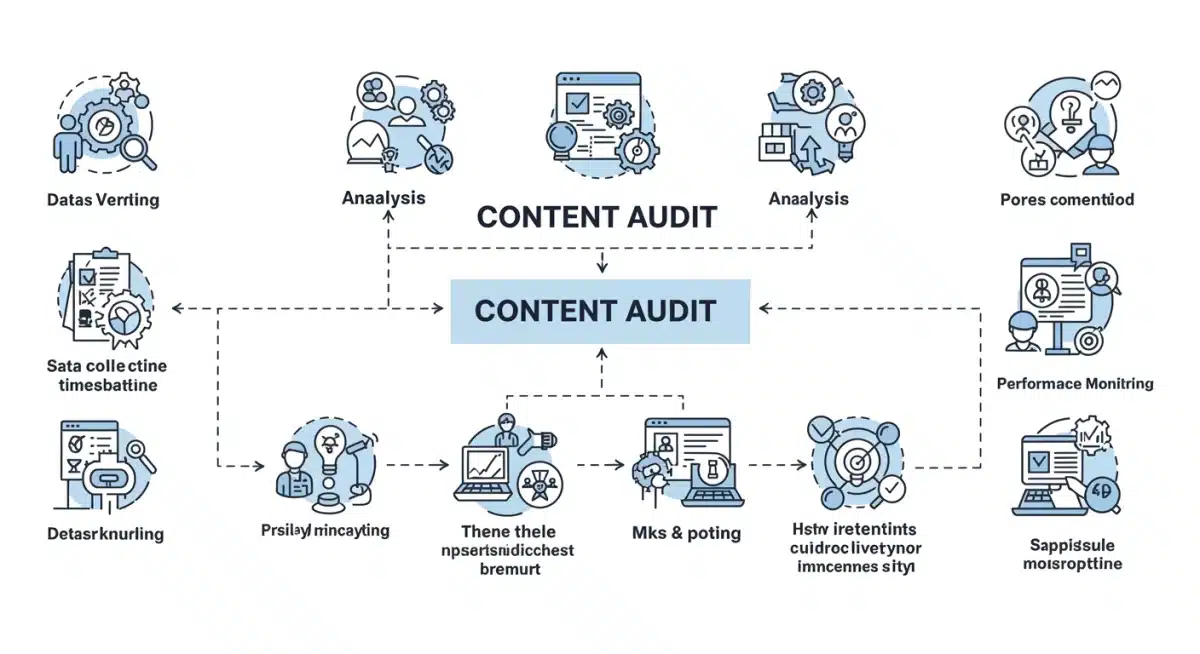
Content Action Categories
Define clear actions for each piece of content based on your analysis.
- Update & Optimize: For content with good potential but needing freshness or better SEO. This includes adding new information, improving readability, updating statistics, and optimizing for new keywords.
- Consolidate & Redirect: For duplicate or thin content. Merge similar pages into a single, comprehensive resource and set up 301 redirects from the old URLs.
- Remove & Republish: For severely outdated or irrelevant content that no longer serves a purpose. Consider removing it completely or republishing a completely new version if the topic is still valuable.
- Create New: Identify content gaps where your website lacks coverage on important topics relevant to your audience and keywords.
Prioritize pages with the highest potential for improvement. Often, pages ranking on the second or third page of SERPs are excellent candidates for optimization,
as a small push can lead to significant ranking gains.
Phase 4: Implementation and On-Page SEO Enhancements
With your action plan in place, the next step is implementation. This involves making the actual changes to your content and ensuring all on-page SEO best practices are met.
This hands-on phase directly impacts how search engines perceive and rank your pages.
Focus on both the quality of your written content and the technical aspects that aid search engine crawling and indexing.
Every change should be deliberate and aimed at improving user experience and search engine visibility.
Key On-Page SEO Tactics
Detailed optimization at the page level is crucial for effective revitalization.
- Keyword Integration: Naturally embed target keywords in headings, body text, and meta descriptions.
- Readability Improvements: Use shorter sentences, paragraphs, and subheadings; incorporate bullet points and numbered lists.
- Internal Linking: Create strategic internal links to relevant pages, distributing link equity and improving navigation.
- Image Optimization: Compress images for faster loading, use descriptive alt text, and relevant filenames.
- Meta Data Refinement: Craft compelling meta titles and descriptions to improve click-through rates.
- Schema Markup: Implement structured data where appropriate to enhance SERP visibility with rich snippets.
Remember that user experience is paramount. While optimizing for search engines, always keep your human readers in mind.
Content that is valuable and easy to consume for users will naturally perform better in search results.
Phase 5: Monitoring, Measurement, and Iteration for Sustained Growth
The work doesn’t end once changes are implemented. Continuous monitoring, measurement, and iteration are essential for sustained SERP growth.
This phase allows you to track the impact of your content audit, identify further opportunities, and make ongoing adjustments.
Set up dashboards in Google Analytics and Google Search Console to track key metrics related to your revitalized pages.
Pay close attention to organic traffic, keyword rankings, and user behavior changes over time. Your goal is to see that 10% boost, and then some.
Tools and Metrics for Tracking Progress
Utilize various tools to keep a close eye on your performance.
- Google Analytics: Monitor organic sessions, bounce rate, time on page, and conversion rates.
- Google Search Console: Track keyword impressions, clicks, average position, and indexing status.
- Rank Tracking Tools: Use dedicated SEO tools to monitor keyword positions for your target pages.
- A/B Testing: Experiment with different headlines, meta descriptions, or content formats to see what resonates best.
The digital landscape is constantly shifting, so your content strategy should be agile.
Regularly review your audit findings, adapt your approach based on new data, and embrace a continuous improvement mindset.
This iterative process ensures your content remains a powerful asset, driving consistent organic growth.
Future-Proofing Your Content Strategy Beyond 2025
Looking beyond the immediate goal of a 10% SERP boost, a robust content audit strategy in 2025 also serves to future-proof your digital presence.
Anticipating upcoming trends and algorithm shifts is crucial for long-term success.
This involves not just reacting to changes, but proactively positioning your content to thrive in future environments.
Consider the growing importance of AI-generated content, voice search optimization, and multimodal search.
Your content should be versatile and adaptable, capable of serving diverse user needs across multiple platforms and technologies.
Adapting to Emerging Trends
Stay ahead of the curve by incorporating forward-thinking elements into your content strategy.
- AI-Driven Content Creation: Leverage AI tools for research, drafting, and optimization, but always with human oversight for quality and E-E-A-T.
- Voice Search Optimization: Structure content to answer conversational queries, using natural language.
- Video and Visual Content: Integrate diverse media formats to cater to different learning styles and search preferences.
- Semantic SEO: Focus on topic clusters and comprehensive coverage rather than isolated keywords to establish authority.
By embedding these considerations into your content audit and revitalization processes, you ensure that your efforts today not only yield immediate ranking improvements
but also build a resilient, high-performing content ecosystem ready for whatever the future of search holds.
| Key Audit Phase | Brief Description |
|---|---|
| Data Collection | Gather all content URLs and performance metrics (traffic, keywords, backlinks). |
| Content Analysis | Identify underperforming pages and content gaps using collected data. |
| Action Planning | Categorize content for update, consolidation, removal, or new creation. |
| Monitoring & Iteration | Continuously track performance, adjust strategies, and adapt to trends. |
Frequently Asked Questions About Content Audits
The primary goal is to systematically evaluate existing content to identify underperforming or outdated pages, understand their impact on SEO, and develop strategies to revitalize them. This leads to improved search engine rankings and better user engagement, ensuring your digital presence remains competitive and relevant.
For optimal results, a comprehensive content audit should be conducted at least once a year. However, smaller, more focused audits can be performed quarterly or bi-annually, especially after significant algorithm updates or major content strategy shifts, to ensure continuous optimization and responsiveness to market changes.
Essential tools include Google Analytics for traffic and user behavior data, Google Search Console for keyword performance and indexing issues, and an SEO crawling tool (e.g., Screaming Frog, Ahrefs, SEMrush) for technical insights and comprehensive site data. A spreadsheet program is also crucial for organizing and analyzing the collected data effectively.
Yes, a well-executed content audit can realistically achieve a 10% boost in SERP rankings within three months. This is particularly true for websites with a substantial amount of underperforming content. By focusing on high-impact optimizations like keyword targeting, content freshness, and technical SEO fixes, significant improvements are often observable in a relatively short timeframe.
Content decay refers to the gradual decline in organic traffic and rankings for a piece of content over time, often due to outdated information or increased competition. A content audit identifies decaying content, allowing you to update statistics, add new insights, improve SEO, or even repurpose the content to restore its relevance and performance, effectively combating further decay.
Conclusion
Embarking on a strategic content audit in 2025 is not merely an optional task; it is a fundamental pillar of sustainable digital growth and enhanced search engine visibility.
By methodically identifying and revitalizing underperforming pages, you not only address immediate ranking deficiencies but also fortify your entire content ecosystem against future challenges.
The commitment to this iterative process, driven by data and focused on user value, is your clearest path to achieving and surpassing that ambitious 10% SERP ranking boost within three months,
ensuring your digital footprint remains robust and relevant in an ever-evolving online world.