Attribution Models for Paid Ads: Boost ROI by 12% in 2025
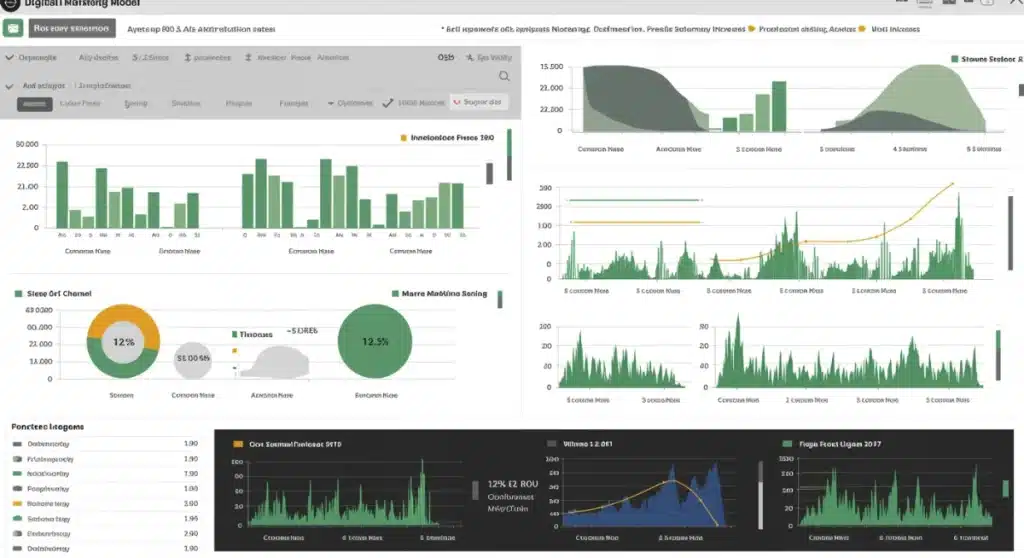
Implementing advanced attribution models for paid ads is predicted to drive a 12% increase in ROI for businesses in 2025 by providing a more accurate understanding of marketing channel effectiveness and optimizing budget allocation.
In the dynamic landscape of digital advertising, understanding where your marketing dollars truly make an impact is paramount. The question of which
paid ad attribution model drives a 12% more ROI in 2025 is not just theoretical; it’s a critical strategic inquiry for businesses aiming to optimize their spending and gain a competitive edge. This article delves into the various attribution models, comparing their methodologies and analyzing their potential financial impact to help you make informed decisions for the coming year.
The Evolution of Attribution Models
Attribution models have undergone significant transformations, moving from simplistic single-touch approaches to sophisticated multi-touch frameworks. Initially, marketers often relied on basic models that gave all credit to either the first or last interaction, which, while easy to implement, often painted an incomplete picture of the customer journey.
As digital ecosystems grew more complex, with users engaging through multiple channels and devices before converting, the need for more nuanced attribution became apparent. This evolution reflects a growing understanding that customer paths to purchase are rarely linear and often involve numerous touchpoints, each contributing to the final conversion in its own way.
Understanding Single-Touch Models
Single-touch attribution models are the simplest form of attributing conversions, assigning 100% of the credit to a single touchpoint in the customer journey. While straightforward, they often fail to capture the full complexity of modern marketing.
- First-Click Attribution: This model credits the very first interaction a customer has with your brand. It’s useful for understanding which channels introduce customers to your business but ignores all subsequent engagements.
- Last-Click Attribution: Conversely, last-click attribution gives all credit to the final interaction before a conversion. This model is popular due to its simplicity and direct link to immediate results, but it can undervalue earlier touchpoints that built initial interest.
While single-touch models offer a clear and easy-to-understand view, their inherent limitation lies in their inability to acknowledge the collaborative nature of marketing channels. They provide a narrow perspective, often leading to suboptimal budget allocation by overvaluing or undervaluing certain stages of the customer journey.
Exploring Multi-Touch Attribution for Deeper Insights
Multi-touch attribution models distribute credit across multiple touchpoints in the customer journey, providing a more comprehensive view of how different channels contribute to conversions. These models acknowledge that a customer’s path is often complex and involves several interactions before a purchase is made.
Unlike single-touch models, multi-touch approaches aim to assign a weighted value to each interaction, reflecting its perceived influence on the final conversion. This granular insight allows marketers to optimize their budgets more effectively, ensuring that all contributing channels receive appropriate recognition and investment.
Linear Attribution Model
The linear attribution model assigns equal credit to every touchpoint in the customer’s conversion path. For instance, if a customer interacts with four different ads before converting, each ad receives 25% of the credit.
- Fair Distribution: This model offers a balanced view, acknowledging every interaction’s role without favoring any particular stage.
- Simplicity with Detail: It’s relatively easy to understand and implement while still providing more detail than single-touch models.
- Potential Drawback: While balanced, it might not accurately reflect the true impact of certain touchpoints, as not all interactions have equal influence.
Linear attribution is a good starting point for businesses transitioning from single-touch models, as it encourages a holistic view of the customer journey. However, its equal distribution can sometimes mask the true effectiveness of high-impact touchpoints or the limited influence of low-impact ones.

Time Decay and Position-Based Attribution
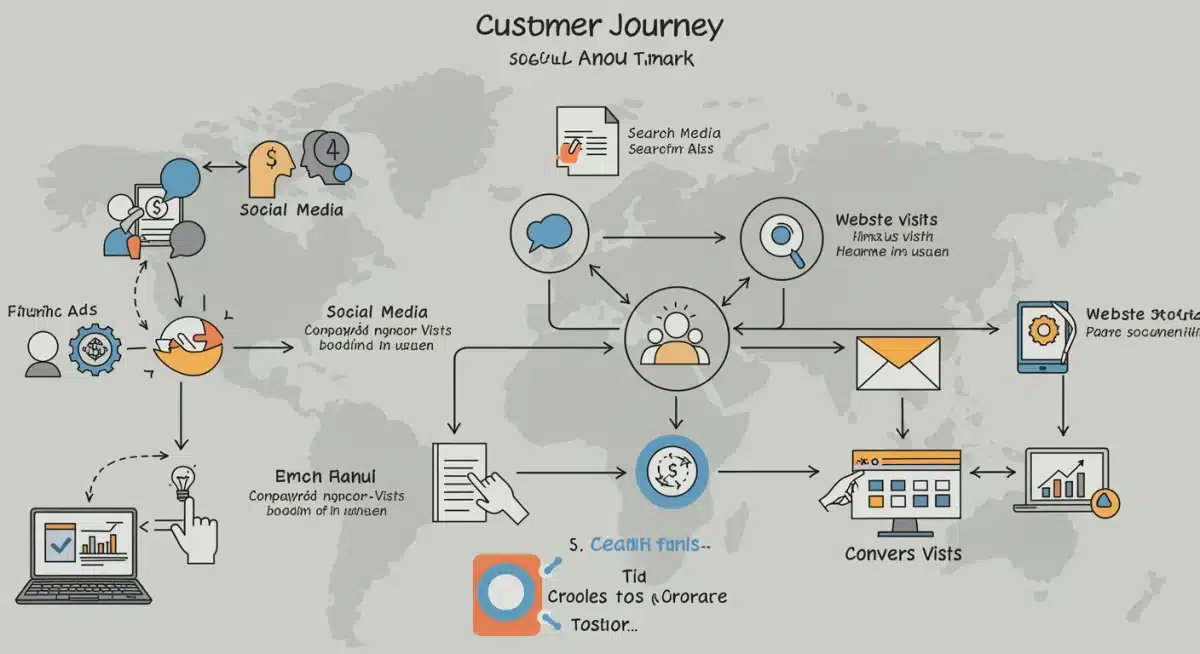
As we delve deeper into multi-touch attribution, models like Time Decay and Position-Based (or U-shaped) offer more refined perspectives on the customer journey. These models recognize that not all touchpoints contribute equally and attempt to weigh them based on their proximity to the conversion or their strategic position in the funnel.
Understanding these models is crucial for marketers looking to move beyond basic attribution and gain a more nuanced insight into the effectiveness of their campaigns. They allow for a more strategic allocation of resources by highlighting the interactions that truly drive conversions.
Time Decay Attribution
The Time Decay model gives more credit to touchpoints that occur closer in time to the conversion. Interactions that happen days or weeks before the conversion receive less credit than those that happen just hours or minutes prior.
- Recency Focus: Emphasizes the immediate impact of recent marketing efforts, which can be particularly useful for businesses with shorter sales cycles.
- Gradual Credit Distribution: Credit is distributed using an exponentially decreasing curve, meaning the most recent touchpoint gets the most credit, and the first gets the least, but all still receive some acknowledgment.
- Ideal Use Case: Best suited for campaigns where the final stages of the customer journey are most influential, such as promotional offers or retargeting efforts.
This model acknowledges the diminishing influence of older interactions while still giving them some credit, offering a balanced view that prioritizes recent engagements. It’s particularly effective for understanding the impact of nurturing campaigns that guide customers towards a purchase.
Position-Based (U-shaped) Attribution
The Position-Based or U-shaped model assigns the most credit to the first and last interactions, with the remaining credit distributed equally among the middle touchpoints. Typically, 40% of the credit goes to the first interaction, 40% to the last, and the remaining 20% is split among the middle touches.
- Highlights Key Stages: Recognizes the importance of both initial awareness (first touch) and final conversion (last touch) while still acknowledging the journey in between.
- Balanced Perspective: Provides a good balance between understanding initial engagement and final conversion drivers, making it suitable for longer sales cycles.
- Strategic Insight: Useful for optimizing both top-of-funnel awareness campaigns and bottom-of-funnel conversion efforts.
The U-shaped model is a robust option for businesses that value both brand discovery and direct conversion efforts. It provides a strategic view that can help marketers optimize different stages of their customer funnel, ensuring that both initial engagement and final persuasion are adequately supported.
Data-Driven and Custom Attribution Models: The Future of ROI
As marketing analytics become more sophisticated, data-driven and custom attribution models are emerging as the most powerful tools for optimizing ROI. These models move beyond predefined rules and instead use advanced algorithms and machine learning to determine the true contribution of each touchpoint.
The ability to analyze vast amounts of data and identify complex patterns allows these models to provide unparalleled insights into customer behavior. This granular understanding is key to unlocking significant ROI improvements, potentially driving the predicted 12% increase for businesses in 2025.
Data-Driven Attribution (DDA)
Data-Driven Attribution (DDA) models utilize machine learning algorithms to analyze all available data from your customer journeys. They assess the actual impact of each touchpoint on conversions, rather than relying on predetermined rules.
- Algorithmic Precision: DDA models use statistical modeling to assign fractional credit to each touchpoint based on its contribution to conversion probability.
- Dynamic Adaptation: These models continuously learn and adapt as new data becomes available, ensuring attribution remains relevant and accurate over time.
- Platform Integration: Often available within major advertising platforms like Google Ads and Facebook Ads, making implementation more accessible.
DDA offers a highly sophisticated approach, providing insights that rule-based models cannot. By understanding the true incremental value of each interaction, marketers can make more informed decisions about budget allocation, leading to significant improvements in campaign performance and ROI.
Custom Attribution Models
Custom attribution models are tailored specifically to a business’s unique customer journey, sales cycle, and strategic objectives. These models are built from the ground up, incorporating specific business logic and data sources to create an attribution framework that perfectly aligns with organizational goals.
- Tailored Logic: Businesses can define their own rules and weights for different touchpoints, reflecting their specific marketing strategies and customer behaviors.
- Integration with CRM: Often integrate with CRM systems and other proprietary data sources, providing a holistic view of customer interactions across all platforms.
- Competitive Advantage: A custom model can provide a unique competitive advantage by revealing insights that generic models might miss, allowing for truly optimized marketing spend.
Creating a custom attribution model requires significant resources and expertise, but the potential for a highly accurate and actionable framework can justify the investment. It represents the pinnacle of attribution sophistication, offering the deepest insights into marketing effectiveness and the strongest potential for ROI growth.
Financial Impact and ROI Enhancement in 2025
The adoption of advanced attribution models, particularly data-driven and custom approaches, is poised to significantly impact the financial performance of paid ad campaigns in 2025. By moving beyond traditional, often misleading, attribution methods, businesses can unlock substantial improvements in their return on investment. The projected 12% increase in ROI is not an arbitrary figure but a reflection of the precision and strategic advantages these models offer.
Accurate attribution allows marketers to identify which specific touchpoints and channels are genuinely driving conversions, rather than merely appearing to contribute. This clarity enables more intelligent budget allocation, shifting resources from underperforming areas to those with proven effectiveness.
Optimizing Budget Allocation
One of the most direct financial benefits of sophisticated attribution is the ability to optimize budget allocation with unprecedented accuracy. When you know precisely which channels are most effective at each stage of the customer journey, you can distribute your ad spend more strategically.
- Eliminating Waste: Advanced models identify channels that consume budget without yielding proportional results, allowing for reallocation to more impactful areas.
- Maximizing High-Performers: By pinpointing top-performing touchpoints, businesses can scale successful campaigns and invest more confidently in what works.
- Improved CPA/ROAS: Better allocation directly translates to a lower Cost Per Acquisition (CPA) and a higher Return on Ad Spend (ROAS), driving the overall ROI increase.
The ability to reallocate funds based on data-driven insights ensures that every dollar spent on paid ads is working as efficiently as possible. This optimization is a key driver behind the projected ROI improvements, allowing businesses to achieve more with the same or even reduced marketing budgets.
Strategic Decision Making
Beyond immediate budget optimization, advanced attribution models empower superior strategic decision-making. The deep insights they provide extend to understanding customer behavior, channel interplay, and the true value of different marketing initiatives.
- Customer Journey Insights: Gain a clearer understanding of how customers interact with your brand across various touchpoints, informing content strategy and user experience improvements.
- Channel Synergy: Identify how different channels complement each other, enabling integrated marketing strategies that leverage the strengths of each platform.
- Future Campaign Planning: Use historical attribution data to forecast future campaign performance and plan new initiatives with a higher probability of success.
These strategic advantages contribute to sustained growth and competitive advantage. By understanding the intricate dynamics of their marketing ecosystem, businesses can not only improve current campaign performance but also build a more resilient and effective long-term marketing strategy, ultimately leading to significant and lasting ROI gains.
Implementing and Measuring Attribution Success
Successfully implementing and measuring the impact of attribution models is a multi-step process that requires careful planning, robust data infrastructure, and continuous analysis. The journey doesn’t end with selecting a model; it begins with integrating it into your marketing operations and consistently evaluating its effectiveness.
To truly realize the projected 12% ROI increase in 2025, businesses must commit to a culture of data-driven decision-making, ensuring that attribution insights are not just collected but actively used to refine strategies and optimize performance across all paid ad campaigns.
Key Implementation Steps
Implementing a new attribution model, especially a sophisticated one, involves several critical steps to ensure accuracy and utility. Skipping any of these can compromise the integrity of your data and the reliability of your insights.
- Data Collection and Integration: Ensure all relevant data sources (ad platforms, CRM, website analytics) are properly integrated and collecting consistent, clean data.
- Model Selection and Customization: Choose the model that best fits your business goals and customer journey, customizing it as needed for unique nuances.
- Testing and Validation: Run pilot tests and compare results with previous attribution methods to validate the new model’s accuracy and ensure it provides actionable insights.
A well-executed implementation lays the groundwork for accurate measurement and effective optimization. It ensures that the attribution model becomes a reliable tool rather than just another data point, providing the foundation for improved ROI.
Measuring and Refining for Continuous Improvement
Attribution is not a set-it-and-forget-it solution. Continuous measurement, analysis, and refinement are essential to maximize its benefits and adapt to evolving market conditions and customer behaviors. The goal is to create a feedback loop that constantly enhances your marketing efforts.
- Regular Performance Reviews: Periodically review attribution reports to identify trends, pinpoint effective channels, and detect areas needing improvement.
- A/B Testing and Experimentation: Use attribution insights to inform A/B tests on ad creatives, landing pages, and targeting strategies, validating hypotheses with real data.
- Cross-Channel Optimization: Leverage attribution data to optimize spend not just within individual channels but also across your entire marketing mix, fostering synergy and efficiency.
By consistently measuring and refining your attribution strategy, you create a dynamic system that continuously learns and improves. This iterative process is crucial for sustaining the competitive advantage gained from accurate attribution and ensuring that your paid ad campaigns consistently deliver optimal ROI, driving towards and potentially exceeding the 12% target in 2025.
| Key Attribution Model | Brief Description |
|---|---|
| Last-Click | Assigns 100% credit to the final interaction before conversion. Simple, but incomplete. |
| Linear | Distributes equal credit to all touchpoints in the customer journey. Balanced, but lacks weighting. |
| Time Decay | Gives more credit to touchpoints closer in time to the conversion. Emphasizes recency. |
| Data-Driven | Uses machine learning to assign credit based on actual impact. Most accurate for ROI. |
Frequently Asked Questions About Paid Ad Attribution
Paid ad attribution is the process of identifying and assigning credit to the specific marketing touchpoints that lead to a customer conversion. It’s crucial because it helps businesses understand which ads and channels are most effective, allowing for optimized budget allocation and improved return on investment (ROI).
By accurately crediting all contributing touchpoints, advanced attribution models like data-driven and custom models enable more precise budget allocation. This precision reduces wasted ad spend on underperforming channels and reallocates it to high-impact areas, directly leading to significant ROI improvements, potentially up to 12%.
Single-touch models assign all credit to one interaction (e.g., first or last click), offering simplicity but limited insight. Multi-touch models, such as linear or time decay, distribute credit across multiple touchpoints, providing a more comprehensive view of the customer journey and the combined influence of various marketing efforts.
Businesses with complex customer journeys, significant ad spend across multiple channels, and access to substantial conversion data should consider data-driven attribution. These models use machine learning to uncover non-obvious correlations and provide the most accurate picture of channel effectiveness, maximizing optimization potential.
Common challenges include data integration complexities, ensuring data cleanliness and consistency, gaining internal stakeholder buy-in, and the initial learning curve associated with interpreting new insights. Proper planning and continuous testing are essential to overcome these hurdles and ensure successful implementation.
Conclusion
The journey through various attribution models reveals a clear path towards significantly enhanced ROI for paid ad campaigns in 2025. While single-touch models offer simplicity, it is the sophisticated multi-touch, and particularly data-driven and custom, attribution models that hold the key to unlocking a projected 12% increase in return on investment. By providing a more accurate and granular understanding of the customer journey, these advanced models empower marketers to make intelligent, data-backed decisions on budget allocation, optimize campaign performance, and ultimately drive superior financial outcomes. Embracing these evolving attribution strategies is no longer optional but a strategic imperative for businesses aiming to thrive in the competitive digital advertising landscape.