Core Web Vitals 2025: Boost Rankings & Engagement
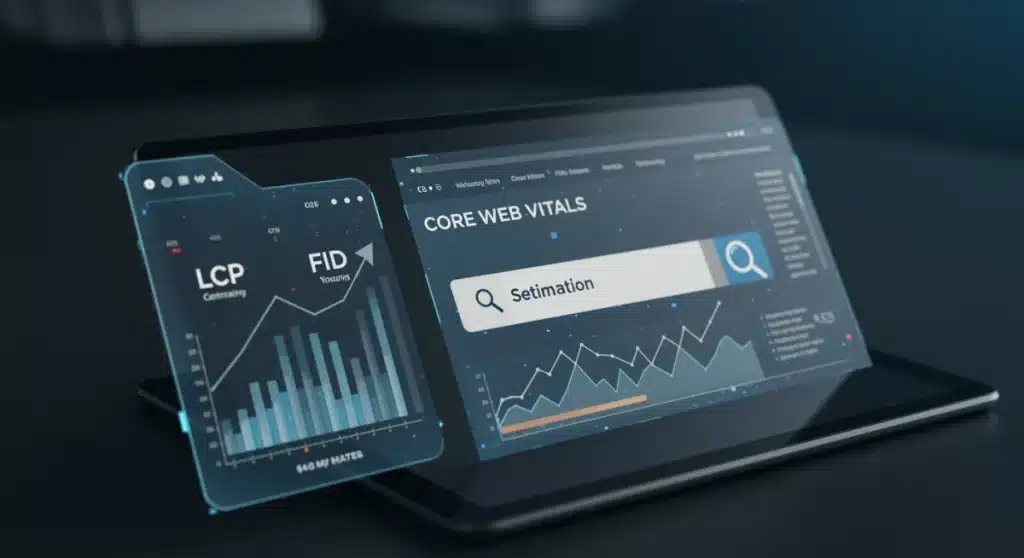
Optimizing Core Web Vitals in 2025 is crucial for achieving a 15% increase in search rankings and significantly enhancing user engagement through superior page experience.
As the digital landscape evolves, understanding and implementing effective strategies for Core Web Vitals in 2025 is no longer just an advantage, it’s a necessity. This guide will walk you through the critical optimizations to not only meet but exceed user expectations, ultimately boosting your search rankings and fostering deeper engagement.
The Evolving Landscape of Core Web Vitals in 2025
The internet is a dynamic environment, constantly shifting with new technologies and user behaviors. Core Web Vitals, Google’s set of metrics for measuring user experience, are at the forefront of this evolution. In 2025, these metrics are more refined and influential than ever, dictating how search engines perceive the quality of your website and, consequently, where it ranks.
Understanding these shifts is paramount for any digital marketer or website owner. Gone are the days when basic SEO tactics alone guaranteed visibility. Today, a holistic approach that prioritizes the user’s journey is key to success.
Key Metric Updates and Their Impact
While the fundamental Core Web Vitals (Largest Contentful Paint, Cumulative Layout Shift, and Interaction to Next Paint) remain central, their thresholds and Google’s interpretation continue to evolve. Staying informed about these nuances is vital for effective optimization.
- Largest Contentful Paint (LCP): Measures perceived load speed. In 2025, user patience is even shorter, demanding faster LCP times, ideally under 2.5 seconds.
- Cumulative Layout Shift (CLS): Quantifies visual stability. Unstable layouts frustrate users; a CLS score below 0.1 is critical for a smooth experience.
- Interaction to Next Paint (INP): Assesses responsiveness. This metric, replacing FID, focuses on the latency of all interactions, aiming for under 200 milliseconds.
These metrics collectively paint a picture of your site’s performance from a user’s perspective. Ignoring them is akin to building a beautiful store in a hard-to-reach location; people might see it, but they won’t stay.
The impact of these evolving metrics extends beyond mere technical performance. They directly influence user behavior, affecting bounce rates, conversion rates, and ultimately, your bottom line. Websites that prioritize a seamless user experience will inevitably outperform those that neglect these crucial signals.
Strategies for Optimizing Largest Contentful Paint (LCP)
Largest Contentful Paint (LCP) is all about speed, specifically how quickly the main content of your page becomes visible to the user. A slow LCP can lead to immediate abandonment, impacting both user engagement and search rankings.
Achieving an excellent LCP score requires a multi-faceted approach, addressing various aspects of your website’s architecture and content delivery. It’s not just about raw server speed, but how efficiently your content is rendered.
Prioritizing Critical Resources
To improve LCP, you must identify and prioritize the resources critical for rendering the largest content element. This often involves optimizing images, fonts, and CSS. The goal is to deliver these elements as quickly as possible, minimizing render-blocking resources.
- Image Optimization: Compress images, use modern formats like WebP, and implement responsive images to serve appropriately sized files for different devices.
- Font Loading Strategy: Utilize
font-display: swapor preload critical fonts to prevent text from being invisible during loading. - CSS Delivery: Minify CSS, remove unused styles, and inline critical CSS to ensure essential styles are available immediately.
Beyond these technical adjustments, consider the overall design of your page. Simpler layouts with fewer large elements above the fold tend to have better LCP scores. Every element on your page contributes to the loading time, so a minimalist approach can often be beneficial.
Another crucial aspect is server response time. A slow server can significantly bottleneck your LCP, regardless of how well-optimized your front-end is. Invest in reliable hosting and consider using a Content Delivery Network (CDN) to distribute your content closer to your users, reducing latency.
By focusing on these areas, you can dramatically reduce your LCP, providing users with a faster and more satisfying initial loading experience. This directly translates to improved engagement and a positive signal to search engines.
Enhancing Visual Stability with Cumulative Layout Shift (CLS)
Cumulative Layout Shift (CLS) measures how much unexpected layout shift occurs during the loading phase of a webpage. Imagine trying to click a button, only for it to jump out of the way just as you’re about to tap it. This frustrating experience is what CLS aims to quantify and minimize.
A low CLS score indicates a stable and predictable page, which is essential for a positive user experience. Layout shifts often occur due to images, ads, or dynamically injected content that load after the initial page rendering, pushing existing elements around.
Preventing Unwanted Layout Shifts
Addressing CLS requires careful attention to how elements are placed and loaded on your page. The key is to reserve space for elements that might load asynchronously, preventing them from causing sudden shifts.
- Specify Image Dimensions: Always include
widthandheightattributes for images and video elements. This allows the browser to reserve the correct amount of space before the media loads. - Handle Ads and Embeds: For advertisements or embedded content, reserve space with CSS or use a placeholder element. If dynamic ad sizes are used, ensure the largest possible size is accounted for.
- Avoid Injecting Content Above Existing Content: Unless in response to a user interaction, avoid inserting new content at the top of the page, as this will push down all subsequent content.
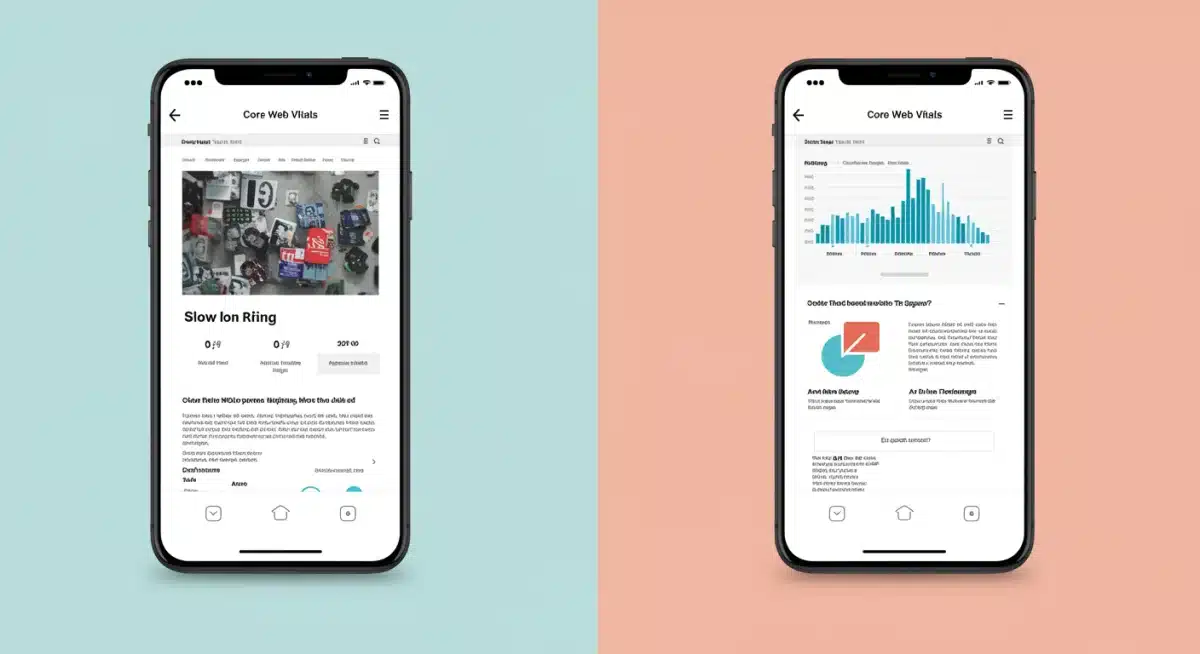
Font loading can also contribute to CLS if fonts are swapped out, causing text reflows. Using font-display: optional or preloading critical fonts can mitigate this. Furthermore, be mindful of animations; ensure they are smooth and don’t cause layout changes.
Ultimately, a stable layout creates a sense of reliability and professionalism for your users. By proactively preventing CLS, you not only improve your Core Web Vitals score but also build trust and reduce user frustration, leading to a more positive interaction with your site.
Mastering Interaction to Next Paint (INP) for Responsiveness
Interaction to Next Paint (INP) is the newest Core Web Vital, focused on measuring the responsiveness of your website to user input. It assesses the latency of all interactions a user makes on your page, from clicks and taps to keyboard inputs, and reports a single, representative value.
A low INP score signifies that your website is highly responsive, providing immediate feedback to user actions. This creates a fluid and satisfying experience, encouraging deeper engagement and reducing feelings of sluggishness.
Diagnosing and Improving Interaction Latency
Improving INP often involves optimizing JavaScript execution and ensuring the main thread is free to respond to user input. Long-running tasks can block the main thread, leading to noticeable delays.
- Optimize JavaScript: Break up long JavaScript tasks into smaller chunks using
setTimeoutorrequestAnimationFrame. Defer non-critical JavaScript execution until after the initial load. - Reduce Input Delay: Minimize the work done on the main thread during user interactions. Avoid complex calculations or DOM manipulations immediately after an event.
- Efficient Event Handlers: Ensure your event listeners are lightweight and execute quickly. Debounce or throttle events that fire frequently.
Tools like Lighthouse and Chrome DevTools are invaluable for identifying specific interactions that contribute to high INP scores. They can pinpoint bottlenecks in your JavaScript, helping you focus your optimization efforts where they will have the most impact.
The rise of INP emphasizes that modern web experiences demand not just fast loading, but also instant feedback. Users expect their actions to be acknowledged immediately. By focusing on INP, you’re not just improving a metric; you’re fundamentally enhancing the perceived speed and usability of your site, which is crucial for retaining attention and driving conversions.
The Direct Link Between Core Web Vitals and Search Rankings
Google has explicitly stated that Core Web Vitals are a ranking factor, forming part of the broader ‘page experience’ signals. While not the sole determinant, neglecting these metrics can certainly hinder your visibility in search results. In 2025, this correlation is expected to strengthen, making optimization even more critical.
Search engines prioritize user satisfaction. Websites that offer a superior user experience, as measured by Core Web Vitals, are more likely to be rewarded with higher rankings. This isn’t just about technical compliance; it’s about aligning with Google’s mission to deliver the best possible results to its users.
Beyond Rankings: User Engagement and Conversion
While search rankings are a primary concern, the benefits of optimizing Core Web Vitals extend far beyond SEO. A fast, stable, and responsive website directly impacts user engagement and conversion rates. Users are more likely to stay, explore, and convert on a site that feels good to use.
- Lower Bounce Rates: A slow or janky site causes users to leave quickly. Improved Core Web Vitals lead to lower bounce rates, signaling to search engines that your content is valuable.
- Increased Time on Site: A pleasant user experience encourages visitors to spend more time exploring your content, increasing their engagement.
- Higher Conversion Rates: Whether it’s a purchase, a sign-up, or a download, a frictionless experience removes obstacles, making users more likely to complete desired actions.
Consider the cumulative effect. A 15% boost in search rankings means more organic traffic. When that traffic lands on a site optimized for Core Web Vitals, they are more likely to engage, leading to higher conversion rates. This creates a powerful positive feedback loop, solidifying your digital presence.
The investment in Core Web Vitals optimization in 2025 is an investment in your audience. It demonstrates a commitment to quality and user-centric design, which search engines, and more importantly, your users, will reward.
Tools and Best Practices for Continuous Monitoring
Optimizing for Core Web Vitals isn’t a one-time task; it’s an ongoing process. The web is constantly changing, and so too are user expectations and Google’s algorithms. Therefore, continuous monitoring and iterative improvements are essential to maintain peak performance.
Fortunately, a suite of powerful tools is available to help you track, diagnose, and improve your Core Web Vitals scores. Integrating these into your regular workflow is a best practice for any serious website owner or SEO professional.
Essential Monitoring Tools
Leveraging the right tools can demystify Core Web Vitals data and provide actionable insights for improvement. These tools offer both field data (real user experiences) and lab data (simulated environments).
- Google Search Console: Provides real-world Core Web Vitals data for your site, highlighting specific URLs that need attention.
- PageSpeed Insights: Offers both field and lab data, along with specific recommendations for improving each Core Web Vital metric.
- Lighthouse: An automated tool integrated into Chrome DevTools, providing comprehensive audits for performance, accessibility, and best practices.
- Web Vitals Chrome Extension: A quick way to see Core Web Vitals scores for any page you visit in real-time.
Beyond these tools, setting up custom alerts for significant drops in Core Web Vitals scores can help you react quickly to potential issues. Regular performance audits, perhaps quarterly or bi-annually, should also be part of your maintenance routine.
Remember that optimization is an iterative process. Implement changes, monitor their impact, and then refine further. The goal is not just to pass the Core Web Vitals assessment but to consistently deliver an exceptional user experience that keeps users engaged and Google happy.
| Key Metric | Optimization Focus |
|---|---|
| Largest Contentful Paint (LCP) | Improve page load speed, optimize images & critical resources. |
| Cumulative Layout Shift (CLS) | Ensure visual stability, prevent unexpected content movement. |
| Interaction to Next Paint (INP) | Enhance page responsiveness to user interactions. |
| Overall Impact | Boosts search rankings and improves user engagement significantly. |
Frequently Asked Questions About Core Web Vitals in 2025
The primary Core Web Vitals for 2025 are Largest Contentful Paint (LCP), Cumulative Layout Shift (CLS), and Interaction to Next Paint (INP). These metrics measure loading performance, visual stability, and responsiveness, respectively, providing a comprehensive view of user experience.
Core Web Vitals are a direct ranking factor for Google. Websites with excellent Core Web Vitals scores are more likely to rank higher in search results, as they offer a superior user experience, which Google prioritizes in its ranking algorithms for 2025.
For 2025, an excellent Largest Contentful Paint (LCP) score is generally considered to be 2.5 seconds or less. Achieving this ensures that the main content of your webpage loads quickly, providing a positive first impression to users.
INP (Interaction to Next Paint) is replacing FID because it offers a more comprehensive measure of page responsiveness by observing all interactions a user has with a page, not just the first. It measures the latency from user interaction to the next visual update.
Absolutely. A fast, stable, and responsive website, achieved through Core Web Vitals optimization, significantly reduces bounce rates and increases time on site. Users are more likely to stay, explore, and convert when their experience is smooth and frustration-free.
Conclusion
The journey to mastering Core Web Vitals in 2025 is an essential one for any entity aiming for digital prominence. By prioritizing loading speed (LCP), visual stability (CLS), and interaction responsiveness (INP), you are not just adhering to Google’s guidelines; you are fundamentally enhancing the user experience. This dedication translates directly into tangible benefits: improved search rankings, a significant boost in user engagement, and ultimately, a stronger, more effective online presence. The digital landscape demands agility and user-centric design, and Core Web Vitals stand as the benchmark for achieving both. Embrace these optimizations, and watch your digital efforts flourish.