Brand Touchpoints: 2025 Audit for Seamless Customer Journeys
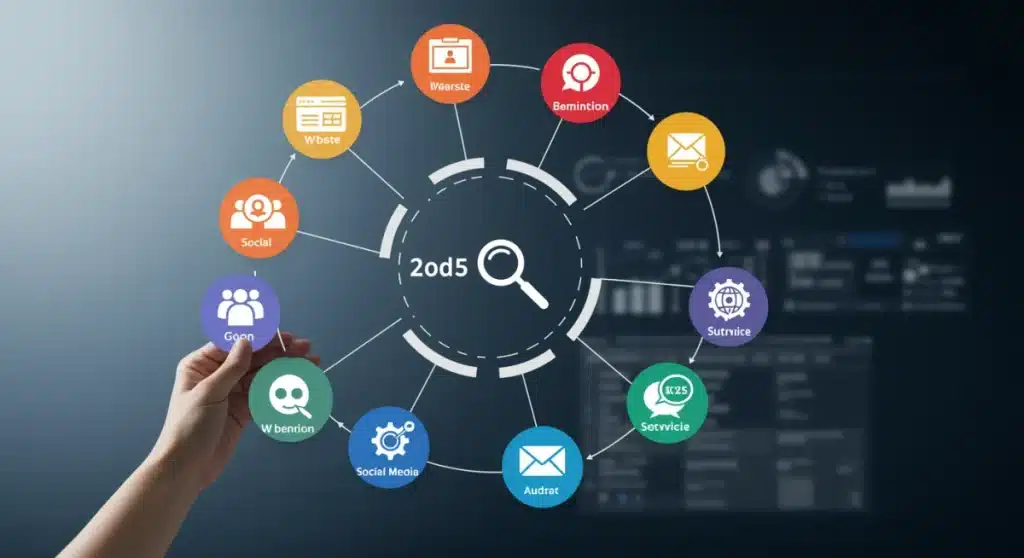
Optimizing brand touchpoints in 2025 is essential for creating a seamless customer journey, directly impacting brand loyalty and business growth by ensuring every interaction reinforces positive brand perception and meets evolving consumer expectations.
In today’s hyper-connected world, every interaction a customer has with your brand contributes to their overall perception and loyalty. This intricate web of interactions, known as brand touchpoints, is more critical than ever. Achieving a truly seamless customer journey requires meticulous attention and proactive optimization. This article delves into optimizing brand touchpoints: a 2025 audit checklist for a seamless customer journey, providing a comprehensive guide for businesses aiming to excel in brand building and customer experience.
Understanding the Evolving Landscape of Brand Touchpoints
The digital age has dramatically expanded the number and complexity of brand touchpoints. What once might have been limited to advertising, in-store experiences, and direct mail now encompasses a vast array of digital channels, from social media and email marketing to chatbots, mobile apps, and online communities. Understanding this evolving landscape is the first step toward effective optimization.
Consumers today expect personalized, consistent, and frictionless experiences across all channels. They move fluidly between online and offline interactions, often expecting brands to remember their preferences and history regardless of the touchpoint. This demand for interconnected experiences necessitates a holistic view of the customer journey, moving beyond siloed departmental approaches.
The Shift to Experiential Marketing
Experiential marketing has gained significant traction, focusing on creating immersive and memorable brand interactions. These experiences, whether virtual reality campaigns or pop-up stores, serve as powerful touchpoints that can forge deeper emotional connections with customers.
- Personalized content delivery
- Interactive digital experiences
- Seamless cross-channel transitions
- Consistent brand messaging
The goal is not just to inform but to engage, entertain, and build a relationship. Every touchpoint should contribute to a cohesive brand narrative, making the customer feel valued and understood. Neglecting even one touchpoint can disrupt the entire journey, leading to frustration and potential churn.
In conclusion, the modern brand touchpoint landscape is dynamic and multifaceted. Businesses must adopt a customer-centric approach, continuously analyzing and adapting their strategies to meet the ever-changing expectations of their audience. This foundational understanding sets the stage for a comprehensive audit.
Establishing Your 2025 Brand Touchpoint Audit Framework
A structured audit framework is crucial for effectively evaluating and enhancing your brand touchpoints. Without a clear methodology, the process can become overwhelming and yield inconsistent results. Our 2025 audit framework focuses on a systematic approach, ensuring every critical aspect of the customer journey is examined.
Begin by mapping out the entire customer journey, from initial awareness to post-purchase support. Identify every potential interaction point, both explicit and implicit. This includes obvious touchpoints like your website and social media profiles, as well as less obvious ones such as third-party reviews, word-of-mouth, and even unboxing experiences.
Key Steps in the Audit Process
The audit should be broken down into manageable phases, each with specific objectives. This ensures thoroughness and allows for focused analysis and actionable insights.
- Define audit scope and objectives
- Identify all existing brand touchpoints
- Gather data on customer interactions
- Analyze touchpoint effectiveness and consistency
It’s vital to involve cross-functional teams in this process. Marketing, sales, customer service, product development, and even IT departments all play a role in shaping different touchpoints. Their collective insights will provide a more comprehensive and accurate picture of the current state.
Furthermore, consider leveraging technology to streamline data collection and analysis. Customer relationship management (CRM) systems, marketing automation platforms, and analytics tools can provide invaluable quantitative data on touchpoint performance and customer behavior. Qualitative data, gathered through surveys, focus groups, and direct customer feedback, is equally important for understanding sentiment and pain points.
In summary, establishing a robust audit framework involves meticulous planning, comprehensive identification of touchpoints, cross-functional collaboration, and effective data utilization. This structured approach ensures a thorough evaluation, paving the way for strategic improvements.
Assessing Consistency and Cohesion Across Touchpoints
One of the most significant challenges in managing brand touchpoints is maintaining consistency and cohesion. A disjointed brand experience can confuse customers, erode trust, and ultimately damage brand perception. Your 2025 audit must rigorously evaluate how well your brand narrative, visual identity, and tone of voice are maintained across every interaction point.
Start by reviewing your brand guidelines. Are they comprehensive and clearly communicated to all stakeholders? Then, compare these guidelines against actual touchpoint implementations. Look for discrepancies in logo usage, color palettes, typography, messaging, and even the emotional tenor of communications.
Ensuring Brand Voice Uniformity
The brand voice is a critical element of consistency. Whether it’s formal, friendly, authoritative, or playful, it should resonate uniformly across all channels. Inconsistencies can make your brand feel inauthentic or unprofessional to customers.
- Review all external communications for tone
- Assess visual elements for adherence to guidelines
- Evaluate messaging for clarity and alignment
- Check for consistent customer service protocols
This assessment extends beyond mere aesthetics; it delves into the functional consistency of the customer journey itself. For instance, if a customer begins an inquiry on your website, can they seamlessly continue that conversation via chat or phone without repeating information? Such functional cohesion is paramount for a truly seamless experience.

Consider the hand-off points between different departments or channels. Are there any friction points where customers experience delays, confusion, or a feeling of being passed around? These are often critical areas for improvement, as they directly impact perceived seamlessness.
Ultimately, a successful audit of consistency and cohesion requires a keen eye for detail and a commitment to upholding brand standards at every turn. It’s about ensuring that each touchpoint, regardless of its nature, contributes positively and harmoniously to the overall brand experience.
Leveraging Data and Analytics for Touchpoint Optimization
In the 2025 landscape, data and analytics are indispensable tools for optimizing brand touchpoints. Relying on intuition alone is no longer sufficient; informed decisions must be driven by quantifiable insights into customer behavior and touchpoint performance. This section focuses on how to effectively gather, analyze, and act upon data to refine your customer journey.
Begin by identifying key performance indicators (KPIs) for each touchpoint. For a website, this might include bounce rate, conversion rate, and time on page. For social media, engagement rates and reach are crucial. For email campaigns, open rates and click-through rates are essential. Without clear KPIs, it’s impossible to measure effectiveness.
Utilizing Customer Feedback
Beyond quantitative data, qualitative feedback provides invaluable context. Surveys, net promoter scores (NPS), customer satisfaction (CSAT) scores, and direct feedback from customer service interactions can highlight pain points and areas for improvement that data alone might not reveal.
- Track website analytics and user behavior
- Monitor social media engagement metrics
- Analyze email campaign performance
- Collect and analyze direct customer feedback
Advanced analytics tools, including AI-powered platforms, can help in identifying patterns and predicting customer behavior across different touchpoints. These tools can reveal which touchpoints are most effective at different stages of the customer journey and where customers might be dropping off.
For example, if analytics show a high drop-off rate on a particular product page, it might indicate issues with content, pricing, or user experience at that specific touchpoint. Similarly, if customer service calls increase after a specific marketing campaign, it could signal confusion in the campaign’s messaging, necessitating an adjustment to that touchpoint.
In essence, data and analytics provide the evidence base for your optimization efforts. They allow for a data-driven approach to identifying weaknesses, capitalizing on strengths, and making continuous improvements to ensure a truly seamless and effective customer journey.
Innovating and Personalizing Future Touchpoints
The future of brand touchpoints lies in innovation and hyper-personalization. As technology advances, so do customer expectations for unique and tailored experiences. Your 2025 audit checklist wouldn’t be complete without considering how to integrate cutting-edge technologies and personalization strategies to elevate the customer journey.
Explore emerging technologies such as augmented reality (AR) and virtual reality (VR) for immersive product demonstrations, AI-powered chatbots for instant and intelligent customer support, and machine learning for predictive personalization. These innovations can transform static touchpoints into dynamic, engaging experiences.
Implementing Hyper-Personalization Strategies
Personalization goes beyond addressing a customer by their first name. It involves understanding their individual preferences, past interactions, and current context to deliver highly relevant content, offers, and support at every stage of their journey.
- Leverage AI for predictive content delivery
- Implement dynamic website content based on user behavior
- Offer personalized product recommendations
- Tailor marketing messages to individual preferences
Consider the integration of Internet of Things (IoT) devices, which can create ambient touchpoints that seamlessly connect with a customer’s daily life. Smart home devices, for instance, could offer proactive service reminders or personalized product suggestions based on usage patterns, further embedding your brand into the customer’s ecosystem.
Furthermore, ethical considerations surrounding data privacy and transparency must be at the forefront of any personalization strategy. Building trust through responsible data handling is as crucial as the personalization itself. Customers are more likely to engage with personalized experiences when they feel their data is respected and protected.
In conclusion, innovating and personalizing future touchpoints is about anticipating customer needs and leveraging technology to create delightful, relevant, and trustworthy interactions. This forward-looking approach ensures your brand remains competitive and continues to build strong, lasting customer relationships.
Implementing and Iterating: The Continuous Optimization Cycle
Optimizing brand touchpoints is not a one-time project but an ongoing commitment. After conducting your 2025 audit and identifying areas for improvement, the critical next step is implementation, followed by continuous iteration. This section outlines the importance of a cyclical approach to ensure sustained success and adaptability.
Once you have a clear action plan from your audit, prioritize the changes based on potential impact and feasibility. Start with high-impact, low-effort changes to demonstrate quick wins and build momentum. Communicate these changes across your organization to ensure everyone is aligned with the new strategies and understands their role in the enhanced customer journey.
Establishing Feedback Loops and Metrics
To ensure continuous improvement, robust feedback loops must be established. This involves regularly monitoring the KPIs identified during the audit, collecting ongoing customer feedback, and conducting periodic reviews of touchpoint performance. The data gathered during this phase informs the next round of optimizations.
- Prioritize and implement audit recommendations
- Monitor new touchpoint performance metrics
- Gather ongoing customer feedback
- Conduct regular reviews and adjustments
The market environment, customer preferences, and technological capabilities are constantly evolving. What is optimal today might not be optimal tomorrow. Therefore, a flexible and agile approach to touchpoint management is essential. Be prepared to adapt your strategies, experiment with new ideas, and learn from both successes and failures.
Encourage a culture of continuous learning and experimentation within your organization. Empower teams to identify problems, propose solutions, and test new approaches to touchpoint optimization. This decentralized approach can lead to more innovative and responsive improvements.
In summary, the journey of optimizing brand touchpoints is an iterative one. By implementing changes, rigorously measuring their impact, and continuously adapting based on new data and insights, businesses can ensure their customer journey remains seamless, engaging, and aligned with evolving consumer expectations well beyond 2025.
| Key Point | Brief Description |
|---|---|
| Holistic Touchpoint View | Map and understand all customer interactions across digital and physical channels for a complete journey perspective. |
| Consistency & Cohesion | Ensure uniform brand voice, visuals, and seamless functional transitions across every customer interaction point. |
| Data-Driven Optimization | Utilize KPIs, analytics, and customer feedback to identify pain points and inform strategic improvements. |
| Continuous Iteration | Implement changes, monitor performance, and continuously adapt strategies based on evolving market and customer needs. |
Frequently asked questions about brand touchpoints
A brand touchpoint is any interaction, direct or indirect, a customer has with your brand throughout their journey. This includes everything from seeing an advertisement to visiting your website, interacting with customer service, or using your product. Each touchpoint shapes their perception.
A 2025 audit is crucial because customer expectations and technological landscapes are constantly evolving. It ensures your brand remains relevant, competitive, and capable of delivering the seamless, personalized experiences consumers now demand, preventing disconnects that can harm loyalty.
Consistency across touchpoints builds trust and reinforces brand identity. Inconsistent messaging, visuals, or service can confuse customers, create friction, and erode confidence, leading to a fragmented and unsatisfactory customer journey that ultimately deters engagement.
Data provides quantifiable insights into customer behavior and touchpoint performance. By analyzing metrics and feedback, businesses can identify effective touchpoints, pinpoint areas of friction, and make informed, strategic decisions to enhance the overall customer experience and brand building efforts.
Brands can innovate by integrating emerging technologies like AI, AR/VR, and IoT for immersive experiences and predictive personalization. Focusing on ethical data use and creating highly relevant, tailored interactions will be key to staying ahead in the evolving market.
Conclusion
The journey to a truly seamless customer experience is dynamic and demanding, requiring continuous vigilance and strategic action. By diligently performing a brand touchpoints audit in 2025, businesses can not only identify and rectify existing pain points but also proactively innovate to meet future customer expectations. This commitment to understanding, optimizing, and personalizing every interaction point is not merely a task; it’s a fundamental pillar of modern brand building, ensuring lasting customer loyalty and sustained growth in an increasingly competitive landscape.